Sourcing dried salep tubers from China
Dried salep tubers from China carry £7.90 per 100 kg UK duty, rather than a percentage range. The tariff attaches CITES controls: establish the species and applicable permits before proceeding, and check eligibility for food use separately. Cambridge China Bridge sources dried salep tubers.
Buying from China for a business? How our UK China sourcing agent service works · China sourcing agent for small orders and first imports
Duty by weight and species controls
Read from the UK Trade Tariff on 4 October 2026, dried salep tubers fall within heading 0714 under 0714 90 20 90, covering other arrowroot, salep and similar high-starch roots and tubers. Goods from China carry £7.90 per 100 kg. The supplied tariff record shows no anti-dumping or countervailing measure and no suspension for this line.
The tariff attaches CITES import and export controls and an organic import control. For CITES-listed material, obtain the applicable Great Britain permit and corresponding Chinese documentation. Dried plant parts remain specimens for CITES purposes. For organic food from China, obtain a certificate of inspection for each consignment and check the exporter’s control body and export country against the recognised registers.
Confirm the botanical identity, dried condition and intended use with your broker using finding your commodity code. The supplied facts contain only the applicable dried-salep line, so the table is limited to that line. No percentage-duty worked order applies; the zero values in the example fields are placeholders, not an illustrative quotation. For the wider heading, see dried konjac corms.
| Goods | Commodity code | Duty | Anti-dumping or countervailing duty on China |
|---|---|---|---|
| Dried salep tubers, whole or sliced | 0714 90 20 90 | £7.90 per 100 kg | None |
Specify the species and dried tuber
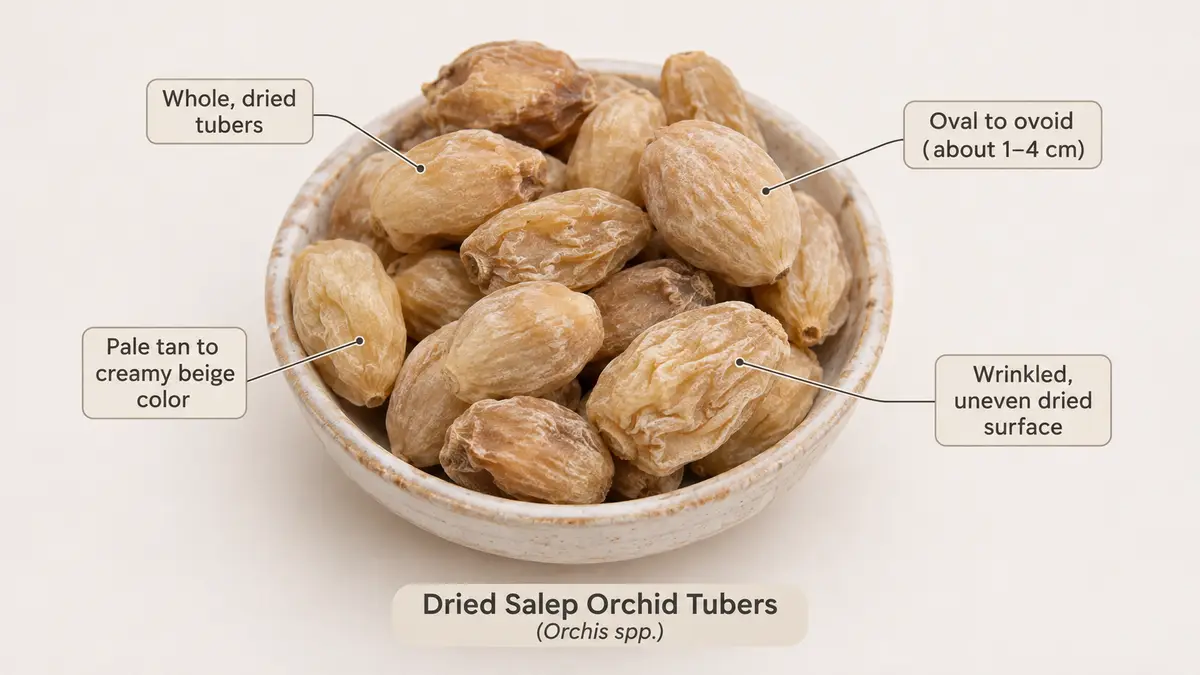
Request the botanical name, growing country, cultivated or wild-collected origin, harvest and drying records, and photographs of the intact tubers. State whether you want whole tubers or slices. Agree acceptable moisture, broken pieces, foreign matter, colour and odour against an approved sample.
Describe the intended food application and processing method. Food must meet general food safety requirements. Verify novel-food status for the actual species, plant part and intended use; novel foods require authorisation before sale in Great Britain. A tariff classification does not establish food-use eligibility.
Inspection checklist
Identity: compare the delivered tubers with the botanical identification, approved sample and supplier records; investigate mixed shapes or substituted material.
Condition: check for mould, insect damage, dampness, musty odours, dirt and excessive fragments; take samples from inside the shipment.
Performance: compare milling behaviour and thickening performance using the agreed preparation method; investigate unexplained differences between batches.
Packaging: check sealed liners, dry cartons, net weight and batch references against the packing list and relevant documents.
What goes wrong
A supplier’s product name can conceal a different species or a substitute starch. Ask for identity evidence before treating a sample’s thickening performance as proof of authenticity. Moisture uptake and poorly sealed liners can leave apparently dry tubers damp or mouldy inside the pack.
Do not assume that dispatch from China proves the material was grown there or that it is eligible for import. Establish the species and source, then have your broker confirm the attached CITES controls and any species-specific restrictions. Resolve food-use eligibility before committing to stock.
Cambridge China Bridge sources these products for UK businesses, checking the factory and the documents before shipment. See factory verification. For repeat volumes, see container programmes.
Frequently asked questions
What is the UK import duty on dried salep from China?
The supplied tariff record gives £7.90 per 100 kg under 0714 90 20 90, with no anti-dumping or countervailing measure and no suspension.
Do dried salep tubers need CITES paperwork?
The tariff attaches CITES controls. Identify the species and confirm applicable permits with your broker. CITES specimens include dead plants and their parts.
Can I sell imported salep as a food ingredient?
Check the actual species, plant part and intended use. Food safety requirements apply, and novel foods need authorisation before sale in Great Britain.
What should I ask a salep supplier for?
Ask for the botanical identity, growing country, source records, drying details, an intact-tuber sample and batch-linked documents. Agree moisture, cleanliness and thickening checks.