Sourcing diesel irrigation engines from China
Diesel irrigation pump engines supplied separately carry 4% UK duty from China across the selected power bands. Engines for new non-road mobile machinery sold in Great Britain need emission type approval and the approval marking. Match continuous output and shaft details to the pump. Cambridge China Bridge sources diesel irrigation pump engines.
Buying from China for a business? How our UK China sourcing agent service works · China sourcing agent for small orders and first imports
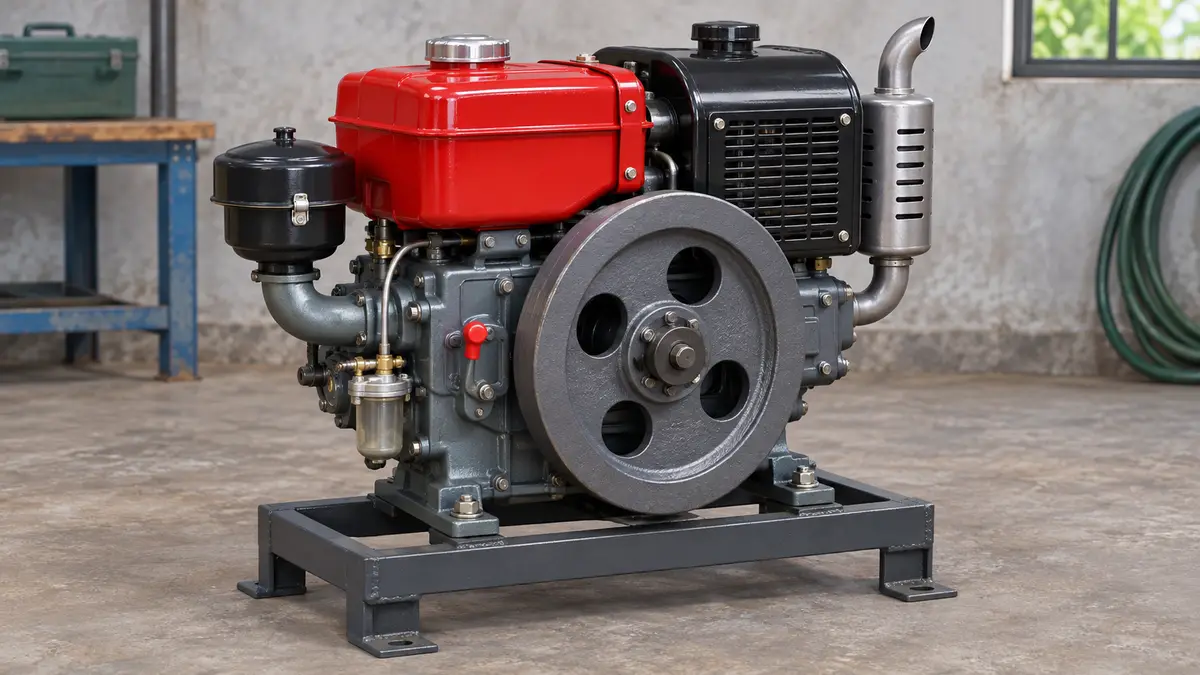
4% duty for irrigation pump engines
Read from the UK Trade Tariff on 1 October 2026, heading 8408 covers compression-ignition internal combustion piston engines. This guide concerns diesel engines supplied separately to drive irrigation pumps. The selected new-engine lines distinguish power bands. Have a complete engine-and-pump set assessed separately rather than assuming the engine code applies.
The supplied tariff extract records 4% duty on goods from China for every selected line, with no anti-dumping or countervailing measure and no attached import control. Some lines have 0% suspensions restricted to specified vehicle temperature-control or vehicle-manufacturing uses, including authorised-use supervision on 8408 90 43 90. These are not general relief for irrigation engines.
Give your customs broker the engine specification, rated power, condition and intended use to confirm the commodity code. For another pump-engine application within this heading, see diesel fire-pump engines.
| Goods | Commodity code | Duty | Anti-dumping or countervailing duty on China |
|---|---|---|---|
| New irrigation pump engines, power not exceeding 15 kW | 8408 90 41 90 | 4% | None |
| New irrigation pump engines, power over 15 kW but not exceeding 30 kW | 8408 90 43 90 | 4% | None |
| New irrigation pump engines, power over 30 kW but not exceeding 50 kW | 8408 90 45 90 | 4% | None |
| New irrigation pump engines, power over 50 kW but not exceeding 100 kW | 8408 90 47 90 | 4% | None |
| New irrigation pump engines, power over 100 kW but not exceeding 200 kW | 8408 90 61 90 | 4% | None |
Specify continuous output and the pump connection
Specify continuous shaft output at the pump's operating speed, torque, rotation viewed from the shaft end, shaft diameter and keyway, flywheel housing, coupling and mounting dimensions. State the pump's duty point and operating pattern. Agree radiator and fan capacity for the installation, air filtration, starting equipment, governor, controller connections and the spares supplied.
Ask for the approval certificate and match it to the engine supplied. Describe whether the irrigation equipment is transportable or permanently installed so the approval scope can be assessed. If the engine is supplied as partly completed machinery, obtain assembly instructions and a declaration of incorporation. Agree responsibility for the finished pump set's safety documents and guarding.
Worked duty example
Illustrative example, not a quote: Illustrative order: one new diesel irrigation pump engine, over 30 kW but not exceeding 50 kW under 8408 90 45 90, invoiced at £8,000 free on board, with £1,200 of freight and insurance to the UK. The customs value is £9,200. Duty at 4% is £368. Import VAT at 20% is charged on the customs value plus duty, £9,568, so it is £1,913.60. Import taxes total £2,281.60; a VAT-registered importer can usually reclaim the VAT, so the lasting cost is the £368 of duty. The import duty and VAT guide explains each step.
Inspection checklist
Identity: compare the delivered engine model, serial number, approval marking and emission-control components with the approved specification and certificate.
Load test: run the engine under the agreed pump load and speed; record speed stability, oil pressure, coolant temperature, smoke and leaks, then check cold starting and hot restarting.
Interfaces: measure the shaft, keyway, coupling and mounting positions; confirm rotation, starter operation and controller connections. Check the planned protection for belts, couplings and hot surfaces before commissioning.
Arrival: check for impact damage, corrosion and damaged shaft protection. Match filters, gaskets and other agreed spares to the packing list. Check that assembly and operating information is in English. Plan checks using our inspection guide.
Working out your own order? Send us the product on WhatsApp and we reply the same working day: WhatsApp us
What goes wrong
Peak power quoted at a different speed can leave the engine unable to sustain the irrigation load. A mismatched shaft or flywheel housing prevents coupling, while inadequate radiator airflow can cause overheating in an enclosure. Watch for oil leaks, substituted injectors and governor settings that allow speed to drift under load.
Approval paperwork for another engine family, missing assembly instructions and controller wiring that differs from the drawing can delay installation. Put the exact configuration and acceptance checks in the order, and require written approval before substitutions. Agree access to service information and replacement parts before shipment.
Cambridge China Bridge sources these products for UK businesses, checking the factory and the documents before shipment. See factory verification. For machinery and equipment, see machinery imports.
Frequently asked questions
What is the UK import duty on diesel irrigation pump engines from China?
The selected separately supplied new-engine lines carry 4% duty from China. The tariff extract records no anti-dumping or countervailing measure. Listed suspensions concern specified other uses.
Do diesel irrigation pump engines need emission approval?
Describe the intended installation and check the certificate against the engine supplied.
What documents should come with an engine for assembly into a pump?
If supplied as partly completed machinery, it should come with assembly instructions and a declaration of incorporation. Check that the assembly and operating information is in English.
What should I test before accepting an irrigation pump engine?
Test continuous operation at the agreed pump load and speed, cold starting, hot restarting, cooling, leaks and speed stability. Measure the shaft and mounts, and match the controller connections to the drawing.