Sourcing deuterium lamps from China
Deuterium ultraviolet lamps from China carry 0% UK duty on the listed ultraviolet-lamp line; the relevant parts lines also carry 0%. Assess hazardous-substance compliance for the actual product and supply arrangement, then verify instrument fit and optical performance. Cambridge China Bridge sources deuterium lamps.
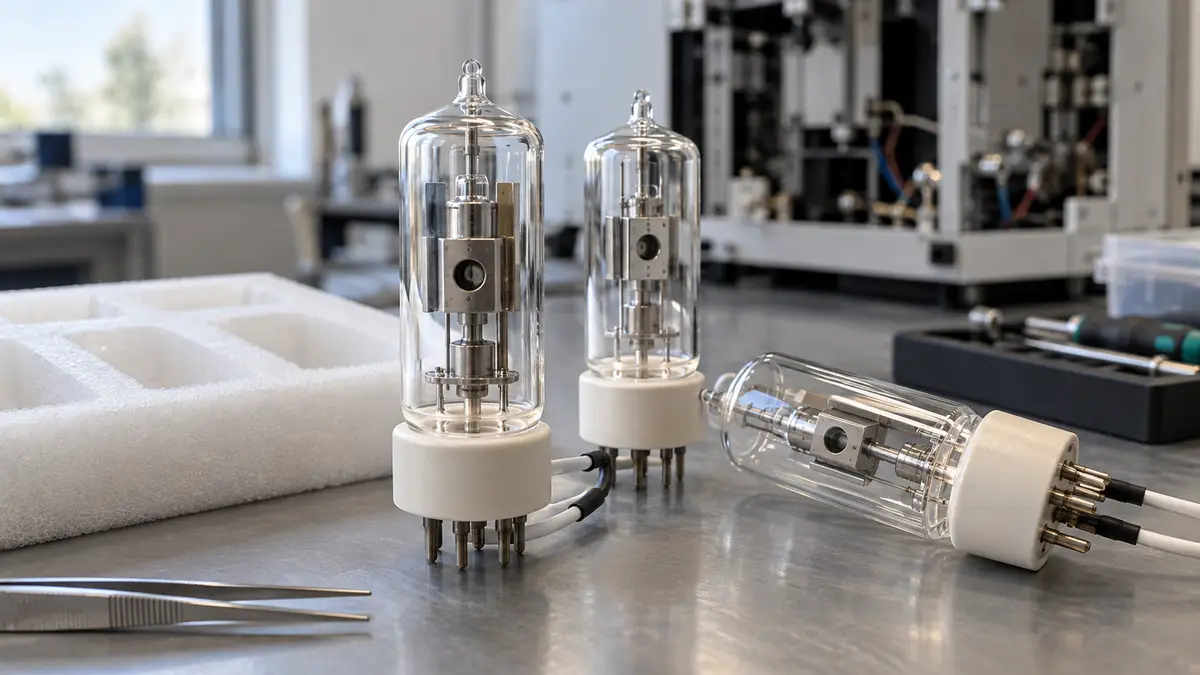
Deuterium lamps and UK duty
Heading 8539 covers electric filament and discharge lamps, ultraviolet and infra-red lamps, arc lamps and LED light sources. For a deuterium ultraviolet lamp, check 8539 49 00 00 against the actual goods. The table separates finished lamps from separately supplied bases and other parts; its finished-lamp rows share a commodity code. For UK-to-China trade, see our guide to exporting LED lamps to China.
Read from the UK Trade Tariff on 30 September 2026, the listed ultraviolet-lamp and relevant parts lines carried 0% duty for goods from China, with no anti-dumping or countervailing duty and no suspension listed. No control is attached to the listed ultraviolet-lamp or other-parts line. The lamp-base line has an import control of mercury. Those controls concern intentionally added mercury; confirm the requirement for your bases with your customs broker.
Confirm the commodity code using the lamp description, drawings and whether it is supplied complete or as parts. A detector or lamp power supply needs its own classification assessment. For the wider lamp family, see UV-C germicidal lamps. For fluorescent models, see our fluorescent lamp sourcing guide. For excimer models, see our excimer UV lamp sourcing guide.
| Goods | Commodity code | Duty | Anti-dumping or countervailing duty on China |
|---|---|---|---|
| Deuterium ultraviolet lamps for spectrometers | 8539 49 00 00 | 0% | None |
| Lamp bases supplied separately for deuterium lamps | 8539 90 10 00 | 0% | None |
| Other deuterium lamp parts supplied separately | 8539 90 90 00 | 0% | None |
Specify the lamp against the instrument
Name the instrument model and replacement part reference. Agree the envelope dimensions, mounting datum, aperture position, window material, connector and pin assignment. Specify the operating current, ignition arrangement, warm-up behaviour, spectral output and stability against the instrument's needs. Ask for performance records tied to the supplied lamp model rather than a generic catalogue curve.
Check hazardous-substance scope before sale: electrical and electronic equipment, including cables and spare parts, falls within the hazardous-substance regulations unless specifically excluded. Record whether the supply is a finished replacement lamp or a component for assembly. Where the Electrical Equipment (Safety) Regulations apply, the importer must ensure that accompanying instructions are in easily understandable English. Arrange a testing and certification review around the actual supply.
Worked duty example
Illustrative example, not a quote: An illustrative batch of replacement deuterium lamps for a laboratory equipment supplier under 8539 49 00 00, invoiced at £12,000 free on board, with £600 of freight and insurance to the UK. The customs value is £12,600. Duty at 0% is £0. Import VAT at 20% is charged on the customs value plus duty, £12,600, so it is £2,520. With no duty, the only import tax is the VAT, which a VAT-registered importer can usually reclaim. The import duty and VAT guide explains each step.
Inspection checklist
Identity: match lamp references, batch identification and packing labels to the approved sample and purchase order.
Fit: compare mounting dimensions, aperture alignment, connector keying and pin assignment with the instrument drawing.
Performance: test ignition, warm-up, output stability and detector baseline in a compatible instrument using an agreed procedure and shielding.
Condition: inspect the optical window, envelope, seals and leads for contamination, cracks or transport damage; check individual protective packaging.
Working out your own order? Send us the product on WhatsApp and we reply the same working day: WhatsApp us
What goes wrong
A lamp can fit the socket while its aperture misses the instrument's optical path. A changed window material, electrode arrangement or connector can also make an apparently matching replacement unsuitable. Keep an approved sample and require written approval before changes to the lamp construction or connection.
Intermittent ignition and unstable output can appear only after installation and warm-up. Agree acceptance tests in the intended instrument before ordering, retain batch performance records and quarantine damaged or mismatched lamps on arrival. A visual inspection alone cannot establish optical compatibility.
Cambridge China Bridge sources these products for UK businesses, checking the factory and the documents before shipment. See factory verification. For components and parts, see sourcing for manufacturers.
Frequently asked questions
What is the UK import duty on deuterium lamps from China?
The supplied tariff reading lists 0% duty for ultraviolet lamps under 8539 49 00 00, with no anti-dumping or countervailing duty. Confirm that your lamp matches the line.
Can I buy a replacement using only the instrument model?
Use the model plus the replacement reference, mounting drawing, aperture position and electrical connection. Approve a sample in the intended instrument before accepting the batch.
Does a laboratory lamp automatically escape hazardous-substance rules?
No. Electrical and electronic equipment, including spare parts, is in scope unless specifically excluded. Assess the actual product and supply arrangement rather than relying on a laboratory-use description.
What should I test when the lamps arrive?
Check identity, window condition, mounting and connections, then test ignition, warm-up and output stability in a compatible instrument. Compare the detector baseline with the agreed acceptance criteria.