Sourcing cleaned quail feathers from China
Cleaned quail feathers from China carry 0% UK duty across the supplied heading. For business imports into Great Britain, cleaning alone does not establish admissibility: confirm recognised treatment, processor approval and consignment documents before shipping. Cambridge China Bridge sources cleaned quail feathers.
Buying from China for a business? How our UK China sourcing agent service works · China sourcing agent for small orders and first imports
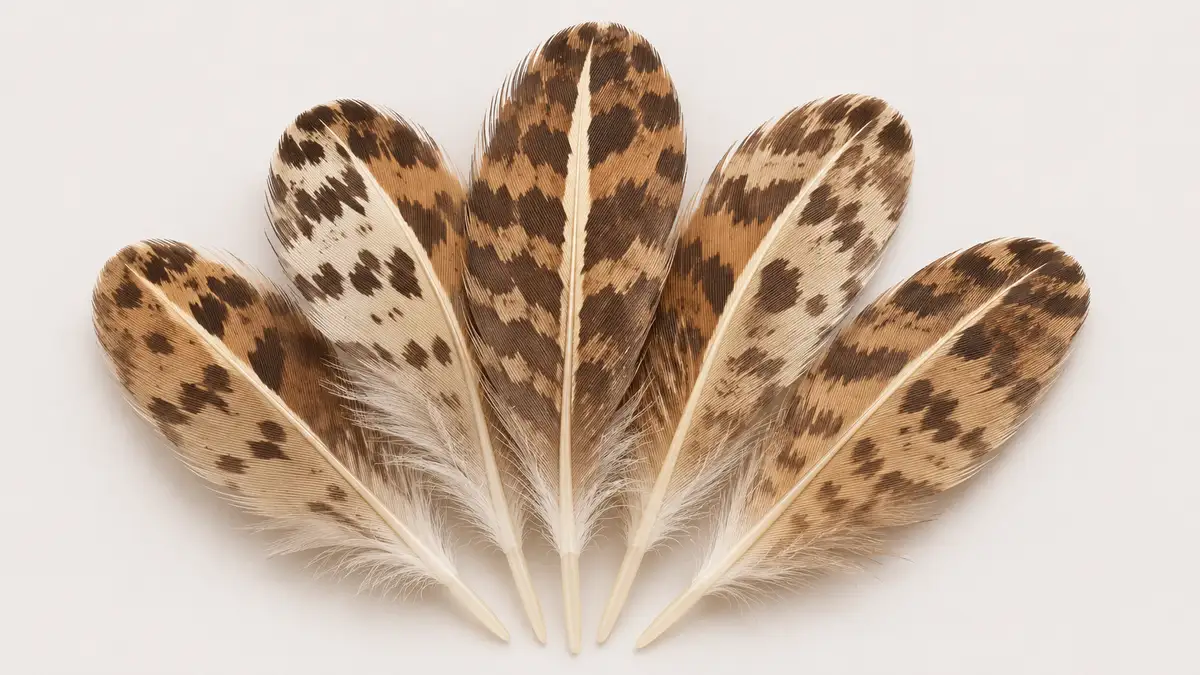
Zero duty, with animal-product controls
Read from the UK Trade Tariff on 5 October 2026, heading 0505 covers feathers and feather parts, including trimmed edges, not further worked than cleaned, disinfected or treated for preservation, alongside bird skins, down, powder and waste. The table shows decorative quail-feather forms under 0505 90 00 00, rather than separate tariff subdivisions.
All supplied lines carry 0% duty for goods from China, with no anti-dumping or countervailing duty and no suspension recorded. Veterinary and waste import controls appear throughout; 0505 90 00 00 also carries CITES import control. The facts also record waste export controls and CITES export control on the other-feathers line. Ask your broker to confirm the health entry document and supporting paperwork for the actual consignment.
Confirm species, intended use and processing before choosing the commodity code. Do not assume a code for loose decorative feathers covers assembled feather articles or feathers of a kind used for stuffing. For the wider heading context, see the cleaned pheasant feathers guide.
| Goods | Commodity code | Duty | Anti-dumping or countervailing duty on China |
|---|---|---|---|
| Cleaned quail body feathers, loose, for decoration | 0505 90 00 00 | 0% | None |
Specify quail species, feather grade and treatment
Specify the quail species, body, wing or tail feathers, natural colour and markings, length grading, intact tips and permitted shaft damage. Agree whether edges are trimmed and whether the order contains loose feathers or assembled pieces. Retain a sample showing acceptable pattern variation, softness, dust and odour. Agree dry packing that protects the feather shape.
The treated-feather guidance permits imports from any trading partner, including China. Business consignments must come from an establishment approved to export to Great Britain and undergo recognised treatment. Untreated feathers cannot be imported. Obtain treatment records, rather than accepting a description such as washed or cleaned. The reference guidance describes steam treatment for 30 minutes or another recognised method.
Arrange the exporter’s signed commercial document within 2 weeks before dispatch, recording processor approval, treatment and the required bird-health and area declarations. Commercial imports require pre-notification and veterinary checks. Confirm CITES status against the exact species with your broker; listed species need the applicable permits. If material is waste under notification controls, shipment must await consent from the dispatch, destination and transit authorities.
Worked duty example
Illustrative example, not a quote: Illustrative order: 5 cartons of cleaned and appropriately treated quail body feathers for decoration under 0505 90 00 00, invoiced at £1,500 free on board, with £900 of freight and insurance to the UK. The customs value is £2,400. Duty at 0% is £0. Import VAT at 20% is charged on the customs value plus duty, £2,400, so it is £480. With no duty, the only import tax is the VAT, which a VAT-registered importer can usually reclaim. The import duty and VAT guide explains each step.
Inspection checklist
Identity: compare species records, feather type, natural markings and batch references with the approved sample; investigate mixed species or substituted feather types.
Condition: sample across cartons for damp, mould, musty odour, grease, dust, attached tissue and foreign matter; compare with the agreed cleanliness specification.
Appearance: check length grading, pattern consistency, intact tips, shaft breakage and edge trimming; assess whether packing has crushed or curled the feathers.
Traceability: match carton marks and processor details to treatment records and consignment documents. Plan representative sampling through the inspection guide.
Working out your own order? Send us the product on WhatsApp and we reply the same working day: WhatsApp us
What goes wrong
A sample of selected feathers can conceal a bulk lot with uneven markings, broken shafts or excessive short pieces. Damp packing can bring odour and mould, while crushing can spoil feathers intended for visible decoration. Set acceptance criteria against a retained sample and inspect the packed shipment.
A clean appearance does not prove recognised treatment or processor approval. Resolve these before dispatch, together with any protected-species or waste questions. If selling the feathers as consumer craft supplies in Great Britain, general product safety rules require safety during normal or reasonably foreseeable use; assess the intended use before sale.
Cambridge China Bridge sources these products for UK businesses, checking the factory and the documents before shipment. See factory verification. For repeat volumes, see container programmes.
Frequently asked questions
What is the UK import duty on cleaned quail feathers from China?
The supplied tariff reading gives 0% duty across heading 0505, including 0505 90 00 00, with no anti-dumping or countervailing duty and no suspension recorded.
Can I import cleaned quail feathers from China?
Treated feathers may come from China, subject to the import conditions. For business consignments, confirm recognised treatment, an approved processor, commercial documents, pre-notification and veterinary checks.
Is washing quail feathers enough for import?
Do not rely on washing alone. Obtain records proving treatment by a recognised method and have your broker confirm the import route. Ask APHA or your broker to confirm whether untreated feathers are admissible before shipping.
What should I check when quail feathers arrive?
Check species and batch identity, markings, length grading, intact tips, broken shafts, dust, grease, odour, damp and packing damage against the retained sample and specification.