Sourcing cleaned chicken feathers from China
Cleaned chicken feathers from China carry 0% UK duty across the relevant lines. For business imports into Great Britain, cleaning alone is insufficient: confirm an accepted treatment, an approved processor and the commercial documents before shipping. Cambridge China Bridge sources cleaned chicken feathers.
Buying from China for a business? How our UK China sourcing agent service works · China sourcing agent for small orders and first imports
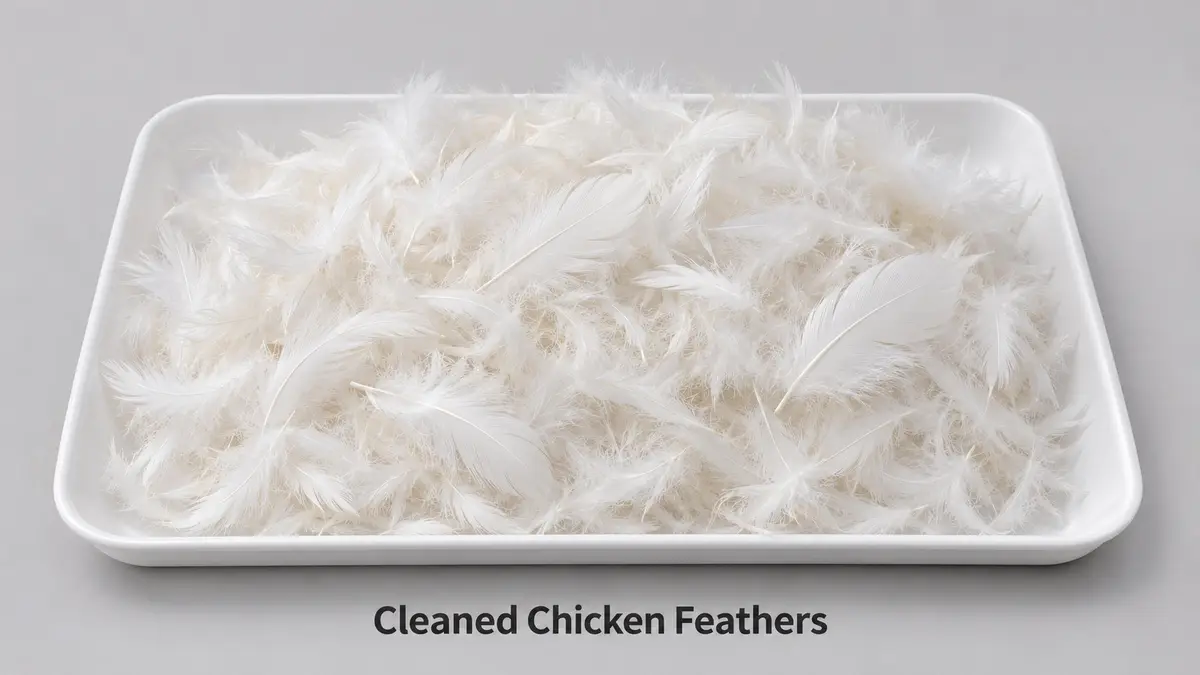
Zero duty, with treatment and import controls
Read from the UK Trade Tariff on 5 October 2026, heading 0505 covers feathers and feather parts not further worked than cleaned, disinfected or treated for preservation, alongside down, feathered bird parts, powder and waste. Relevant cleaned chicken feather lines carry 0% duty from China, with no anti-dumping or countervailing measure and no suspension recorded.
The supplied tariff attaches veterinary and waste import and export controls to the relevant codes. It also attaches CITES import and export controls to 0505 90 00 00. Commercial treated-feather imports require pre-notification and veterinary checks. Ask your customs broker to confirm the common health entry document and how the waste and CITES controls apply to the actual chicken feather consignment.
Distinguish feathers of a kind used for stuffing from other feathers, and describe the processing accurately. The table separates product forms under repeated codes. Confirm classification using finding your commodity code. For another feather family within this heading, see cleaned turkey feathers.
| Goods | Commodity code | Duty | Anti-dumping or countervailing duty on China |
|---|---|---|---|
| Cleaned white chicken feathers of a kind used for stuffing | 0505 10 90 00 | 0% | None |
| Cleaned chicken body feathers, not of a kind used for stuffing | 0505 90 00 00 | 0% | None |
Specify chicken feather grade and treatment
Specify chicken as the source species, body, wing or tail feathers, natural colour, length distribution, intact quills and acceptable broken-feather content. Agree limits for dust, residual grease, moisture, odour and foreign matter against a retained sample. State whether the purchase is for stuffing or another manufacturing use.
Treated feathers may come from any trading partner, including China, but must originate from an establishment approved to export to Great Britain and eligible Category 3 material. Untreated feathers are not permitted. Obtain the processor's treatment records: a description such as 'washed chicken feathers' does not establish an accepted treatment. Check the actual processor through factory verification.
Commercial treated-feather consignments need an exporter-completed, signed and dated commercial document prepared not more than 2 weeks before dispatch; a health certificate is not required under this route. The document must identify the exporter, origin premises approval number and consignment. Ask the relevant authority or customs broker to confirm any treatment, bird-health and origin-area declarations needed in the document. Reconcile it with the batch being purchased.
Worked duty example
Illustrative example, not a quote: Illustrative order: 2 tonnes of cleaned, treated chicken feathers for stuffing under 0505 10 90 00, invoiced at £1,500 free on board, with £900 of freight and insurance to the UK. The customs value is £2,400. Duty at 0% is £0. Import VAT at 20% is charged on the customs value plus duty, £2,400, so it is £480. With no duty, the only import tax is the VAT, which a VAT-registered importer can usually reclaim. The import duty and VAT guide explains each step.
Inspection checklist
Identity: compare species records, feather type and natural colour with the retained sample; investigate mixed species or unexplained substitutions.
Grading: sample across the bales for feather length, broken quills, flattened vanes and dust; compare the distribution with the agreed grade.
Condition: inspect arriving bales for damp, mould, grease, odour, foreign matter and damaged wrapping before accepting the lot.
Traceability: match bale marks and batch references to processor, treatment and consignment records. Arrange checks before dispatch using the quality inspection guide.
Working out your own order? Send us the product on WhatsApp and we reply the same working day: WhatsApp us
What goes wrong
A clean-looking sample can conceal dusty, greasy or damp bulk material. Rough packing can break quills and flatten feathers selected for their shape. An invoice saying 'cleaned feathers' can also leave the treatment unresolved. Agree the grade and treatment separately, then compare representative shipment samples with the retained sample.
Keep saleable feather stock distinct from material described as waste. If notification controls apply to a waste shipment into England, it cannot ship until the Environment Agency and the other competent authorities have consented. For any CITES-listed material mixed into the lot, resolve the applicable import and export permits before shipment. Ask the broker to confirm the route.
Cambridge China Bridge sources these products for UK businesses, checking the factory and the documents before shipment. See factory verification. For repeat volumes, see container programmes.
Frequently asked questions
What is the UK import duty on cleaned chicken feathers from China?
The supplied tariff reading gives 0% duty for 0505 10 90 00 and 0505 90 00 00, with no anti-dumping or countervailing measure and no suspension recorded.
Can I import washed chicken feathers from China?
China is a permitted origin for treated feathers. Washing alone does not establish compliance: confirm an accepted treatment, an approved exporting establishment and the commercial import documents.
Do cleaned chicken feathers need a health certificate?
The commercial treated-feather route requires an exporter-completed commercial document, rather than a health certificate. Pre-notification and veterinary checks still apply.
What should I check when chicken feathers arrive?
Check feather type, colour, length grading, broken quills, dust, grease, moisture, odour and wrapping. Match bale marks to treatment records and compare samples from across the shipment with the agreed sample.