Sourcing cine optical sound heads from China
Cine-projector optical sound heads imported as dedicated projector parts from China carry 0% UK duty, with no trade remedies recorded. Check the supplied electronic assembly's compliance scope before selling in Great Britain. Cambridge China Bridge sources cine-projector optical sound heads.
Buying from China for a business? How our UK China sourcing agent service works · China sourcing agent for small orders and first imports
UK duty on optical sound head assemblies
Heading 9007 covers cinematographic cameras and projectors, whether or not incorporating sound recording or reproducing apparatus, and their parts. Dedicated cine-projector optical sound heads are candidates for the projector-parts line 9007 92 00 90. The table shows purchase descriptions sharing that line, rather than separate tariff subdivisions. For related equipment, see our cine-projector lamphouse guide.
Read from the UK Trade Tariff on 11 October 2026, the listed projector-parts line carried 0% duty for goods from China. The snapshot records no anti-dumping or countervailing measures and no suspensions. It attaches a control labelled 'DCMS Export Licence'. GOV.UK states that importing objects of cultural interest into Great Britain has no licensing requirements; ask your customs broker to confirm how the tariff annotation applies, particularly for vintage assemblies.
Confirm the commodity code using drawings, the intended projector and a description of everything supplied. Ask your broker to review separately supplied general-purpose electronics or optics rather than assuming every item belongs in the projector-parts line.
| Goods | Commodity code | Duty | Anti-dumping or countervailing duty on China |
|---|---|---|---|
| Optical sound head assemblies for cine projectors | 9007 92 00 90 | 0% | None |
Specify the reader and projector interface
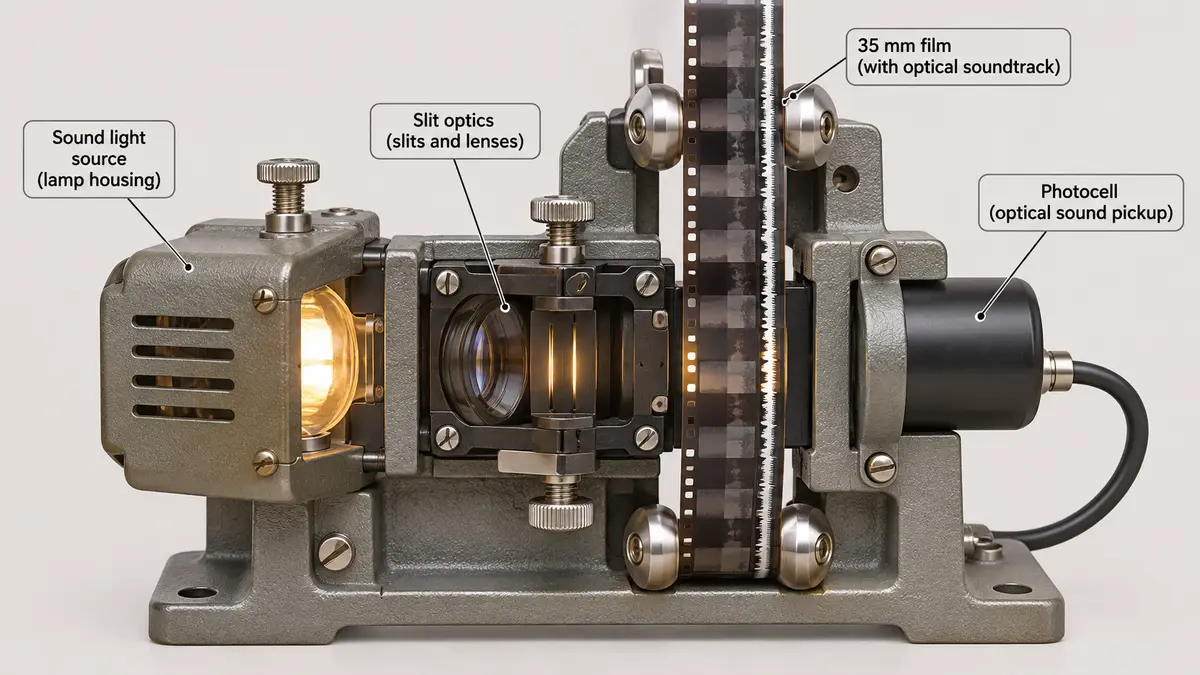
Name the projector model, film gauge, soundtrack type and whether the order is a complete sound head or a reader conversion. Specify the mounting face, shaft and drive interface, film path, sound drum, guide rollers and adjustment access. Agree the exciter light source, detector arrangement, output connections, power supply and compatibility with the existing sound processor.
Approve a sample on the intended projector using reference film and the intended processor. Agree checks for channel separation, noise, distortion, stable output and film handling. Ask for alignment instructions, wiring drawings, replacement detector and light-source details, and a record of the settings used during acceptance.
For electronic assemblies, check electromagnetic compatibility scope: the regulations cover electrical and electronic equipment liable to generate electromagnetic disturbance, subject to exceptions. Check hazardous-substance restrictions and exclusions for electrical equipment and spare parts. Establish whether the supplied product falls within electrical-equipment producer obligations; producers must register annually. Ask for compliance documents matching the actual assembly and assess any supplied mains power unit separately.
Worked duty example
Illustrative example, not a quote: 20 cine-projector optical sound head assemblies; illustrative order, not a quotation under 9007 92 00 90, invoiced at £10,000 free on board, with £900 of freight and insurance to the UK. The customs value is £10,900. Duty at 0% is £0. Import VAT at 20% is charged on the customs value plus duty, £10,900, so it is £2,180. With no duty, the only import tax is the VAT, which a VAT-registered importer can usually reclaim. The import duty and VAT guide explains each step.
Inspection checklist
Fit: compare mounting faces, shaft connections, cable exits and adjustment travel with the approved drawings and sample.
Sound: use reference film to check channel identity, separation, noise, distortion and output stability after warming up.
Film path: check drum rotation, roller alignment and film contact surfaces; inspect test film for scratches after running.
Delivery: inspect reader alignment, optical surfaces, connectors and transit damage; reconcile assembly identification, wiring drawings and agreed spare parts.
Working out your own order? Send us the product on WhatsApp and we reply the same working day: WhatsApp us
What goes wrong
A head can fit mechanically yet produce weak or distorted sound because its light source, detector or output does not match the soundtrack and processor. Poor alignment can reduce channel separation, while worn bearings or uneven film movement can make playback unstable. Test the approved combination rather than accepting a demonstration through the factory's own amplifier.
Transit can disturb reader alignment or damage exposed rollers and connectors. Photograph the assembly before installation, retain the acceptance settings and compare arrival tests with the approved sample. Agree who supplies replacement parts and alignment support. Our quality inspection guide explains how to turn these checks into an inspection brief.
Cambridge China Bridge sources these products for UK businesses, checking the factory and the documents before shipment. See factory verification. For components and parts, see sourcing for manufacturers.
Frequently asked questions
What is the UK import duty on optical sound heads from China?
The supplied tariff snapshot lists 0% for projector parts under 9007 92 00 90, with no anti-dumping or countervailing measures. Confirm that the supplied head belongs in that line.
Will an optical sound head fit my existing projector?
Check the mounting face, shaft and drive interface, film path, adjustment access and processor connections. Approve a sample fitted to the intended projector.
Do electronic sound heads need compliance checks?
Yes. Establish the assembly's scope under electromagnetic compatibility and hazardous-substance rules, and check electrical-equipment producer obligations. Request documents for the exact supplied configuration.
How should I test sound quality before shipment?
Use reference film with the intended projector and processor. Check channel separation, noise, distortion, output stability and film scratching, then record the accepted alignment settings.