Sourcing chestnut flour from China
Pure chestnut flour from China falls within the residual fruit and nut flour line, with duty at 8% rather than a range. Imported nut products must meet the same food hygiene standards as domestic food. Organic shipments need additional certification checks. Cambridge China Bridge sources chestnut flour.
Buying from China for a business? How our UK China sourcing agent service works · China sourcing agent for small orders and first imports
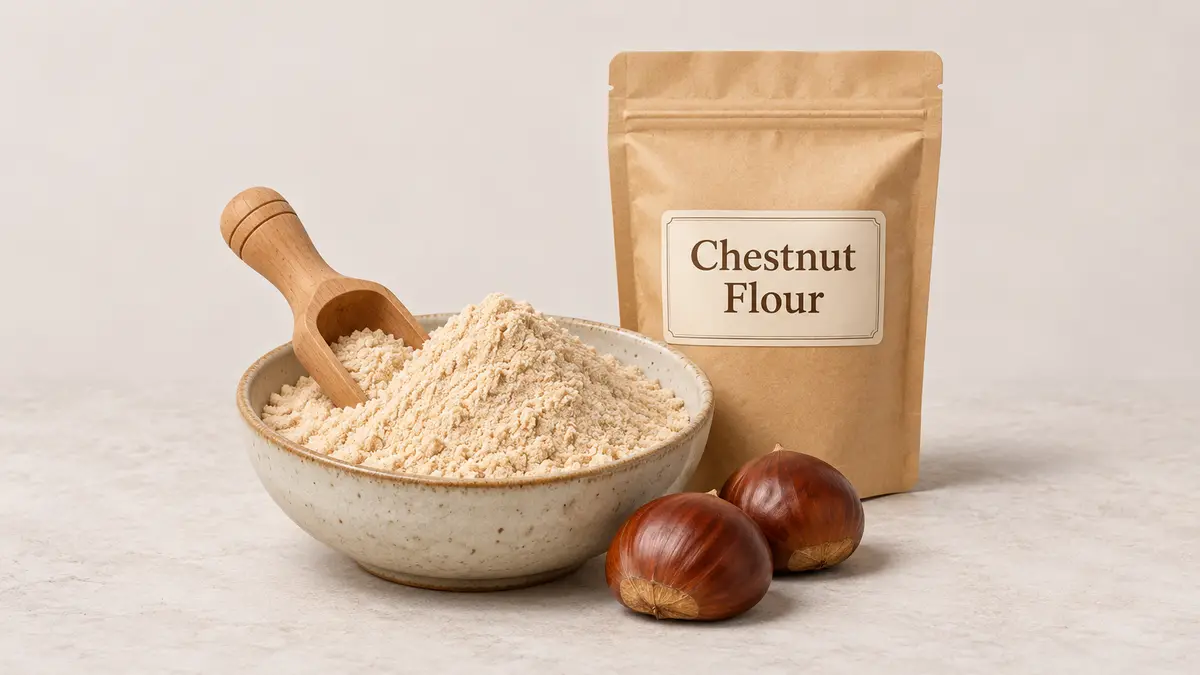
Chestnut flour classification and UK duty
Heading 1106 covers flour, meal and powder of dried pulses, sago, specified roots and tubers, and fruit and nuts. Pure chestnut flour fits the residual fruit and nut flour line, 1106 30 90 80, subject to confirmation of its composition. The table shows buying presentations using this same commodity line. See the wider flour guide for other products.
Read from the UK Trade Tariff on 29 September 2026, the supplied record gives Chinese-origin goods under this line an 8% duty. It lists no anti-dumping or countervailing duty and no suspension for this line. It attaches an import control of organic products. For organic flour from China entering Great Britain, obtain a certificate of inspection for each consignment and check the exporter’s control body and export country against the recognised organic registers.
Confirm the ingredients, processing and intended use with your customs broker before declaring the goods. A flour blend needs its own classification assessment. Use finding your commodity code to prepare the product description and supporting documents.
| Goods | Commodity code | Duty | Anti-dumping or countervailing duty on China |
|---|---|---|---|
| Pure chestnut flour, finely milled | 1106 30 90 80 | 8% | None |
Specify the chestnut, milling and baking performance
Specify edible chestnuts rather than water chestnuts, and ask the supplier to identify the botanical species. Agree whether the kernels are dried or roasted before milling, whether skins are removed, and whether the flour contains any added starch, cereal flour or sweetener. Keep an approved sample for comparison.
Agree particle size, moisture acceptance criteria, colour, flavour and intended use. Trial the sample in your actual cake, biscuit or pasta recipe. Ask for batch test reports covering the agreed microbiological and contaminant checks, together with information on shared milling equipment and cleaning between products.
Imported nut products must meet the same food hygiene standards and procedures as food produced in Great Britain. For organic purchasing, the importer must be UK-based and certified by an approved UK control body. Confirm the certification route before approving organic packaging.
Worked duty example
Illustrative example, not a quote: Illustrative trial pallet of bagged pure chestnut flour; FOB and freight values are illustrative under 1106 30 90 80, invoiced at £1,000 free on board, with £138 of freight and insurance to the UK. The customs value is £1,138. Duty at 8% is £91.04. Import VAT at 20% is charged on the customs value plus duty, £1,229.04, so it is £245.81. Import taxes total £336.85; a VAT-registered importer can usually reclaim the VAT, so the lasting cost is the £91.04 of duty. The import duty and VAT guide explains each step. This assumes the goods are standard-rated for VAT. Most food for human consumption is zero-rated, and animal feed can be too, in which case no import VAT is due, so check the rate for your product in HMRC's VAT Notice 701/14.
Inspection checklist
Identity: compare the flour and ingredient declaration with the approved sample; investigate unexpected starch, coarse skin particles or a changed roast flavour.
Condition: check for damp bags, hard caking, insects, foreign material and musty or rancid odours. Compare measured moisture and particle size with the agreed specification.
Packing: check inner-bag seals, bag weights and protection from moisture. Match batch markings on bags with the packing list and batch test reports.
Labels: check the food name, date marking and storage instructions against the approved artwork. Prepacked flour sold in Great Britain must carry the responsible food business operator’s UK address, or the UK importer’s address where applicable.
Working out your own order? Send us the product on WhatsApp and we reply the same working day: WhatsApp us
What goes wrong
Flour that looks acceptable can behave differently in a recipe when milling, roasting or moisture changes. Approve recipe performance as well as appearance. Keep suspect damp, infested or off-smelling bags apart while investigating; a visual inspection does not establish microbiological condition.
An organic claim creates additional import work. A supplier’s domestic certificate does not establish that the exporter’s control body is recognised for the shipment. Check that recognition and the consignment certificate before dispatch. Retail packs also need a suitable UK business address; approving only the Chinese artwork can leave labels needing correction.
Cambridge China Bridge sources these products for UK businesses, checking the factory and the documents before shipment. See factory verification. For repeat volumes, see container programmes.
Frequently asked questions
What is the UK import duty on chestnut flour from China?
The supplied tariff record gives 8% for 1106 30 90 80, with no listed anti-dumping or countervailing duty or suspension. Confirm that your product is pure chestnut flour and fits this line.
Can I import organic chestnut flour from China?
For Great Britain, use a UK-certified organic importer, obtain a certificate of inspection for each consignment and check the exporter’s control body and export country against the recognised registers.
What should I ask a chestnut flour factory to specify?
Ask for species, ingredients, drying or roasting process, skin removal, particle size, moisture criteria and batch test reports. Compare an approved sample in your own recipe.
Does retail chestnut flour need a UK address?
Prepacked food sold in Great Britain must include the responsible food business operator’s UK address. If that operator is outside the UK, include the UK importer’s address.