Sourcing taro flour from China
Edible taro flour from China has a supplied tariff rate of £138 per 1,000 kg under 1106 20 90 00, rather than a percentage duty range. Imported food must meet general food safety requirements. Specify the ingredients and processing method before approving samples. Cambridge China Bridge sources taro flour.
Buying from China for a business? How our UK China sourcing agent service works · China sourcing agent for small orders and first imports
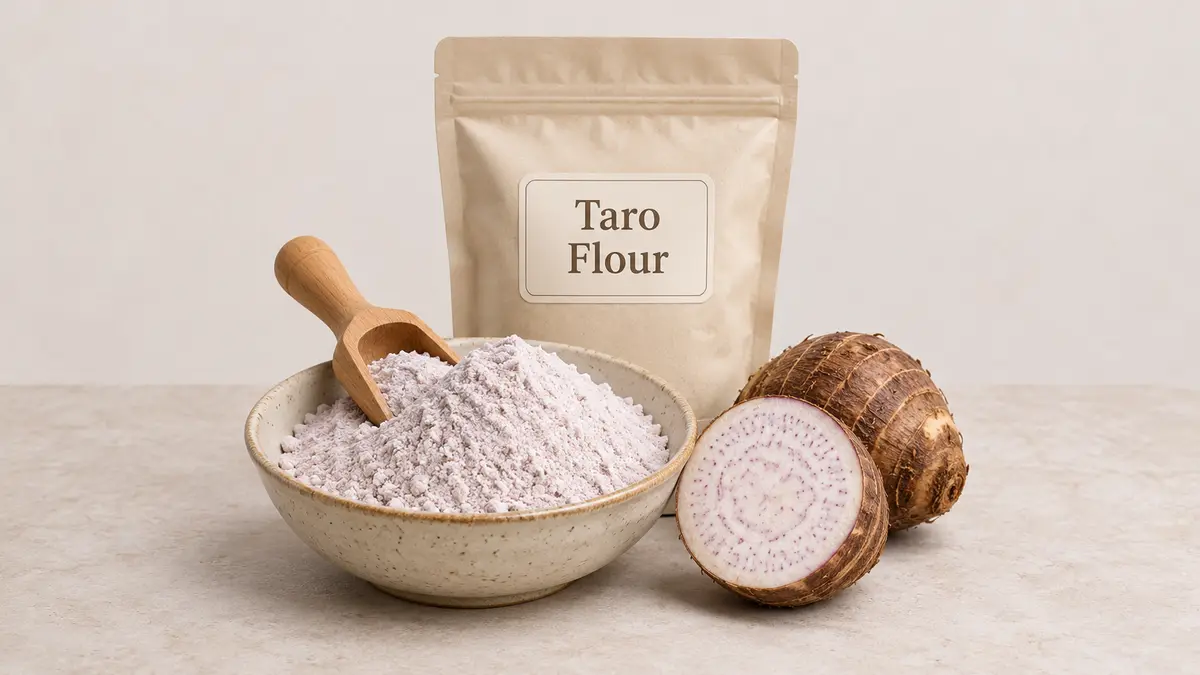
UK duty on taro flour
Read from the UK Trade Tariff on 29 September 2026, heading 1106 covers flour, meal and powder from specified plant products, including roots and tubers. The relevant edible taro flour line is 1106 20 90 00, with duty for goods from China of £138 per 1,000 kg. The supplied record lists no anti-dumping or countervailing duty and no suspension for this line. Duty is weight-based, so a percentage-of-value example would be misleading.
The tariff attaches import control of organic products. An organic importer must be based and certified in the UK, and organic food must use a recognised country, territory and control-body route. The exporter’s control body issues the certificate of inspection. Before ordering organic taro flour from China, ask your organic control body and customs broker to confirm the consignment requirements and certification route.
Give your broker the ingredient list, processing description and intended use to confirm the commodity code. Do not assume that a sweetened drink mix or flavoured preparation shares the plain flour classification. See the wider flour heading guide for other product families.
| Goods | Commodity code | Duty | Anti-dumping or countervailing duty on China |
|---|---|---|---|
| Edible taro flour, meal and powder | 1106 20 90 00 | £138.00 per 1000 kg | None |
Specify the taro ingredient and cooking performance
State whether you want milled taro alone or a blend. Request the full recipe, including added starch, sugar, colourings and flavourings. Record whether the taro is cooked before drying, the milling method, particle size, moisture specification and intended cooking instructions. Approve a sample in your actual dough, filling or beverage recipe, checking texture, sediment and colour after heating.
Food intended for human consumption must meet general food safety legal requirements. Agree a batch testing plan with a laboratory rather than relying on appearance or a generic supplier certificate. Use testing and certification support to define the evidence you need. A business selling or distributing the flour must register with its local authority.
Inspection checklist
Identity: match the batch recipe and production records to the approved taro flour specification; investigate undeclared substitutions.
Condition: inspect bag seals and liners, then check for dampness, hard lumps, insects, foreign matter and unusual odours.
Performance: compare particle texture, colour and cooking behaviour with the retained approved sample using the same recipe.
Documents: match bag identifiers to batch test reports and shipment records; compare labels with approved artwork and check organic paperwork where applicable.
What goes wrong
A supplier may use “taro powder” for a sweetened, coloured beverage blend while the buyer expects milled taro. A sample that works in a drink may fail in dough or a filling. Record the recipe and processing method, and require approval before either changes.
Moisture entering through damaged seals can leave powder caked or musty. Hold affected bags apart while you investigate and arrange testing. Visual inspection cannot establish food safety. Resolve mismatched batch records and organic certification questions before accepting the shipment for sale.
Cambridge China Bridge sources these products for UK businesses, checking the factory and the documents before shipment. See factory verification. For repeat volumes, see container programmes.
Frequently asked questions
What is the UK import duty on taro flour from China?
The supplied tariff record gives edible taro flour under 1106 20 90 00 a duty of £138 per 1,000 kg. It lists no anti-dumping or countervailing duty and no suspension for that line.
Is taro drink powder the same as taro flour?
Check the recipe. Drink powder may contain sugar, starch, colourings or flavourings. Specify milled taro explicitly and ask your broker to check the classification of any blend.
What should I check before buying organic taro flour?
Check your UK organic importer certification and the recognised certification route. Ask the exporter’s control body about the inspection certificate and have your broker confirm the consignment requirements.
How do I check taro flour when it arrives?
Check seals, dampness, lumps, odour and batch identifiers. Compare cooking performance with the approved sample and match test reports to the delivered batch. Hold questionable bags apart for investigation.