Sourcing almond flour from China
Almond flour from China has UK import duty of 8% under the relevant line, so there is no duty range within this family. Food hygiene and clear almond allergen information matter; organic shipments need an inspection certificate. Cambridge China Bridge sources almond flour.
Buying from China for a business? How our UK China sourcing agent service works · China sourcing agent for small orders and first imports
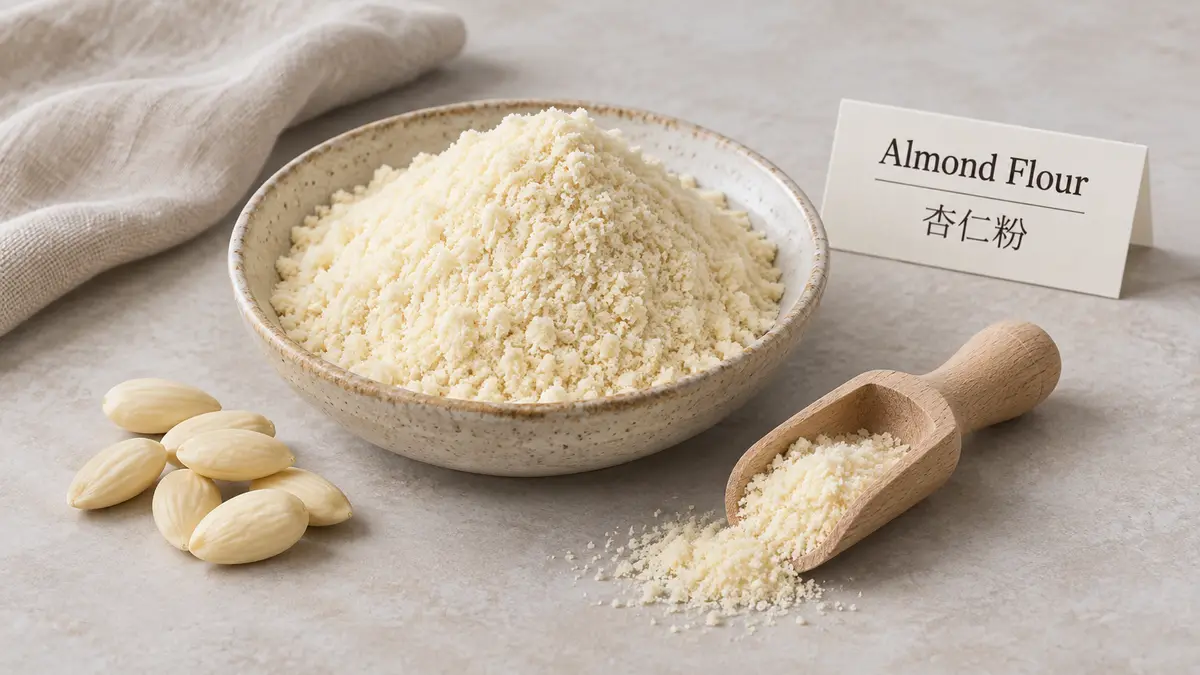
Almond flour classification and UK duty
Heading 1106 covers flour, meal and powder of dried pulses, sago, certain roots and tubers, and fruit and nuts. Plain almond flour falls within the residual fruit-and-nut line, 1106 30 90 80. The table describes buying forms under this same line. For the wider heading, see pulse, nut and fruit flours.
Read from the UK Trade Tariff on 29 September 2026, the supplied almond-flour line shows 8% duty for goods from China, with no anti-dumping or countervailing duty and no suspension listed. It attaches import control of organic products. Organic consignments from China need an inspection certificate issued by the exporter's control body. Your company must be based and certified in the UK to import organic products.
Confirm the ingredients and processing with your customs broker before using this code, particularly for sweetened powders or baking mixes. Use finding your commodity code and provide the product specification rather than relying on the supplier's description.
| Goods | Commodity code | Duty | Anti-dumping or countervailing duty on China |
|---|---|---|---|
| Plain blanched almond flour | 1106 30 90 80 | 8% | None |
Specify the almond and the grind
Specify sweet almond kernels, not apricot kernels, and state whether skins are removed. Agree fine flour or coarse meal, the particle-size profile, moisture, fat content, colour and intended baking use. Request the full composition, including any carriers or additives. Compare the production sample in your own recipe before approving bulk manufacture.
Imported nuts must meet the same food-hygiene standards as food produced in Great Britain. Ask for batch-linked results for aflatoxins and microbiological quality, alongside the factory's process and cleaning records. Agree the test scope through testing and certification. These checks should accompany sensory and baking trials.
Worked duty example
Illustrative example, not a quote: Illustrative trial order: 100 kg of blanched almond flour; FOB and freight values are illustrative under 1106 30 90 80, invoiced at £1,000 free on board, with £1,000 of freight and insurance to the UK. The customs value is £2,000. Duty at 8% is £160. Import VAT at 20% is charged on the customs value plus duty, £2,160, so it is £432. Import taxes total £592; a VAT-registered importer can usually reclaim the VAT, so the lasting cost is the £160 of duty. The import duty and VAT guide explains each step. This assumes the goods are standard-rated for VAT. Most food for human consumption is zero-rated, and animal feed can be too, in which case no import VAT is due, so check the rate for your product in HMRC's VAT Notice 701/14.
Inspection checklist
Identity and grind: compare skin content, colour and particle distribution with the approved sample; investigate unexpected bitterness or visible foreign material.
Freshness and condition: check for rancid odours, damp clumps, insects and damaged seals. Keep suspect bags separate while investigating.
Batch evidence: match bag markings, production records and laboratory reports. For organic stock, check that the inspection certificate describes the shipment.
Allergen labels: identify almonds clearly. Where an ingredients list is used, emphasise allergenic ingredients each time they appear. Food information for products sold in the UK must be in English.
Working out your own order? Send us the product on WhatsApp and we reply the same working day: WhatsApp us
What goes wrong
A sample can bake well while bulk flour has a different grind or skin content. This can change texture and appearance. Moisture ingress and poor seals can also leave flour clumped or stale. Agree acceptance criteria and retain a sealed production sample for comparison on arrival.
A shared mill may handle other nuts or cereals. Ask about segregation and cleaning before approving claims about absent allergens. Precautionary allergen labelling should follow a thorough risk assessment and be used only for a real cross-contamination risk that cannot be removed.
Cambridge China Bridge sources these products for UK businesses, checking the factory and the documents before shipment. See factory verification. For repeat volumes, see container programmes.
Frequently asked questions
What is the UK import duty on almond flour from China?
The supplied tariff reading shows 8% under 1106 30 90 80, with no trade remedy or suspension listed for that line. Confirm the classification against the actual ingredients and processing.
Can I import organic almond flour from China?
Organic consignments need an inspection certificate from the exporter's control body. Your company must be based and certified in the UK. Check the exporter and export country against the official organic registers.
Does almond flour need allergen labelling?
Almonds must be identified clearly as an allergen. UK food information must be in English.
What should I check before accepting a batch?
Compare grind, skin content, colour and baking performance with the approved sample. Check freshness, seals and batch-linked test reports. Investigate rancid odours, damp clumps or unexplained differences.