Sourcing chenille trimming cords from China
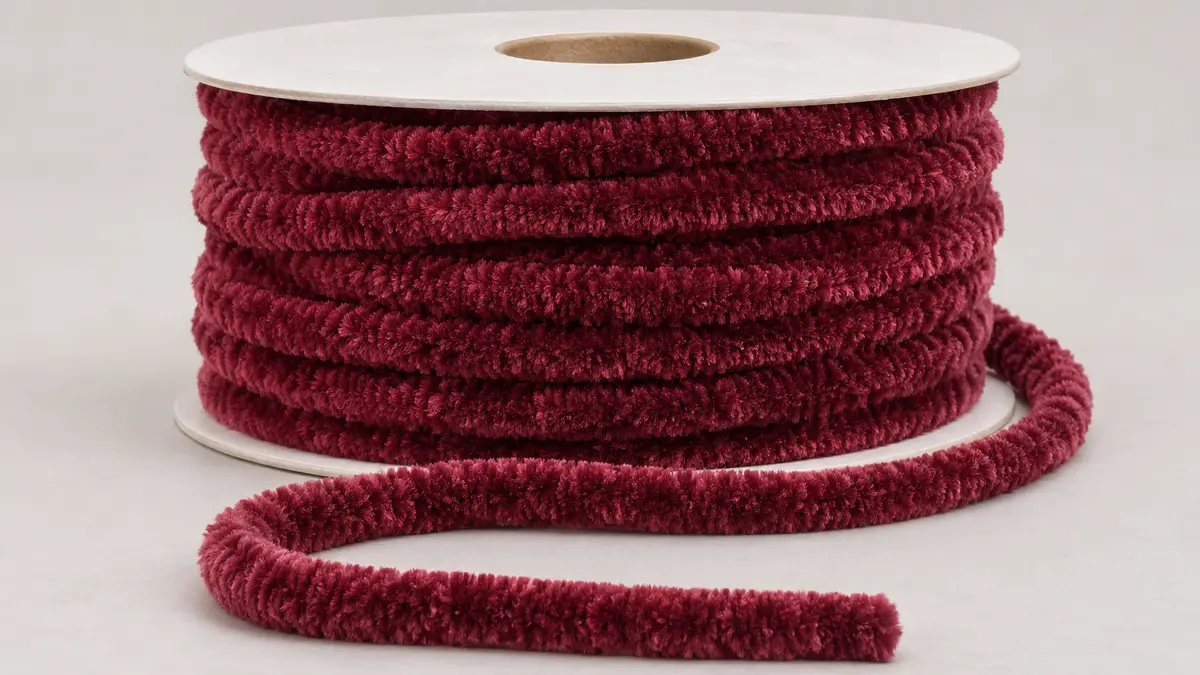
Chenille trimming cords from China covered by heading 5808 carry 4% UK duty across the listed lines. Decorative cords sold to consumers in Great Britain must be safe in normal or reasonably foreseeable use. Specify the pile, core and intended application. Cambridge China Bridge sources chenille trimming cords.
Buying from China for a business? How our UK China sourcing agent service works · China sourcing agent for small orders and first imports
4% duty on chenille trimming cords
Heading 5808 covers braids in the piece and ornamental trimmings in the piece without embroidery, other than knitted or crocheted, plus tassels, pompons and similar articles. This guide concerns chenille cords supplied as decorative trimming for sewing or furnishing. Send a sample and construction details to your customs broker rather than classifying from the word chenille alone.
Read from the UK Trade Tariff on 2 October 2026, both listed commodity lines carry 4% duty for goods from China. The supplied data lists no anti-dumping or countervailing duty, tariff suspension or attached import control. The table repeats those lines for different fibre options; these are not separate tariff subdivisions.
Confirm the commodity code against the actual construction before ordering. Braids in the piece and other ornamental trimming cords have different codes despite sharing the duty rate. For the wider heading, see gimp upholstery braid.
| Goods | Commodity code | Duty | Anti-dumping or countervailing duty on China |
|---|---|---|---|
| Cotton chenille braid, in the piece | 5808 10 00 00 | 4% | None |
| Cotton chenille ornamental trimming cord, other than braid | 5808 90 00 00 | 4% | None |
Specify the chenille pile and cord core
State the pile fibre and core fibre separately, finished diameter, pile coverage, colour reference, softness, flexibility and intended use. Agree tolerances for diameter and roll length, permitted joins, cut-end finish and winding tension. Approve a physical sample sewn onto the intended fabric, including corners and curves.
Ask for the fibre composition so garment customers can prepare their textile labels. Where fibre labelling is required, the label must show fibre content. Ask the relevant authority or your customs broker to confirm which UK REACH azo dye restrictions apply to dyed trims intended for skin contact, as discussed in our published trimming guide. Consumer cords supplied in Great Britain must be safe in normal or reasonably foreseeable use.
Worked duty example
Illustrative example, not a quote: 6,000 metres of polyester chenille trimming cord, illustrative only under 5808 90 00 00, invoiced at £6,000 free on board, with £600 of freight and insurance to the UK. The customs value is £6,600. Duty at 4% is £264. Import VAT at 20% is charged on the customs value plus duty, £6,864, so it is £1,372.80. Import taxes total £1,636.80; a VAT-registered importer can usually reclaim the VAT, so the lasting cost is the £264 of duty. The import duty and VAT guide explains each step.
Inspection checklist
Pile and core: rub and flex samples, check shedding, bald patches and exposed core, and compare diameter and pile coverage with the approved sample.
Colour: compare rolls with the approved colour sample under consistent lighting. Test rubbing and washing against the light fabric the cord will touch.
Sewing and care: sew a trial length around curves, then use the intended cleaning method. Check shrinkage, puckering, pile flattening and whether the core pulls through.
Rolls and identification: measure sampled roll lengths, inspect joins and crushed sections, and match colour, fibre description and batch identification to the packing list. See quality inspection explained.
Working out your own order? Send us the product on WhatsApp and we reply the same working day: WhatsApp us
What goes wrong
A plush sample can hide a weak construction. Bulk cord may shed pile, expose the core at bends or arrive flattened by tight winding. Different dye batches can look mismatched when neighbouring lengths are sewn onto the same cushion or curtain. Dark pile can also transfer colour onto pale fabric.
Keep an approved sewn sample and agree how the factory will handle joins and shade changes. Inspect cord after unwinding and after the intended care treatment. For children's clothing, decorative cords and loops must be safe; check the intended placement before approving the design.
Cambridge China Bridge sources these products for UK businesses, checking the factory and the documents before shipment. See factory verification. For own-brand ranges, see sourcing for brands.
Frequently asked questions
What is the UK import duty on chenille trimming cords from China?
The supplied tariff data shows 4% across the listed heading 5808 lines, with no listed anti-dumping or countervailing duty or tariff suspension.
Is chenille trimming cord the same as chenille yarn?
This guide covers decorative trimming cords. Send a sample, construction details and intended use to your customs broker; a supplier's chenille description alone is insufficient to select the code.
How do I check whether chenille cord will shed?
Rub and flex the cord, sew it around curves and clean it as intended. Compare loose pile, bald patches and exposed core with the approved sample.
Can I use chenille trimming cords on children's clothing?
Only where the finished clothing is safe. Check cord placement, loops and attachment before approving the design; decorative cords can create safety risks.