Sourcing cassava starch residue feed from China
UK duty on unblended cassava starch residue feed from China is 0% under the relevant other starch-residue line, so the rate is the same across these forms. Confirm applicable feed-business registration, feed material labelling and undesirable-substance requirements with the relevant feed authority before importing. Cambridge China Bridge sources cassava starch residue feed.
Buying from China for a business? How our UK China sourcing agent service works · China sourcing agent for small orders and first imports
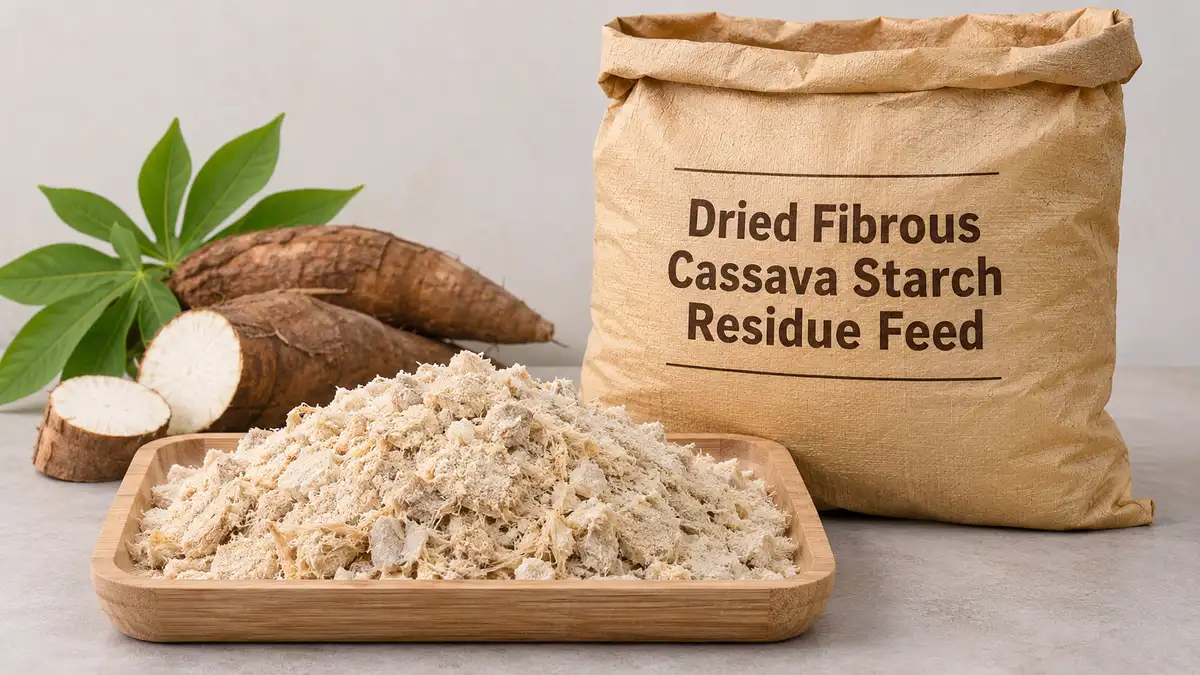
Cassava residue classification and duty
Read from the UK Trade Tariff on 29 September 2026, heading 2303 covers starch-manufacturing residues and other listed processing residues, including pellets. For unblended cassava starch residue, the relevant candidate is 2303 10 90 90, other starch-manufacturing residues. The forms shown share this commodity line; they are not separate tariff subdivisions. For other products, see the starch and brewing residues guide.
The supplied record gives this line 0% duty for goods from China, with no anti-dumping or countervailing duty and no suspension. It attaches organic import and waste import controls, plus an export waste control relevant to later exports. Confirm importer establishment and certification requirements, together with inspection-certificate requirements, with your customs broker and organic control body. Waste controls apply where the material is waste; confirm its status and the applicable shipment procedure before ordering.
Give your broker the cassava origin, starch-extraction process, physical form, intended feed use and details of any added ingredients to confirm the commodity code. Do not assume that a formulated feed containing cassava residue belongs in the same line. For imports into England subject to waste notification controls, the exporter must apply to the competent authority in the country of dispatch for consent.
| Goods | Commodity code | Duty | Anti-dumping or countervailing duty on China |
|---|---|---|---|
| Dried cassava starch residue pulp for feed | 2303 10 90 90 | 0% | None |
Specify the extraction residue and drying process
Specify residue from cassava starch extraction, rather than dried whole-root chips or pure cassava starch. Record whether it is dried pulp, ground material or pellets, and require disclosure of binders, preservatives and other ingredients. Ask for the factory's process description, drying method and batch analysis.
Agree moisture, residual starch, crude fibre, crude protein, ash and particle size against the intended ration. State whether results are reported as supplied or on a dry-matter basis. For pellets, agree durability and fines; for loose material, agree handling and dust expectations. Include hydrocyanic acid in the laboratory testing brief.
Confirm applicable feed-business registration, feed material naming, statutory label declarations and undesirable-substance requirements with the relevant feed authority. Confirm the appropriate feed material description and testing brief before approving bags or bulk documents. Use testing and certification support to arrange sampling and analysis.
Worked duty example
Illustrative example, not a quote: Illustrative order, not a quotation: 12 tonnes of dried cassava starch residue for feed under 2303 10 90 90, invoiced at £3,500 free on board, with £2,680 of freight and insurance to the UK. The customs value is £6,180. Duty at 0% is £0. Import VAT at 20% is charged on the customs value plus duty, £6,180, so it is £1,236. With no duty, the only import tax is the VAT, which a VAT-registered importer can usually reclaim. The import duty and VAT guide explains each step. This assumes the goods are standard-rated for VAT. Most food for human consumption is zero-rated, and animal feed can be too, in which case no import VAT is due, so check the rate for your product in HMRC's VAT Notice 701/14.
Inspection checklist
Identity: match the starch-extraction process and physical form to the contract; investigate root chips, excess peel, grit or undeclared ingredients.
Analysis: independently sample the shipment and compare moisture, starch, fibre, protein and ash with the agreed specification; obtain the hydrocyanic acid and contaminant results for that lot.
Arrival condition: check for damp bags, mould, heating, insects, caking and unusual odours; compare pellet breakage and fines with loading samples.
Documents and packaging: match batch references across bags, analysis reports and delivery documents; check net weight, seals, feed declarations and any organic paperwork.
Working out your own order? Send us the product on WhatsApp and we reply the same working day: WhatsApp us
What goes wrong
A supplier's sample can differ from the delivered extraction residue. Changes in residual starch, fibre or ash alter feeding value, while extra water increases the weight without increasing dry material. Poor drying or water entering damaged bags can cause caking and mould. Compare independently collected loading and arrival samples through the quality inspection guide.
A starch analysis alone does not answer the hydrocyanic acid question. Ask the laboratory to assess the actual lot, and keep suspect material separate while investigating. Missing organic documents or an unresolved waste classification can also disrupt clearance. Agree the product identity, analysis and document checklist before loading.
Cambridge China Bridge sources these products for UK businesses, checking the factory and the documents before shipment. See factory verification. For repeat volumes, see container programmes.
Frequently asked questions
What is the UK import duty on cassava starch residue feed from China?
The supplied tariff record gives 2303 10 90 90 a 0% duty rate for goods from China, with no anti-dumping or countervailing duty and no suspension. Confirm that your product belongs in this line.
Is cassava starch residue the same as cassava chips?
No. Specify the pulp left after starch extraction. Whole-root chips are a different product. Ask for the process description and batch starch, fibre and ash results.
What should I test in cassava starch residue feed?
Agree moisture, residual starch, fibre, protein and ash tests, plus hydrocyanic acid and relevant contaminants. Sample the shipment independently and match each report to its batch.
Does cassava starch residue automatically count as waste?
No. Waste shipment controls apply if the material is waste. Ask your broker and the relevant authority to confirm its status and the applicable procedure before shipping.