Sourcing Beach Windbreaks from China
Beach windbreaks within heading 6306 carry a flat 12% UK duty from China across the supplied lines. Consumer products must be safe in normal or reasonably foreseeable use. Confirm the fabric, pole construction and anchoring before ordering. Cambridge China Bridge sources beach windbreaks.
Buying from China for a business? How our UK China sourcing agent service works · China sourcing agent for small orders and first imports
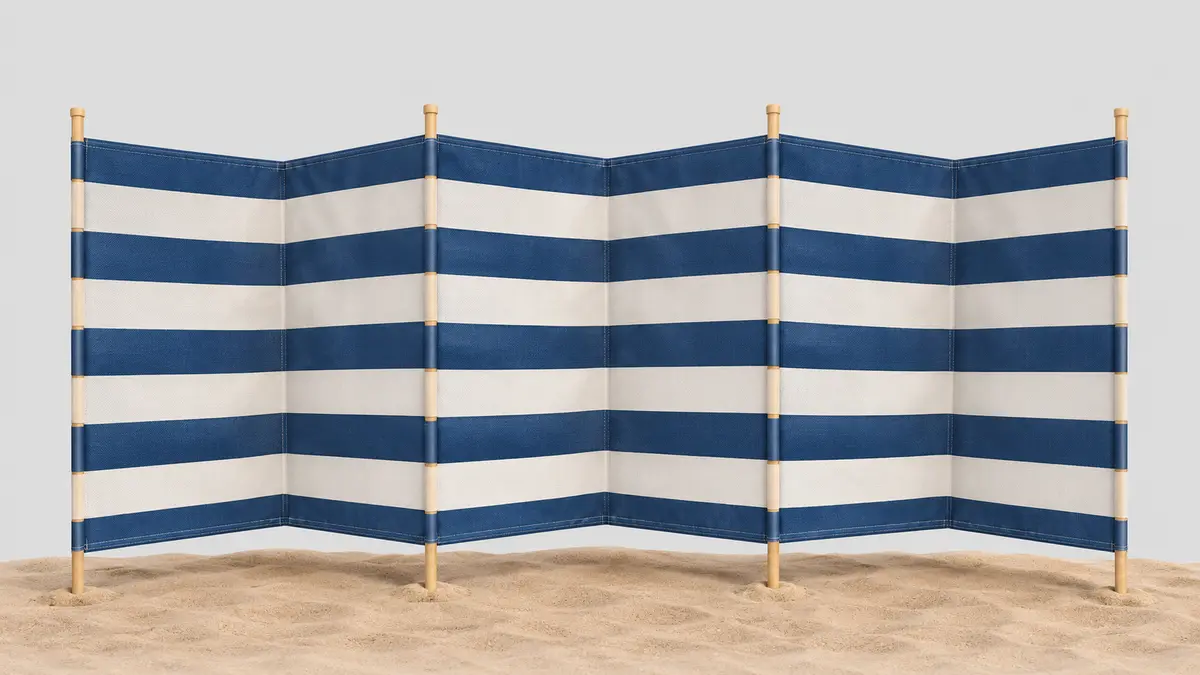
Beach windbreak duty and classification
Read from the UK Trade Tariff on 11 December 2026, heading 6306 covers tarpaulins, awnings, sunblinds, tents, sails and camping goods. For textile beach windbreaks, assess the other camping-goods lines against the finished product and fibre composition. The table also includes separately supplied tarpaulins and awnings for a coordinated beach range; these are not interchangeable codes for a complete windbreak.
The supplied lines carry a flat 12% duty for goods from China. The record shows no anti-dumping or countervailing duty and no attached import controls. The camping-goods and awning lines shown have no suspensions. Elsewhere in the heading, the tent suspension is restricted to tents for setting up field hospitals; it does not provide relief for ordinary beach windbreaks.
Confirm the commodity code using photographs, fabric composition, coating, pole materials and the complete packing list. Treat the windbreak descriptions in the table as classification candidates to confirm with your customs broker. See garden shade sails for the wider heading.
| Goods | Commodity code | Duty | Anti-dumping or countervailing duty on China |
|---|---|---|---|
| Cotton camping goods: candidate line for cotton beach windbreaks | 6306 90 00 19 | 12% | None |
| Other textile camping goods: candidate line for synthetic beach windbreaks | 6306 90 00 90 | 12% | None |
| Synthetic-fibre tarpaulins and awnings supplied separately | 6306 12 00 00 | 12% | None |
| Other textile tarpaulins and awnings supplied separately | 6306 19 00 00 | 12% | None |
Specify panels, poles and sand anchoring
Specify erected length and height, panel layout, fabric composition and weight, weave, coating, print placement and packed dimensions. Agree seam construction, reinforced pole sleeves, sleeve closures and replaceable components. State whether the intended use is on loose sand or firmer ground, and agree an anchoring arrangement for that surface.
Define pole material, diameter, finish, joints, caps and ground tips. Ask for evidence supporting the supplier's proposed wind limits using the complete assembly and stated anchoring method. Agree illustrated pitching, safe handling, weather-response, drying and storage instructions.
Consumer products must be safe in normal or reasonably foreseeable use, and safety compliance should be demonstrated before sale. Textile labels must show fibre content. REACH restrictions limit, ban or set conditions on substances. Ask for material information covering fabric, prints and coatings so applicable restrictions can be checked through testing and certification.
Worked duty example
Illustrative example, not a quote: 12 wholesale cartons of cotton beach windbreaks, illustrative only under 6306 90 00 19, invoiced at £9,000 free on board, with £800 of freight and insurance to the UK. The customs value is £9,800. Duty at 12% is £1,176. Import VAT at 20% is charged on the customs value plus duty, £10,976, so it is £2,195.20. Import taxes total £3,371.20; a VAT-registered importer can usually reclaim the VAT, so the lasting cost is the £1,176 of duty. The import duty and VAT guide explains each step.
Inspection checklist
Fabric and stitching: compare dimensions, colour, print alignment, seams and sleeve reinforcement with the approved sample. Check rubbing and colour transfer using the agreed method.
Poles and fittings: assemble the finished set; check straightness, joint retention, caps, ground tips and rough edges. Look for splinters, cracked tubing and loose fittings.
Anchoring and assembly: pitch the windbreak on the agreed surface; check sleeve fit, fabric tension, guy attachments and supplied stakes against the approved configuration.
Packing and arrival: check fibre labels, instructions, contents and carry bags. Open cartons for damp fabric, mould, bent poles and puncture damage. Arrange inspection before dispatch.
Working out your own order? Send us the product on WhatsApp and we reply the same working day: WhatsApp us
What goes wrong
A sample can look tidy indoors while pole sleeves split under tension or joints separate during pitching. Loose sand can expose weaknesses that a hard-floor demonstration misses. Agree an assembled test with the intended anchoring and inspect seams, sleeves and joints afterwards.
Salt exposure, damp packing and repeated rolling can reveal corrosion, colour transfer or coating damage. Ask for evidence matching any wind-resistance or sun-protection claim. Freeze the approved fabric, poles, fittings and packing method in the order, and require approval before substitutions.
Cambridge China Bridge sources these products for UK businesses, checking the factory and the documents before shipment. See factory verification. For own-brand ranges, see sourcing for brands.
Frequently asked questions
What is the UK import duty on beach windbreaks from China?
The supplied heading 6306 record gives a flat 12% across its lines, including the other camping-goods candidates. Confirm the finished windbreak's commodity code before declaring it.
Which commodity code covers a beach windbreak?
Check 6306 90 00 19 for cotton camping goods and 6306 90 00 90 for other textile camping goods. These are candidates; confirm against the finished design, fabric and supplied set.
How should I check a wind-resistant beach windbreak?
Ask for evidence matching the complete panel, pole and anchoring configuration. Pitch the sample on the intended surface and agree acceptance criteria before production.
What should I inspect when beach windbreaks arrive?
Check pole damage, joint retention, sleeve stitching, panel dimensions, colour transfer, missing fittings and damp packing. Assemble a finished set and compare it with the approved sample.