Sourcing BMS boards from China
Battery management system boards classified under heading 8537 carry a standard UK duty of 2% from China; conditional suspensions are not a general exemption. For Great Britain, establish whether the board is a finished product or an input for further manufacture before deciding its conformity route. Cambridge China Bridge sources battery management system boards.
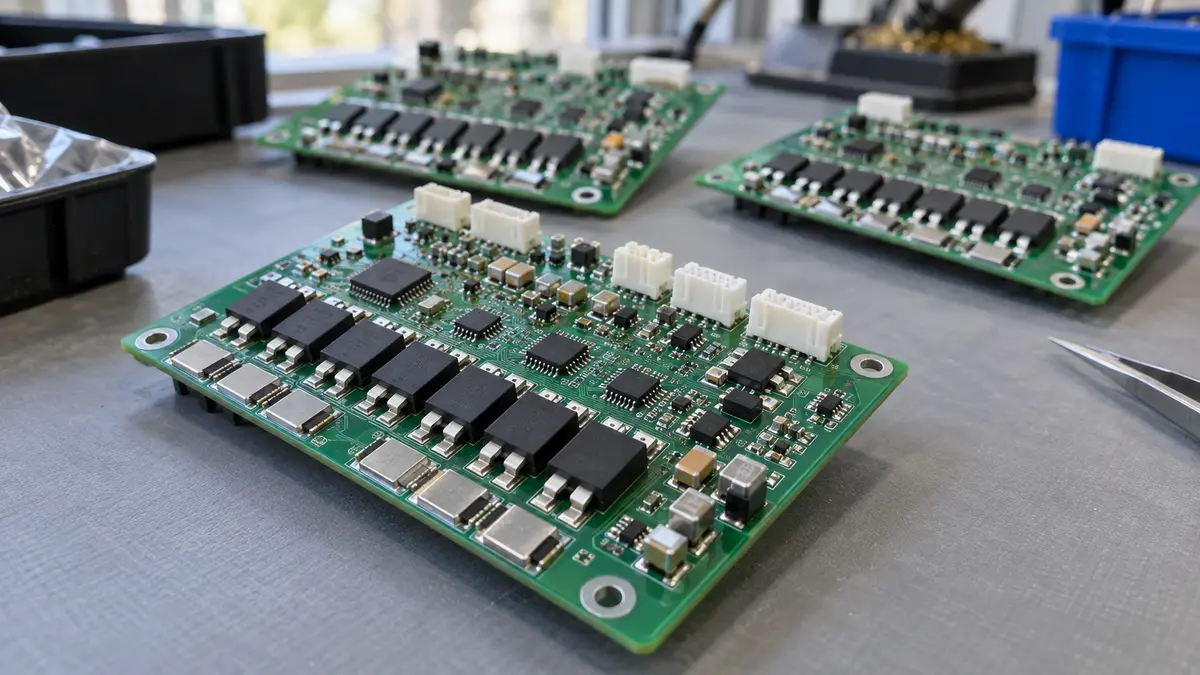
Duty on battery management system boards
Heading 8537 covers assemblies for electrical control or distribution. A battery management board's circuitry, switching functions, programmable memory and voltage determine whether it fits this heading and which line applies. The table gives classification candidates, not interchangeable codes. The higher-voltage lines describe complete control assemblies and should not be selected merely because a board monitors a high-voltage battery.
Read from the UK Trade Tariff on 30 September 2026, the selected lines carry 2% standard duty for goods from China, with no anti-dumping or countervailing measures shown. Conditional suspensions at 0.00 % cover specified products or authorised uses, rather than battery management boards generally. The tariff also attaches fluorinated greenhouse gas import control: tell your broker whether the goods contain or rely on these gases and confirm the applicable declaration requirement.
Confirm the commodity code using the schematic, component list, operating voltage and intended use before ordering. For the related product family, see battery-monitoring integrated circuits.
| Goods | Commodity code | Duty | Anti-dumping or countervailing duty on China |
|---|---|---|---|
| Other programmable memory controllers, not exceeding 1,000 V | 8537 10 91 99 | 2% | None |
| Other electrical control boards, not exceeding 1,000 V | 8537 10 98 99 | 2% | None |
| Other control assemblies exceeding 1,000 V but not exceeding 72.5 kV | 8537 20 91 90 | 2% | None |
| Other control assemblies exceeding 72.5 kV | 8537 20 99 90 | 2% | None |
Specify the battery pack and protection behaviour
Specify cell chemistry, series configuration, pack voltage range, continuous and peak current, balancing method, temperature sensors and connector pinout. Separate the board's own supply voltage from the voltage it measures or switches. Agree protection thresholds, fault recovery, standby consumption and how the board communicates with the charger or host controller.
Freeze the schematic, component list and firmware revision with the approved sample. Ask for protection test records and thermal results under your intended load and mounting conditions. Include disconnected sensors, broken sense wires and charger faults in the agreed test plan.
For Great Britain, distinguish boards imported for further manufacture from separately supplied finished products. Under the electromagnetic compatibility guidance, the finished-product manufacturer carries ultimate compliance responsibility for inputs imported for further manufacture. Separately marketed components may need their own conformity assessment. Electrical Equipment (Safety) Regulations cover most equipment operating between 50 and 1,000 volts alternating current or 75 and 1,500 volts direct current. Also establish whether hazardous-substance restrictions apply; importers are responsible for in-scope equipment.
Worked duty example
Illustrative example, not a quote: 20 battery management system boards for a pilot build; illustrative values under 8537 10 98 99, invoiced at £1,800 free on board, with £636 of freight and insurance to the UK. The customs value is £2,436. Duty at 2% is £48.72. Import VAT at 20% is charged on the customs value plus duty, £2,484.72, so it is £496.94. Import taxes total £545.66; a VAT-registered importer can usually reclaim the VAT, so the lasting cost is the £48.72 of duty. The import duty and VAT guide explains each step.
Inspection checklist
Identity: check board revision, firmware, component markings and connector orientation against the approved sample and component list.
Protection: use a controlled test fixture to check voltage, current and temperature trips, sensor faults and recovery against the agreed settings.
Load and balancing: check heating, current measurement and balancing behaviour under the agreed pack simulation and load conditions.
Arrival condition: inspect solder joints, contamination, damaged connectors and protective packaging; match batch identification to the factory test records. Plan quality inspection around these checks.
Working out your own order? Send us the product on WhatsApp and we reply the same working day: WhatsApp us
What goes wrong
A board can power up while using the wrong chemistry settings, reversed sense connections or unsuitable recovery logic. Accepting a supplier's current rating without checking cooling and mounting conditions can leave the assembled pack overheating. Test the approved sample with the intended charger and host controller before releasing production.
Component substitutions and unrecorded firmware changes can alter protection behaviour between batches. Agree written approval for changes and retain the tested configuration. A conformity document for another board revision does not resolve those differences; ask for evidence matching the product you will supply.
Cambridge China Bridge sources these products for UK businesses, checking the factory and the documents before shipment. See factory verification. For components and parts, see sourcing for manufacturers.
Frequently asked questions
What is the UK import duty on BMS boards from China?
The selected heading 8537 lines carry 2% standard duty from China. No anti-dumping or countervailing measures are shown. Conditional suspensions are not a general exemption for BMS boards.
Which commodity code should I use for a BMS board?
Check the schematic, switching functions, programmable memory and operating voltage. The table lists candidates; confirm the exact code rather than classifying from the supplier's product name.
Does every bare BMS board need its own conformity marking?
Establish its supply route. Electromagnetic compatibility guidance distinguishes inputs imported for further manufacture from separately marketed components, which may require individual assessment and marking.
What should I test before accepting BMS boards?
Check protection trips and recovery, balancing, current measurement, heating, sensor faults, connector pinout and firmware revision against the approved pack specification.