Sourcing parquet panels from China
Assembled wooden parquet panels from China carry 0% to 2% UK duty, depending on their construction and whether they are for mosaic floors. Importers first placing covered timber products on the Great Britain market must apply timber due diligence. Cambridge China Bridge sources assembled wooden parquet flooring panels.
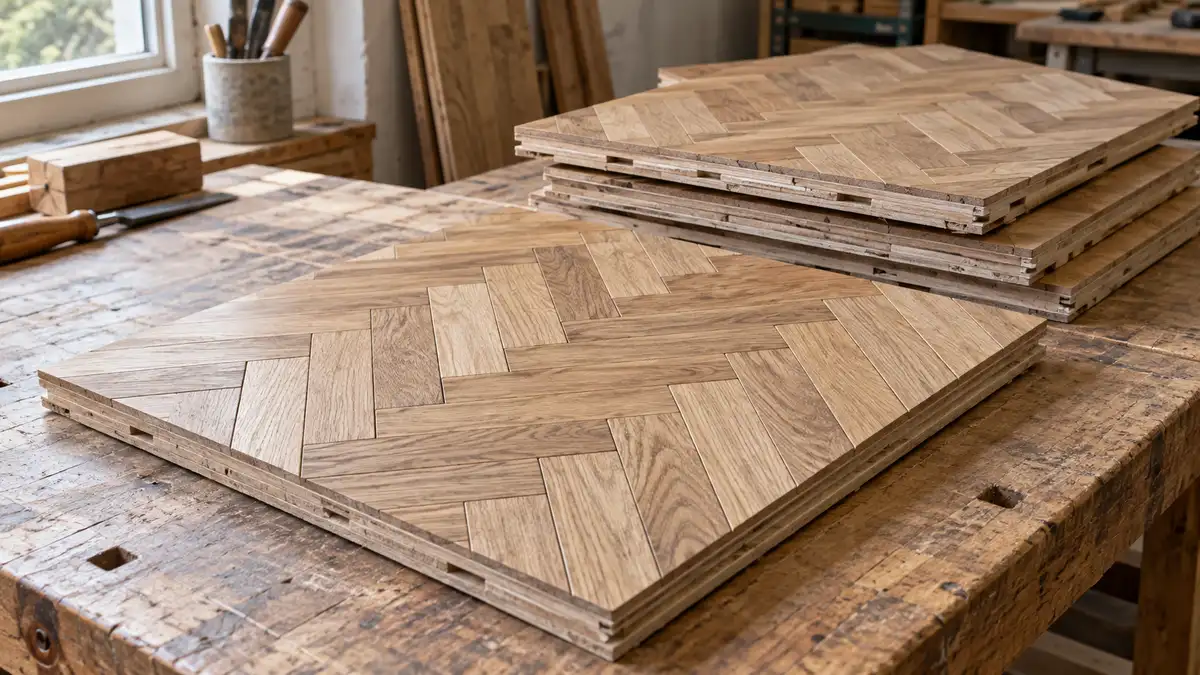
Duty depends on the panel construction
Heading 4418 includes assembled flooring panels within builders’ joinery and carpentry of wood. This guide covers assembled parquet panels, including wooden mosaic and multilayer panels. See the wider doors and flooring guide for other products within the heading. For concrete formwork sourcing, see wooden shuttering panels.
Read from the UK Trade Tariff on 30 September 2026, wooden mosaic panels and bamboo mosaic panels carried 2% duty from China. Multilayer wooden panels and other assembled wooden panels carried 0%. The selected lines show no anti-dumping or countervailing duty and no suspension. CITES import and export controls attach to the wooden mosaic and other wooden panel lines. The tariff also lists a cultural-goods export licence control; ask your customs broker about any planned onward export. For bamboo sheet materials, see our bamboo plywood sourcing guide.
For CITES-controlled specimens entering Great Britain from China, apply for the relevant permit and contact the Chinese management authority for the corresponding export document. Confirm the species and applicable documentation before ordering. Give your broker the layer structure, wear-layer material and panel layout to confirm the commodity code.
| Goods | Commodity code | Duty | Anti-dumping or countervailing duty on China |
|---|---|---|---|
| Wooden mosaic flooring panels | 4418 74 00 00 | 2% | None |
| Multilayer wooden flooring panels | 4418 75 00 00 | 0% | None |
| Other assembled wooden flooring panels | 4418 79 00 00 | 0% | None |
| Mosaic flooring panels of bamboo or with a bamboo wear layer | 4418 73 10 00 | 2% | None |
Specify the parquet pattern and layer structure
Define the assembled pattern, panel dimensions, total thickness, wear-layer thickness, backing and joint profile. Name the species in every wooden layer, agree the colour and knot allowance, and retain an approved sample. Specify moisture acceptance criteria, finish, installation method and the intended use with underfloor heating where relevant. For doorway components, see our wooden door thresholds guide.
Covered timber products first placed on the Great Britain market require timber due diligence. Obtain harvest-origin and legality documents for the face and core before shipment. Confirm with the relevant authority which performance standard applies to the wood flooring and whether a declaration of performance is required; request relevant test reports for the exact panel construction. Legitimately CE-marked construction products can continue to be supplied to the Great Britain market.
Worked duty example
Illustrative example, not a quote: Illustrative order: 2,400 square metres of multilayer oak parquet panels under 4418 75 00 00, invoiced at £60,000 free on board, with £3,500 of freight and insurance to the UK. The customs value is £63,500. Duty at 0% is £0. Import VAT at 20% is charged on the customs value plus duty, £63,500, so it is £12,700. With no duty, the only import tax is the VAT, which a VAT-registered importer can usually reclaim. The import duty and VAT guide explains each step.
Inspection checklist
Pattern and joints: lay panels from different cartons together and check pattern alignment, squareness, gaps and joint height differences against the approved sample.
Layers and bonding: examine cut samples for wear-layer thickness, core construction, voids and separation; compare them with the agreed specification.
Moisture and finish: record moisture readings at packing and arrival, inspect for cupping or mould, and check colour, coating coverage and surface damage.
Documents and packing: match batch labels to the performance reports and timber-origin file. At inspection, check corner protection, wrapping and signs of water entry.
Working out your own order? Send us the product on WhatsApp and we reply the same working day: WhatsApp us
What goes wrong
A showroom sample can conceal inconsistent production. Panels from different cartons may not align, the wear layer may be thinner than agreed, or the backing may change without approval. Moisture changes can cause cupping and open joints; weak bonding can cause layers to separate.
A report for a different finish or layer structure does not establish the performance of the ordered panel. Resolve mismatched documents, untraceable timber origins and missing CITES documentation before shipment. Keep rejected samples and photographs so the factory can identify the affected batch.
Cambridge China Bridge sources these products for UK businesses, checking the factory and the documents before shipment. See factory verification. For repeat volumes, see container programmes.
Frequently asked questions
What is the UK import duty on parquet panels from China?
The selected mosaic flooring lines carry 2%; multilayer wooden panels and other assembled wooden panels carry 0%. The tariff snapshot shows no anti-dumping or countervailing duty on these lines.
Do parquet panels need timber due diligence?
Yes, for covered timber products first placed on the Great Britain market. Obtain species, harvest-origin and legality evidence for the wooden face and core.
Do wooden parquet panels need CITES permits?
Check the species and listing scope. The tariff attaches CITES import controls to wooden mosaic and other wooden panel lines; controlled specimens need the relevant documentation.
How do I check parquet panels before shipment?
Lay panels from different cartons together, measure the wear layer, check moisture and bonding, and compare the finish and pattern with the approved sample.