Sourcing alfalfa hay from China
Alfalfa hay carries 0% UK tariff duty, but Chinese-origin hay cannot be imported into Great Britain under the published country authorisation. China is absent from its permitted origins. Cambridge China Bridge checks whether a product can be imported before any order is placed.
Buying from China for a business? How our UK China sourcing agent service works · China sourcing agent for small orders and first imports
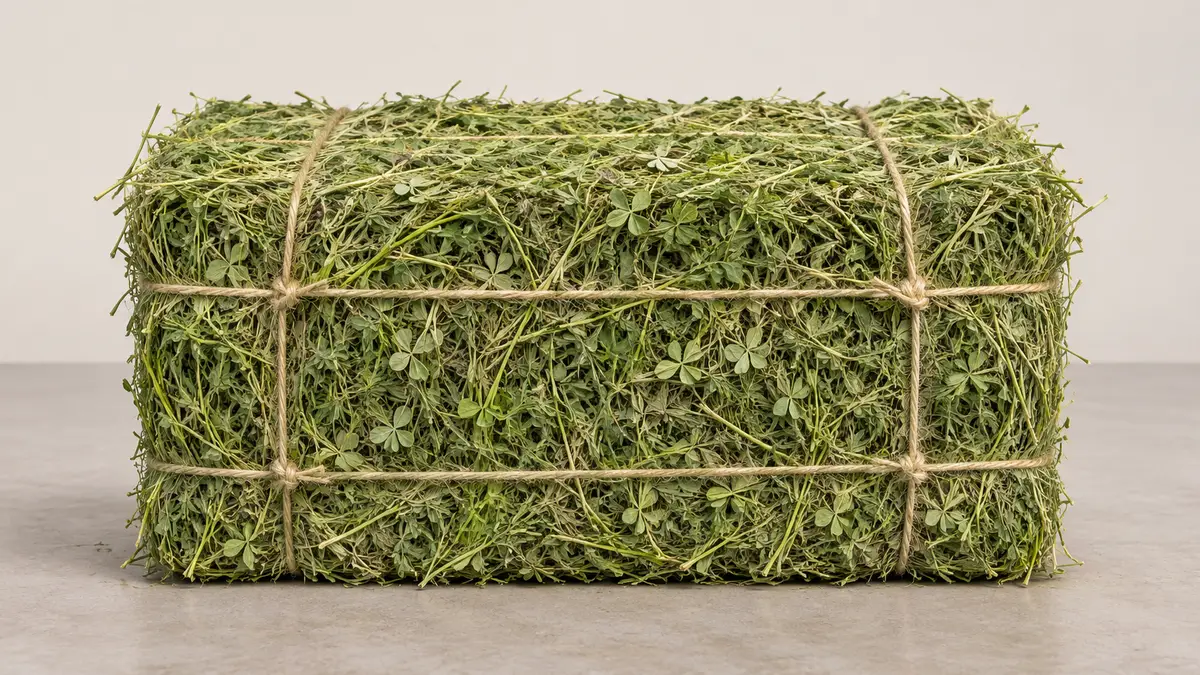
Zero duty, but an import restriction
Read from the UK Trade Tariff on 29 September 2026, heading 1214 covers hay, lucerne and other forage products. Alfalfa hay falls within the hay line, 1214 90 90 20, carrying 0% duty for goods from China. The supplied tariff record lists no anti-dumping or countervailing duty and no suspension, but attaches an import prohibition and an organic import control.
Chinese-origin alfalfa hay cannot be imported into Great Britain under the published hay authorisation: China is absent from the authorised origins. A zero tariff rate does not establish permission to import. Ask your customs broker to confirm the prohibition before committing to a supplier. Treat the worked figures as arithmetic illustrations only, not as a shipment proposal.
The tariff also attaches an organic import control. Confirm its requirements with your customs broker and organic control body; organic certification does not resolve the country restriction. Confirm the commodity code using the actual product form. Meal and pellets have a separate line; see the alfalfa pellets guide for the wider heading.
| Goods | Commodity code | Duty | Anti-dumping or countervailing duty on China |
|---|---|---|---|
| Alfalfa hay in bales | 1214 90 90 20 | 0% | None |
Specify the hay and establish admissibility
Resolve destination admissibility before developing a purchase specification. For an overseas destination, obtain confirmation of its own import requirements rather than applying the Great Britain position.
Describe the product as alfalfa hay and specify whether it is loose, chopped, baled or compressed. Agree the harvest lot, cutting stage, leaf retention, stem coarseness, moisture specification, foreign material allowance and packaging. Request representative samples and a batch report for the nutritional characteristics your customer needs.
Worked duty example
Illustrative example, not a quote: 500 kg of baled alfalfa hay; illustrative figures only, not an admissible China-to-Great-Britain order under 1214 90 90 20, invoiced at £900 free on board, with £2,500 of freight and insurance to the UK. The customs value is £3,400. Duty at 0% is £0. Import VAT at 20% is charged on the customs value plus duty, £3,400, so it is £680. With no duty, the only import tax is the VAT, which a VAT-registered importer can usually reclaim. The import duty and VAT guide explains each step. This assumes the goods are standard-rated for VAT. Most food for human consumption is zero-rated, and animal feed can be too, in which case no import VAT is due, so check the rate for your product in HMRC's VAT Notice 701/14.
Inspection checklist
Identity: compare leaf and stem material with the agreed sample; inspect for grass, weeds and other substituted material.
Condition: open representative bales and check internal moisture, mould, musty odour, discolouration and excessive dust.
Packing: check bale dimensions, weight, compression, bindings and wrapping against the specification; inspect for water damage and torn packaging.
Batch records: match harvest and packing lots to samples, test reports and packing documents. For an admissible destination, repeat condition checks on arrival; use the inspection guide to brief the inspector.
Working out your own order? Send us the product on WhatsApp and we reply the same working day: WhatsApp us
What goes wrong
The main purchasing mistake is treating zero duty as permission to import. China is not an authorised origin under the published hay route, so do not place a Great Britain order on the strength of a supplier's promise to clear customs.
Quality problems to check for include leaf loss during compression, coarse stems replacing leafy material, mixed harvest lots, stones, weeds and damp bale centres. An attractive outer face can conceal poor material inside. Specify how sampling reaches the bale interior and record arrival condition before unloading records and packaging are lost.
Cambridge China Bridge sources these products for UK businesses, checking the factory and the documents before shipment. See factory verification. For repeat volumes, see container programmes.
Frequently asked questions
What is the UK import duty on alfalfa hay from China?
The supplied tariff record shows 0% for 1214 90 90 20, with no anti-dumping or countervailing duty. It also attaches an import prohibition; zero duty does not mean the hay can enter Great Britain.
Can I import Chinese alfalfa hay into Great Britain?
No, under the published hay country authorisation. China is absent from its authorised origins. Confirm the position with your customs broker before ordering.
Does organic certification make Chinese hay admissible?
It does not resolve the country restriction. The tariff separately attaches an organic import control; confirm its requirements with your customs broker and organic control body.
What should I check in an alfalfa hay sample?
Check leaf retention, stem coarseness, internal moisture, mould, dust, weeds and stones. Compare material from inside the bale with the agreed sample and match it to the harvest lot.