Sourcing aircraft-grade birch plywood from China
The relevant birch-faced plywood lines carry 6% UK duty from China, with no trade remedy or suspension recorded. Confirm timber due-diligence obligations for first placing plywood on the Great Britain market with the relevant authority. Specify every veneer and verify batch performance before accepting an aircraft-grade claim. Cambridge China Bridge sources aircraft-grade birch plywood.
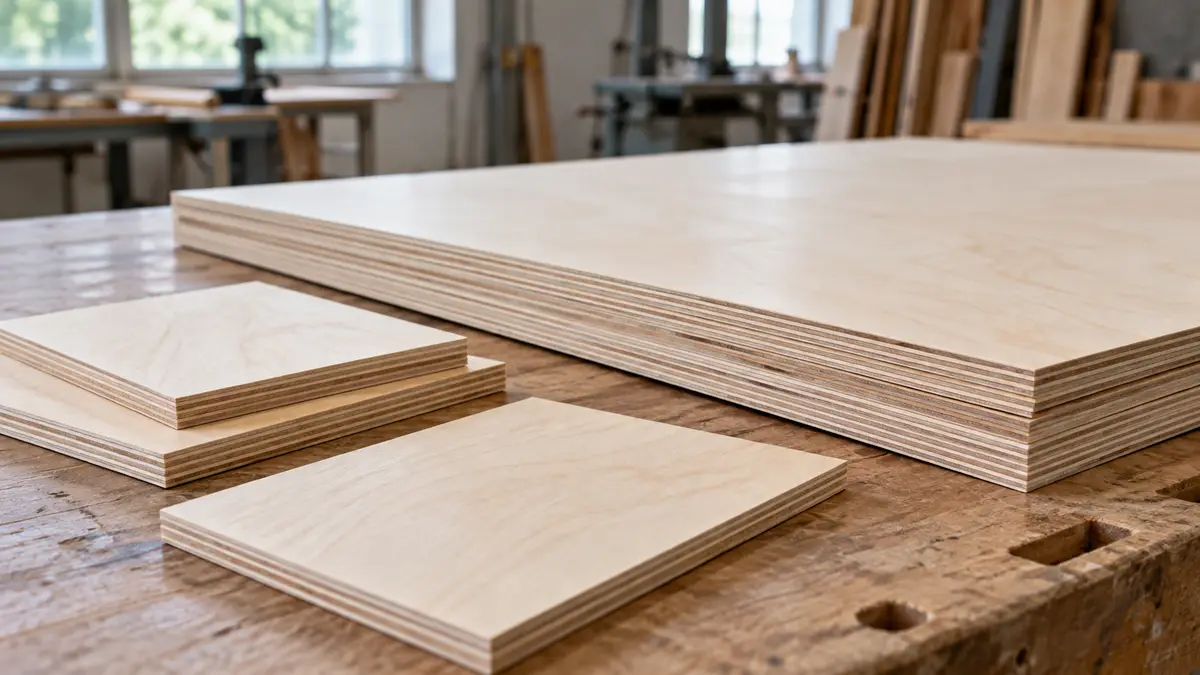
Birch faces, construction and consignment route
Read from the UK Trade Tariff on 30 September 2026, heading 4412 covers plywood, veneered panels and similar laminated wood. The birch-faced plywood lines here cover panels made solely of wood sheets, each ply not exceeding 6 mm. Aircraft-grade is a purchasing description: establish the actual veneer construction when selecting the code.
The selected lines all carry 6% duty for goods from China. The supplied tariff record lists no anti-dumping or countervailing duty, suspension or attached import control for these lines. For direct shipments, consider 4412 33 10 82 or 4412 33 10 84 according to composition. The Türkiye and Kazakhstan rows are route-specific alternatives, not codes to use merely because the timber travelled through those countries.
Give your broker the face and core species, individual ply thicknesses, coatings and consignment route to confirm the commodity code. See the wider plywood guide for other panel constructions and UK import duty and VAT for the tax calculation.
| Goods | Commodity code | Duty | Anti-dumping or countervailing duty on China |
|---|---|---|---|
| Birch-faced plywood, no okoumé, other consignment routes including direct from China | 4412 33 10 82 | 6% | None |
| Other birch-faced plywood, other consignment routes including direct from China | 4412 33 10 84 | 6% | None |
| Birch-faced plywood, no okoumé, consigned from Türkiye | 4412 33 10 12 | 6% | None |
| Birch-faced plywood, no okoumé, consigned from Kazakhstan | 4412 33 10 22 | 6% | None |
Specify the veneers and intended aircraft use
State whether every veneer must be birch, rather than accepting birch faces over another core species. Agree sheet dimensions, finished thickness and tolerances, veneer thickness, grain direction, permissible joints, repairs and core defects. Specify the adhesive, bond performance, moisture condition and mechanical properties against the purchaser's intended application.
Ask the intended aircraft builder or maintenance customer to agree the material specification and acceptance evidence before ordering. Request batch-linked test reports and retain an approved sample. Treat a supplier's aircraft-grade description as a claim to investigate, rather than sufficient evidence of suitability.
Confirm with the relevant authority whether timber due-diligence obligations apply when you first place this plywood on the Great Britain market. Gather species, harvest country and legality evidence for the veneers, assess illegal-harvest risk and address identified risks before placing the product on the market. All species in a composite must be considered separately; for mixed virgin and recycled timber, only virgin timber needs assessment.
Worked duty example
Illustrative example, not a quote: Illustrative order: 50 sheets of aircraft-grade birch plywood; FOB and freight values are illustrative under 4412 33 10 82, invoiced at £8,000 free on board, with £1,200 of freight and insurance to the UK. The customs value is £9,200. Duty at 6% is £552. Import VAT at 20% is charged on the customs value plus duty, £9,752, so it is £1,950.40. Import taxes total £2,502.40; a VAT-registered importer can usually reclaim the VAT, so the lasting cost is the £552 of duty. The import duty and VAT guide explains each step.
Inspection checklist
Construction: cut sample sheets to examine veneer sequence, grain direction, core gaps, overlaps, joints and repairs against the agreed specification.
Dimensions: measure thickness across each sampled sheet, check length, width and squareness, and inspect for bowing and damaged edges.
Performance: arrange batch-linked bond and mechanical testing against the agreed acceptance criteria; compare the tested construction with the supplied sheets.
Arrival and records: check moisture, mould, pack damage and batch labels; match the delivery to test reports and timber records. Agree the sampling scope through quality inspection.
Working out your own order? Send us the product on WhatsApp and we reply the same working day: WhatsApp us
What goes wrong
Birch faces can conceal a different core. Thin veneers may overlap or leave gaps, adhesive bonds may separate, and sheets may warp after damp transport. A report for a different thickness or veneer lay-up does not establish the performance of the delivered batch.
Keep suspect material separate pending investigation. Compare cut sections and retained samples, investigate failed tests, and resolve missing harvest records before release. For sale as aircraft-grade material, agree with the customer what evidence supports that description and the intended use.
Cambridge China Bridge sources these products for UK businesses, checking the factory and the documents before shipment. See factory verification. For repeat volumes, see container programmes.
Frequently asked questions
What is the UK import duty on aircraft-grade birch plywood from China?
The relevant birch-faced plywood lines carry 6% duty. The supplied tariff record lists no anti-dumping or countervailing duty or suspension for these lines.
Does birch-faced plywood mean all-birch plywood?
No. Specify the species of every veneer if you require all-birch construction, and check cut samples against the agreed lay-up.
What evidence should I ask for before buying aircraft-grade plywood?
Agree the intended customer's material specification, then request batch-linked construction, bond and mechanical test evidence. Check that reports match the thickness and lay-up ordered.
Do I need timber due diligence for aircraft-grade birch plywood?
Confirm with the relevant authority whether timber due-diligence obligations apply if you first place this plywood on the Great Britain market. Gather harvest and species information, assess legality risk and address identified risks. Trace the core as well as the faces.