Safe home workspace for a resin or filament printer
Before ordering, obtain material safety information and plan a separate workspace with assessed extraction, suitable power, heat protection and a controlled washing, curing and waste route. Hold the purchase if these arrangements remain unresolved. Ask Cambridge China Bridge to gather the matching factory documents.
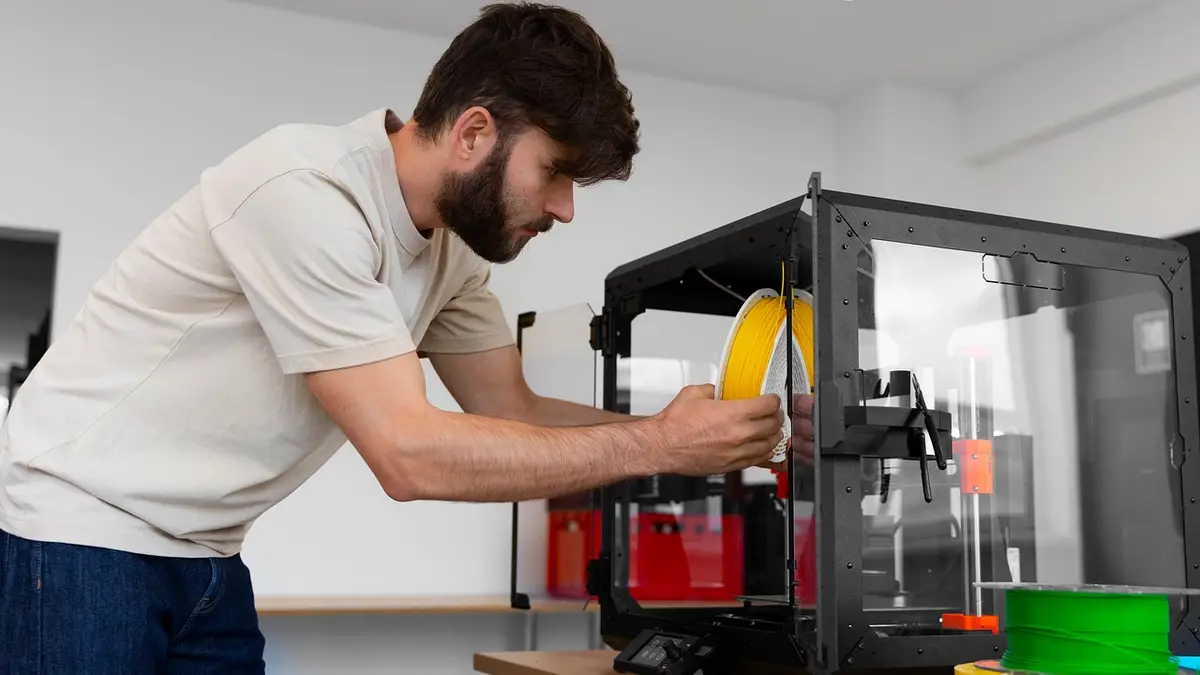
Get material information before choosing the machine
Ask for the current SDS for the exact resin and cleaning chemicals, plus filament safety information covering additives and recommended processing conditions. Request English operating, cleaning and curing instructions. Resolve missing or generic documents before ordering. Our SDS and shipping documents guide explains their separate roles; here, use the material information to plan safe handling at home.
For business use, HSE says the law requires control of risks to workers from harmful substances or processes. Write down exposure routes during printing, opening the enclosure, washing, curing, sanding and spill cleanup. Include family members who could enter or receive contaminated items. Do not treat an SDS, a low-odour claim or a familiar filament name as evidence that your setup is safe.
Assess extraction for the whole workflow
Choose a room separated from sleeping, eating and routine household activity, with restricted access for children and pets. Give an extraction specialist the room layout, intended materials, operating pattern and printer enclosure details. Ask how emissions will be captured during printing and when handling resin or wash liquid. Assess replacement air and outdoor discharge location, including nearby windows and neighbouring properties.
HSE advises checking that extraction is suitable for the process and substances before use. Ask for commissioning evidence under your intended operating conditions, an airflow indicator and maintenance instructions. Do not assume an open window, sealed-looking lid or desktop purifier provides adequate control. For recirculating equipment, ask what captures particles and vapours and how filter replacement is determined. Pause buying if effective control cannot be demonstrated.
Check power, heat and fault protection
Request photographs of the rating plate, plug, cable and power supply for the exact model. Have a competent electrician check compatibility with your home supply and the combined load of the printer, extraction, washer and curing unit. Avoid improvised adaptors and overloaded extensions. Use our electrical import guide for the wider product checks and test report guide to examine supporting evidence.
Provide a stable, heat-resistant work surface, clear cooling vents and an accessible power isolation point. Keep packaging, resin and flammable wash liquids away from heaters and ignition sources. Ask the factory how heater faults, sensor failures and overheating cause shutdown, and request supporting test evidence. Keep protective settings enabled, allow hot parts to cool before handling and arrange attendance during operation. Include a fire response and escape plan. For equipment selection, see our guide to China-bought fire extinguishers and fire blankets.
Separate resin handling, washing and curing
Lay out a contained dirty area for resin pouring, print removal and washing, followed by drying and enclosed curing, with clean storage beyond it. Use dedicated trays and tools, labelled compatible containers and spill materials chosen from the SDS. Select chemical-resistant gloves and splash protection for the actual resin and cleaner; ask about glove compatibility and replacement. Keep food, phones and household utensils away, and wash hands after removing gloves.
Follow the resin manufacturer's washing, drying and curing instructions, including lamp compatibility and part geometry. Check recesses and hollow parts for trapped resin or wash liquid. Keep curing light enclosed and protective interlocks functioning. Do not use a tack-free surface as your sole acceptance check or assume curing makes a part suitable for food contact. Avoid bulk-curing liquid waste as a shortcut; agree its handling with the waste contractor.
Working out your own order? Send us the product on WhatsApp and we reply the same working day: WhatsApp us
Arrange waste disposal before placing the order
Waste from the part of a home used for business is business waste. For an English business workspace, hazardous waste must cause no harm or damage. Ask a waste contractor to classify and confirm acceptance of unused resin, contaminated wash water or solvent, wipes, gloves, supports and failed prints. Provide the SDS and process details. Confirm the local arrangements if your workspace is elsewhere in the UK.
Keep waste streams separate in closed, compatible, labelled containers with spill containment. Do not pour resin or contaminated washing liquid down drains, including liquid from water-washable resin. Do not assume cured scraps belong in household rubbish or recycling; obtain acceptance for the actual material and contamination. For hobby-only use, ask the council about its chemical-waste route. Before buying, record the documents, extraction assessment, electrical checks and waste acceptance; Cambridge China Bridge's own staff in China can gather the factory evidence.
Frequently asked questions
Can I put a resin printer in my bedroom?
Choose a separate workspace away from sleeping and household activity. Include pouring, washing and curing in the extraction assessment. If suitable separation and exposure control cannot be arranged, pause the purchase.
Is an open window enough for a filament printer?
Do not assume so. Ask an extraction specialist to assess the material, operating conditions and room. Seek evidence that the proposed controls work, including when opening the enclosure.
Can water-washable resin waste go down the sink?
Do not pour contaminated wash water down the sink. Collect it in compatible labelled containers and obtain disposal advice and acceptance from your waste contractor or the council's household chemical-waste service.
What should I request from the Chinese factory?
Request matching material safety information, English instructions, electrical ratings and plug photographs, heater fault-protection evidence, extraction details and resin washing and curing instructions before ordering.