Moisture-sensitive components from China
Agree handling instructions for the exact component, collect evidence linked to each sealed pack, and carry its exposure history through inspection, shipping and UK receipt. Hold uncertain packs until your assembly quality owner approves their disposition. Cambridge China Bridge can coordinate supplier evidence through its staff in China.
Agree instructions for the exact component
Ask for the component manufacturer's handling instructions for the exact part and package, including its moisture sensitivity classification where applicable. Have your UK assembly team approve the storage conditions, permitted exposure, packaging and any drying procedure before ordering. Put the approved document revision into the purchase specification; the product specification guide covers the wider brief.
Ask the supplier to explain whether it receives sealed manufacturer packs or opens, splits or repacks them. Agree who records these operations and who can approve deviations. Treat any quoted exposure allowance as conditional on the conditions in the approved instructions, rather than copying it into an unconditional warehouse deadline.
Collect evidence before the pack is sealed
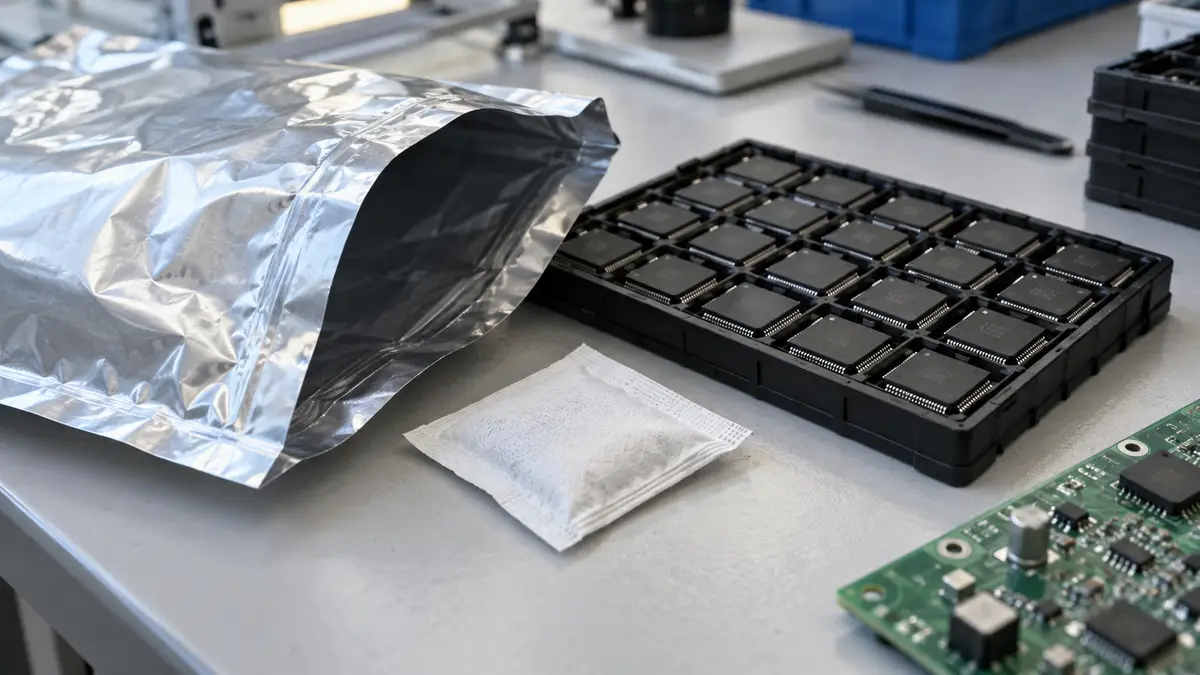
Request a packing record linked to the part, manufacturer lot, pack identifier and quantity. Ask for photographs of the contents and label before sealing, the desiccant and humidity indicator where specified, and the completed seal. Include packing date, operator and any earlier opening or drying record. A photograph of a closed bag alone leaves its contents and handling history unresolved.
Ask the supplier to identify the moisture barrier packaging and sealing process used. Agree checks for punctures, damaged seams and unreadable labels. Plan inspection so packs stay closed where possible; if a pack must be opened, require the inspector to record the opening and follow the approved handling and repacking instructions.
Keep exposure history with every split pack
Use a pack-level log for opening, closing, storage transfers and periods outside the approved storage conditions. Record event times, time zone, operator, location and available temperature and humidity readings. Include handling during factory inspection, consolidation and UK receipt. Keep missing intervals visible rather than entering an assumed exposure value.
When a reel or tray is split, give the resulting packs separate identifiers linked to the original lot and its earlier history. Ask your assembly team to define how exposure is accumulated and how controlled storage affects the allowance. Do not reset the record merely because a bag has been resealed. Use the supplier traceability guide for the wider lot trail.
Hold exceptions at UK receipt
At receipt, match pack identifiers to the supplier records and check seals, labels and packaging condition before routine opening. Keep affected packs on hold if packaging is damaged, records conflict or exposure history is missing. Separate receipt into stock from permission to issue components to assembly.
Arrange any opening check with the assembly quality owner. Record the humidity indicator promptly after opening, where supplied, and interpret it using its own instructions. Do not let an apparently acceptable indicator replace the exposure log. Refer uncertain packs for a documented decision on further checks, approved drying, return or rejection; avoid an improvised oven treatment.
Working out your own order? Send us the product on WhatsApp and we reply the same working day: WhatsApp us
Release packs to a named assembly job
Give the authorised assembly reviewer the approved instructions, pack evidence, exposure log and any exception disposition. Record which packs are released, by whom, for which job and under which handling conditions. Ask the reviewer to confirm the available exposure allowance against the planned assembly process before issuing parts.
Carry the record through line-side waiting, interruptions and unused returns. For drying or repacking, retain the approved procedure and actual process record, then obtain the agreed release decision. Cambridge China Bridge's staff in China can request and check supplier records; your assembly team retains the technical release decision.
Frequently asked questions
Is a sealed bag enough to approve components?
Ask for pack identity, packing evidence and earlier handling history as well as seal condition. Release the pack only after your assembly reviewer has checked these against the approved instructions.
Does resealing restart the exposure allowance?
Do not assume it does. Preserve earlier exposure and ask your assembly team to apply the exact component's approved instructions to resealing and controlled storage.
Can we bake components with missing records?
Hold them for technical review. Ask for a component-specific drying procedure and confirmation that the carrier and packaging suit it. Record the process and obtain approval before assembly.
Who should approve release to UK assembly?
Name an authorised reviewer in your assembly engineering or quality team. Supplier packing approval and shipment approval should feed that review, rather than automatically release parts to the line.