ESD protection for imported components
Specify electrostatic-discharge protection by component, handling stage and packaging function. Agree factory controls, evidence before dispatch and protected unpacking at receipt, with a hold procedure for damaged or undocumented packs. Cambridge China Bridge can coordinate these checks with its staff in China.
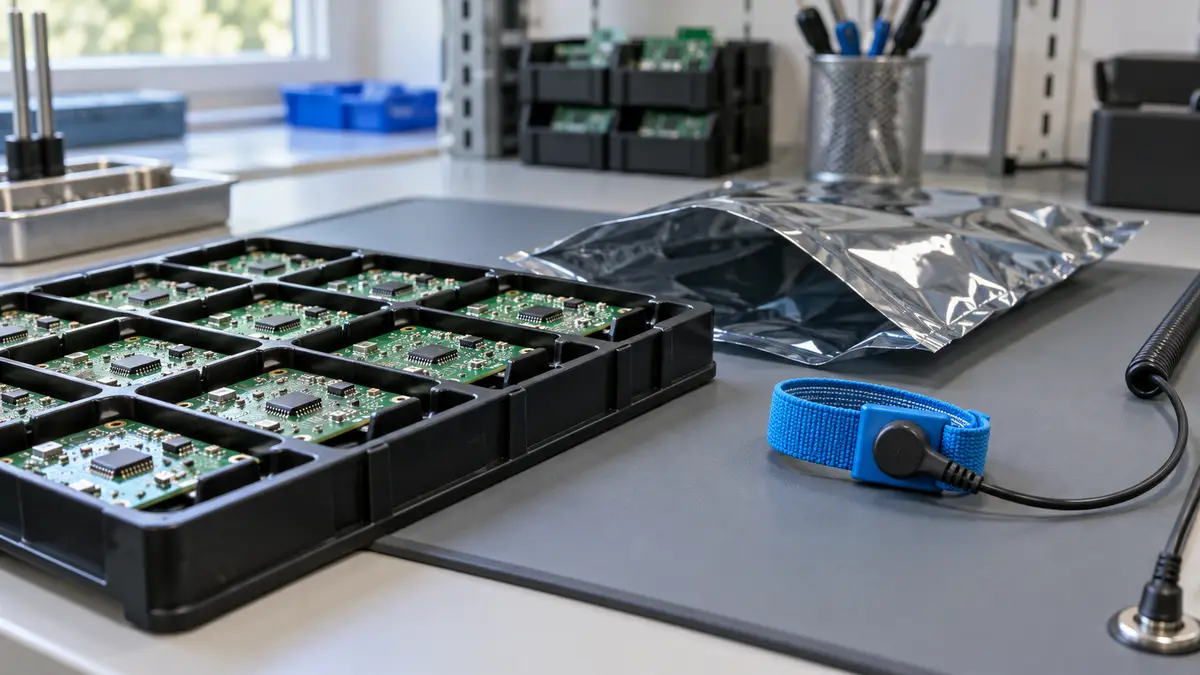
Define protection against the component risk
Ask your engineer to identify static-sensitive components and assemblies using the component manufacturer's handling information. Record part identity, sensitivity information, approved packaging and acceptance criteria in the purchase specification. Where sensitivity is unknown, obtain engineering approval for a precautionary handling and packaging plan before production. Use the product specification guide for the wider purchasing brief.
If your specification names a standard, identify its edition and the clauses relevant to handling or packaging. HSE advises checking that the standard used is current. Ask your engineer to set the applicable test methods, limits and verification frequency; avoid accepting a supplier's unsupported statement that its process is compliant.
Check factory handling throughout the route
Ask the factory to map where exposed components are received, stored, assembled, tested, reworked and packed. Specify designated static-protected work areas, suitable personnel earthing, verified work surfaces and controlled tools and containers. Ask how unavoidable insulating materials are managed, including whether ionisation is needed. Have a competent engineer approve the controls and their safe use.
Request handling instructions, training records and dated verification results for the equipment actually used on your order. Observe packing and rework as well as assembly. Agree what happens when a control fails: hold affected material, identify the exposure period and obtain engineering disposition before release. Extend the same plan to subcontractors and any warehouse that opens protective packaging.
Specify packaging by function
Describe what each packaging layer must do rather than ordering an 'antistatic bag'. Ask for low-charging materials, suitable conductive or dissipative contact packaging and discharge shielding for transport outside protected areas, as approved by your engineer. Specify the bag closure, trays or reels, cushioning and labels. Do not accept colour or a printed static symbol as proof of performance.
Request material identification and test evidence tied to the proposed packaging. Check compatibility with exposed contacts, batteries and the component manufacturer's instructions. Agree separate moisture protection where needed; do not assume a static-protective bag also controls moisture. Approve a packed sample and require approval before packaging substitutions. Use test report verification to assess supporting reports.
Make dispatch evidence traceable
Before shipment, request photographs of the approved packaging in use, closures, warning labels and component lot identification. Match these to packing records and the factory's handling verification results. Photographs help establish what was packed, but do not establish electrical performance. Agree who reviews missing evidence and who can authorise dispatch.
Keep component lots identifiable through split packs, consolidation and repacking. Ask any consolidator to leave protective packs closed unless an approved protected handling process is available. Link the records to your supplier batch traceability plan, so a handling failure can be investigated without treating unrelated stock as affected.
Working out your own order? Send us the product on WhatsApp and we reply the same working day: WhatsApp us
Receive, unpack and decide on release
At receipt, inspect outer cartons, protective-pack closures, punctures, labels and lot identity before opening. Photograph discrepancies and preserve the original packaging. Move sensitive goods to a verified static-protected workstation for unpacking and inspection. Keep unopened packs protected during storage and reseal or transfer opened goods into approved packaging. Add these steps to your goods-in acceptance procedure.
Quarantine goods with damaged shielding, missing identification or an unexplained handling gap. Agree functional checks with your engineer, but do not treat a passing function test as proof that no static damage occurred. Record the exposure concern, factory response and engineering decision. Release, further testing or replacement should follow the agreed acceptance criteria, with the decision retained against the affected lot.
Frequently asked questions
Is an antistatic bag enough for imported components?
Specify the required functions and closure. Ask for evidence of low charging, suitable contact materials and discharge shielding for the transport route. A bag's colour or static symbol is insufficient evidence.
What ESD records should I ask a Chinese factory for?
Request handling instructions, training records, dated equipment verification results, packaging test evidence and packing records linked to your component lots.
Can goods-in staff open static-sensitive components?
Plan unpacking at a verified static-protected workstation with trained staff. Inspect the outside first and keep sensitive components inside their protective packaging until the workstation is ready.
Does a passing function test rule out static damage?
No. Treat it as evidence of performance under the test conditions. If protection was breached, hold the lot and ask your engineer to decide on further testing, release or replacement.