What photos should an inspector take of defects?
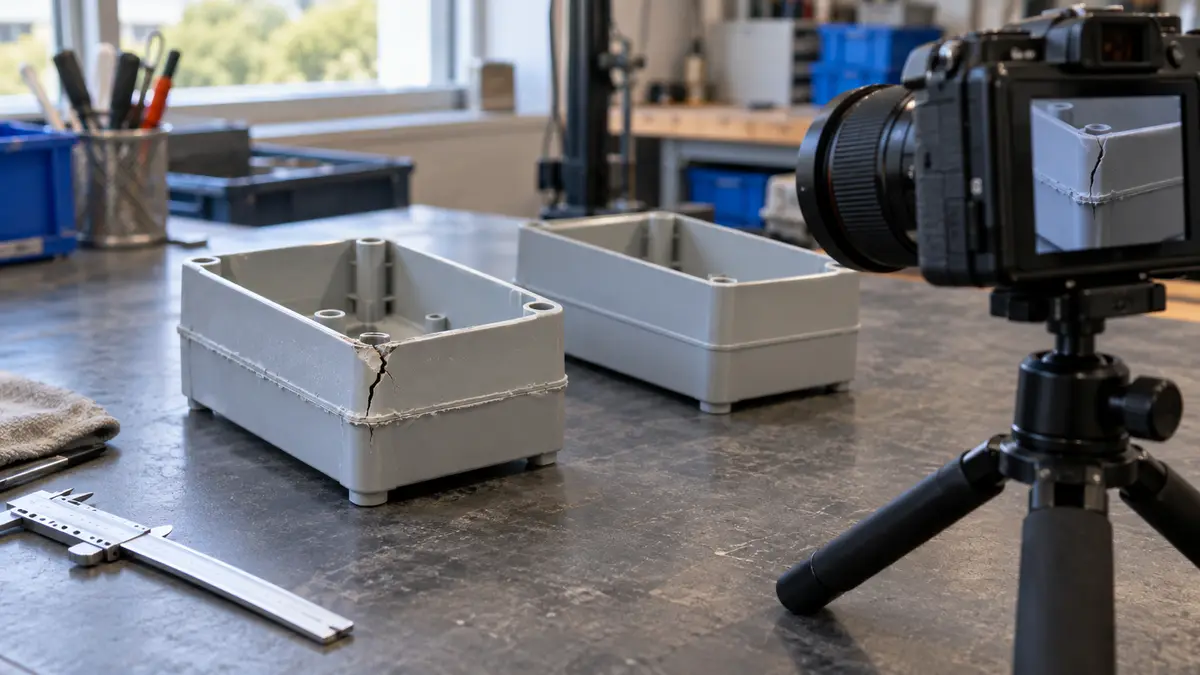
For each defect, request an identifiable whole-item photograph, a view showing its location and a sharp close-up with a readable scale. Link the images to the inspected sample and the defect tally, keeping repeated views separate from defect counts. Agree this photo brief with Cambridge China Bridge.
Give each inspected item a stable identity
Assign a sample number when the item is selected and keep it through inspection, photography and any recheck. Record the order, product variant, batch and source carton alongside it. Put a readable sample card beside the item in the whole-item photograph. Show the complete item and distinctive features so the buyer can recognise what was inspected.
Carry the same sample number into every image caption and the inspection record. Photograph labels or carton markings separately if they are unreadable in the whole-item view. A carton reference alone may not distinguish items taken from the same carton.
Show where the defect sits
Take a location view that includes the defect and a recognisable feature, such as a seam, handle, corner or connector. Describe the side and position in the caption, using an agreed orientation. The buyer should be able to move from the whole-item view to the affected area without guessing.
Add an annotated copy with an arrow or outline if the defect is hard to locate, while retaining the original. Keep marks clear of the defect. Agree what counts as a defect through visual defect limits, rather than deciding acceptance from a dramatic close-up.
Take a close-up with a readable scale
Focus on the defect itself. Place a ruler or suitable scale beside it, in the same plane as the affected surface, with the units visible. Keep the scale from covering the defect. For a flat surface, photograph square-on to reduce perspective distortion. Record the measured dimension separately; do not rely on the photograph alone.
Use even lighting and avoid glare, blur and filters. Add another angle when needed to reveal a dent, crack or raised edge. For colour or gloss differences, include the approved reference under the same lighting and describe what the camera cannot reliably show. Photograph the condition before cleaning or rework, and avoid unsafe handling to obtain a view.
Link images to the tally without double counting
Give each recorded defect its own reference under the sample number. In the defect register, include its description, location, agreed category, measurement where relevant and image filenames. Keep the whole-item, location and close-up views linked to that entry. Separate defects on the same item need distinct entries.
Define whether each tally counts defective items or individual defects, following the agreed inspection plan. Repeated photographs do not create additional defects. If photographs illustrate a recurring issue rather than show every occurrence, label them as representative and list the affected sample numbers separately. Use AQL sampling in practice for sampling and acceptance decisions.
Working out your own order? Send us the product on WhatsApp and we reply the same working day: WhatsApp us
Check the evidence before the inspector leaves
Ask the inspector to open the images at full size and check identity, location, focus and scale against the register. Confirm that every recorded defect has a usable photo set and every tally can be traced to sample records. Resolve missing views while the items are still available. Use reading a pre-shipment inspection report for the wider report review.
Keep original files alongside annotated copies and the final register. Store recheck photographs under the same sample and defect references, labelled with their inspection date and condition before or after rework. Do not overwrite the original finding. For intermittent or hidden faults, add test observations or video where useful; a still image may not capture the failure.
Frequently asked questions
Is a close-up enough to prove a defect?
A close-up can show detail but leave the item and location uncertain. Request a linked whole-item view, location view and close-up with scale.
Should every defect photograph include a ruler?
Put a readable scale in the close-up where size matters. Keep it beside the defect in the same plane, and record the actual measurement separately.
How do I match defect photos to inspection counts?
Link image filenames to the sample number and defect reference in the register. State whether the tally counts defective items or individual defects, and reconcile it with the sample records.
Can representative photos cover repeated defects?
Agree this in advance. Label representative images clearly and list all affected sample numbers in the tally record. Request individual photo sets where identity or severity differs.