How to inspect sofas before shipment
Inspect unpacked sofas against the approved sample, under consistent lighting and after agreed unpacking rest. Check fabric direction, seam positions, cushion recovery and upholstery tension, then compare matching pieces side by side. Record defects before approving dispatch. Cambridge China Bridge can arrange these checks through its staff in China.
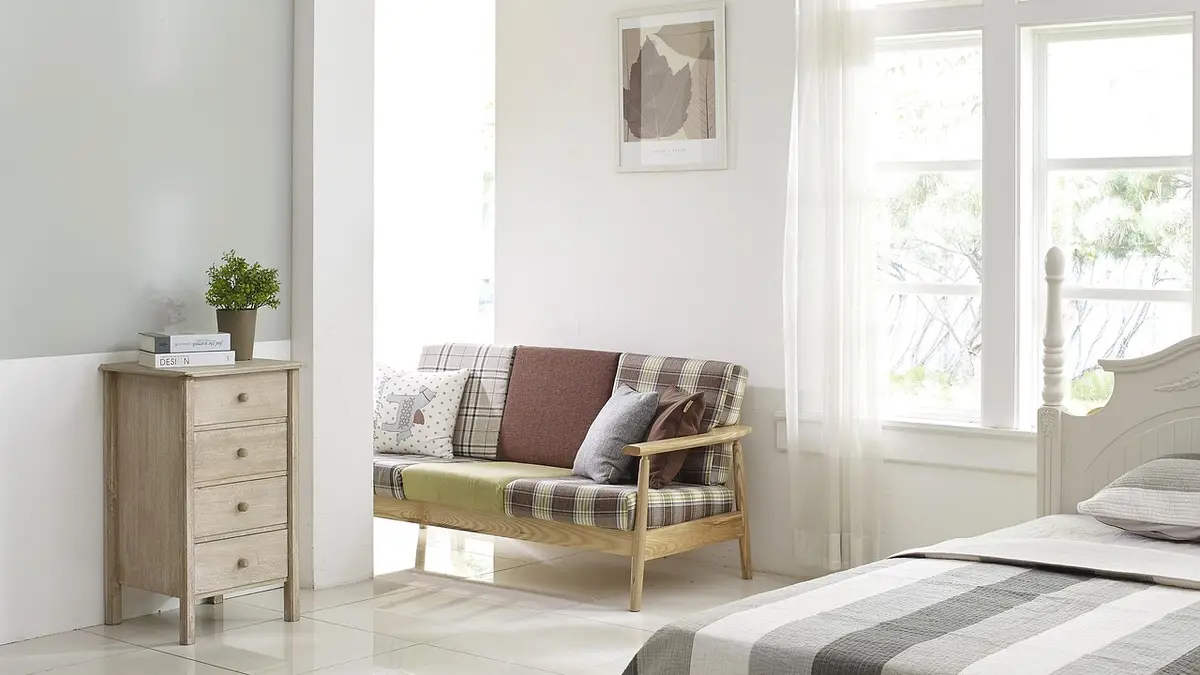
Set up a repeatable sofa inspection
Give the inspector the approved sofa sample, fabric swatch and photographs showing acceptable appearance. Agree unpacking rest, cushion preparation, viewing conditions and acceptance criteria before inspection. Specify whether the intended finish is taut or deliberately relaxed. Use our inspection guide for sampling and inspection arrangements.
Inspect assembled sofas on a level floor with packaging removed. Record each item's identity and condition before brushing, plumping or other preparation. Agree any preparation with the buyer and photograph the result afterwards. Keep this workmanship check separate from the broader purchasing checks in our sofa sourcing guide.
Check fabric direction and seam placement
Compare the fabric direction on seats, backs, arms and loose cushions with the approved sample. For pile fabrics, inspect from different viewing positions under unchanged lighting. Use a gentle hand stroke, if suitable for the fabric, to help distinguish pile direction from an apparent shade difference. Flag panels whose direction differs from the agreed layout.
Trace seams and piping around the sofa. Check their positions against the approved photographs, including corners, arm fronts and cushion edges. Look for wandering seams, puckering, skipped stitches and exposed seam allowances. Where pattern matching was agreed, check the specified joining points rather than assuming every curved surface should align.
Compare cushion recovery under the same conditions
Agree a practical compression method and recovery observation period with the factory before inspection. Use the same operator, action and conditions on comparable cushions and the approved sample. Photograph the original profile, the compressed cushion and its recovery. Describe lingering hollows, uneven crowns, displaced filling and covers that twist.
Check whether the cushion recovers unaided or needs the agreed plumping routine. Compare equivalent seating positions for firmness, support and restored shape. Record the method and elapsed time rather than judging from a photograph alone. A brief recovery check does not establish long-term durability; use our test-report guide when reviewing separate test evidence.
Inspect upholstery tension before and after use
View the sofa from the front, sides and rear, including under light falling across the surface. Compare wrinkles, panel smoothness and corner shaping with the approved finish. Look for loose pockets, uneven pulling, distorted piping and fabric stretched enough to open seams. Do not reject intended soft folds simply because they differ from a taut design.
After the agreed sitting or compression check, inspect for persistent bagging, cover movement and seams pulled out of position. With permission, open accessible cushion zips to compare insert fit and cover alignment. Ask the factory to explain inconsistent results before accepting its proposed remedy.
Working out your own order? Send us the product on WhatsApp and we reply the same working day: WhatsApp us
Compare matching pieces and close defects
Place sofas, chairs and matching modules together in their intended orientation under the same lighting. Compare fabric shade and direction, seam height, piping, cushion profile and upholstery tension across equivalent surfaces. Check the assembled arrangement as well as individual pieces. Separate photographs can hide differences that become obvious when the set is together.
Report each discrepancy with an item identifier, an overall photograph and a close-up showing its location. Include the approved comparison and the inspection conditions. Agree the correction and repeat the affected checks after rework, including comparison with matching pieces. Keep unresolved workmanship discrepancies on the dispatch decision record.
Frequently asked questions
Why do matching sofa panels look different shades?
Check pile direction, viewing angle and lighting before deciding that the fabric colour differs. Compare the panels with the approved sample under the same conditions and record any remaining mismatch.
How do I check sofa cushion recovery?
Agree a compression method and observation period, then use them consistently on comparable cushions and the approved sample. Record shape before compression and after release, including any plumping needed.
Are wrinkles on a new sofa a defect?
Judge wrinkles against the approved design after agreed unpacking rest and preparation. Record unexpected loose pockets, uneven tension or persistent bagging rather than rejecting every soft fold.
Should matching sofas and chairs be inspected together?
Yes. Place them together under the same lighting and compare equivalent surfaces for shade, fabric direction, seam position, cushion shape and tension. Photograph the set as well as individual defects.