How to inspect filled cosmetics before shipment
Inspect finished cosmetics against an agreed specification: measure net contents, check seals and clean closures, reconcile batch codes and test dispensing with the actual formula. Record defects by batch and hold affected stock for review. Inspection does not establish product safety. Cambridge China Bridge can coordinate these checks through its staff in China.
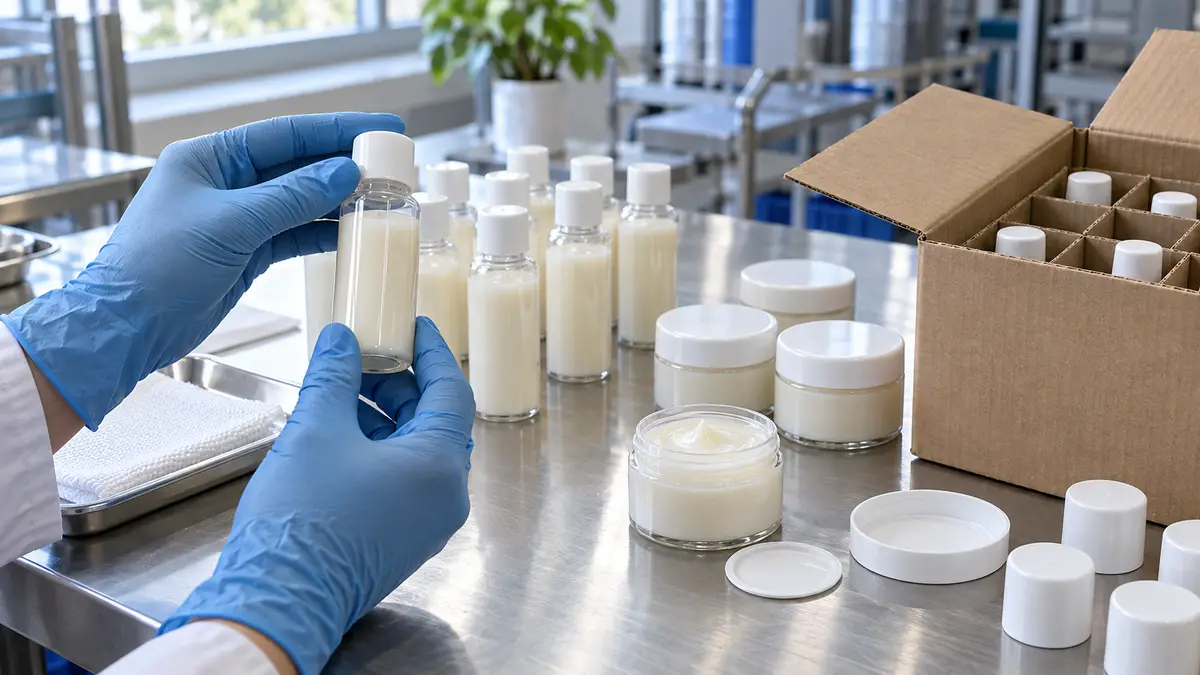
Agree the inspection brief and its limits
Give the inspector the approved filled sample, formula and packaging identifiers, artwork revision, batch list and written acceptance criteria. Specify the fill measurement method, seal tests, closure checks and dispensing procedure. Agree sampling across batches, variants and cartons, including which tests require separate units because they open or damage the pack. Our inspection guide covers sampling and acceptance planning.
Before cosmetics are made available to consumers in Great Britain, safety must be checked by a qualified safety assessor. A visual inspection cannot establish microbiological safety, preservative effectiveness or long-term formula and pack compatibility. Keep shipment findings separate from safety evidence; our beauty sourcing guide covers the wider compliance work.
Measure fill consistency rather than judging bottle levels
Compare sampled units against the agreed net-content target and tolerances. For a weight-based check, use a checked balance and establish the empty packaging weight through an agreed tare method. Record individual net results rather than just an average. Filled gross weight alone includes the container and closure, so packaging variation can hide inconsistent fills.
If the specification uses volume, agree a suitable volume method or a validated conversion using the actual product density under recorded conditions. Do not assume weight and volume are interchangeable. Compare visible levels in matching packs after agreed settling, but treat bubbles, opaque containers and different container shapes as reasons to measure rather than guess.
Check seals and closure cleanliness before opening
Inspect unopened packs for leakage, crooked caps, damaged necks and missing or displaced seals where specified. Check tube crimps, foil edges and tamper features against the approved pack design. Agree a leak-test method suited to the formula and container, with the orientation, conditions and observation period written into the brief. A cap that looks tight is insufficient evidence of sealing.
On designated opening samples, inspect the sealing surface, liner position, threads and underside of the closure. Photograph product residue, debris or damaged seals before cleaning or adjustment. Residue may indicate filling spillage or leakage; record the observation and ask the factory to investigate. A clean-looking closure does not demonstrate freedom from microbial contamination.
Reconcile batch codes and test dispensing
Check that batch codes are present, legible and consistent with the factory's batch records. Reconcile product, retail pack and carton markings wherever your specification calls for them, allowing for cartons deliberately containing mixed batches. Photograph the codes and record which carton supplied each inspected unit. Ask the factory to demonstrate how a code leads back to its filling record.
Use separate functional samples with the actual formula. Follow the agreed opening and priming instructions, then check pumps, sprays, droppers or tube outlets for failure to start, inconsistent delivery, drips, blockage and leakage around the closure. Record priming behaviour and compare delivery against the approved sample or measured specification. Test any transport lock and reclosure; keep opened or dispensed units out of saleable stock.
Working out your own order? Send us the product on WhatsApp and we reply the same working day: WhatsApp us
Make release depend on recorded findings
Ask for results by product and batch, identifying sampled cartons, measurement equipment, methods, conditions, individual readings and defect photographs. Separate observed failures from checks that were not performed. The report should say what passed against the agreed criteria, not declare the cosmetics safe. Our report comparison guide explains the limits of inspection evidence.
Hold affected stock when fills, seals, traceability or dispensing fail the agreed criteria. Require a documented investigation, an identified scope of affected goods and evidence of sorting or rework, followed by reinspection. Ask the Responsible Person or safety assessor to review findings that could affect safety. Record the buyer's shipment decision separately from the inspector's finding.
Frequently asked questions
Can I check cosmetic fill quantity by eye?
Visible levels can flag differences, but cannot establish net contents. Use the agreed weight or volume method and record individual results against the specification.
Does a leak-free cosmetic pack prove the product is safe?
No. It only supports the sealing result under the tested conditions. Inspection cannot replace a qualified safety assessment or establish microbiological safety.
Should cosmetic pumps be tested empty or filled?
Use the actual formula in the finished pack. Check priming, delivery, drips, blockage and closure leakage against the agreed procedure. Keep tested units out of saleable stock.
What should I do if cosmetic batch codes do not match?
Hold the affected stock and reconcile codes with filling and packing records. Record any authorised mixed-batch packing. Do not release goods while their batch identity remains unresolved.