Is a factory checking jig worth paying for?
A checking jig can be worth paying for when repeat orders use a stable design and it reduces total inspection effort without missing unacceptable parts. Compare complete inspection tasks, then approve the jig through blind trials with independently checked parts. Ask Cambridge China Bridge.
Compare the complete inspection task
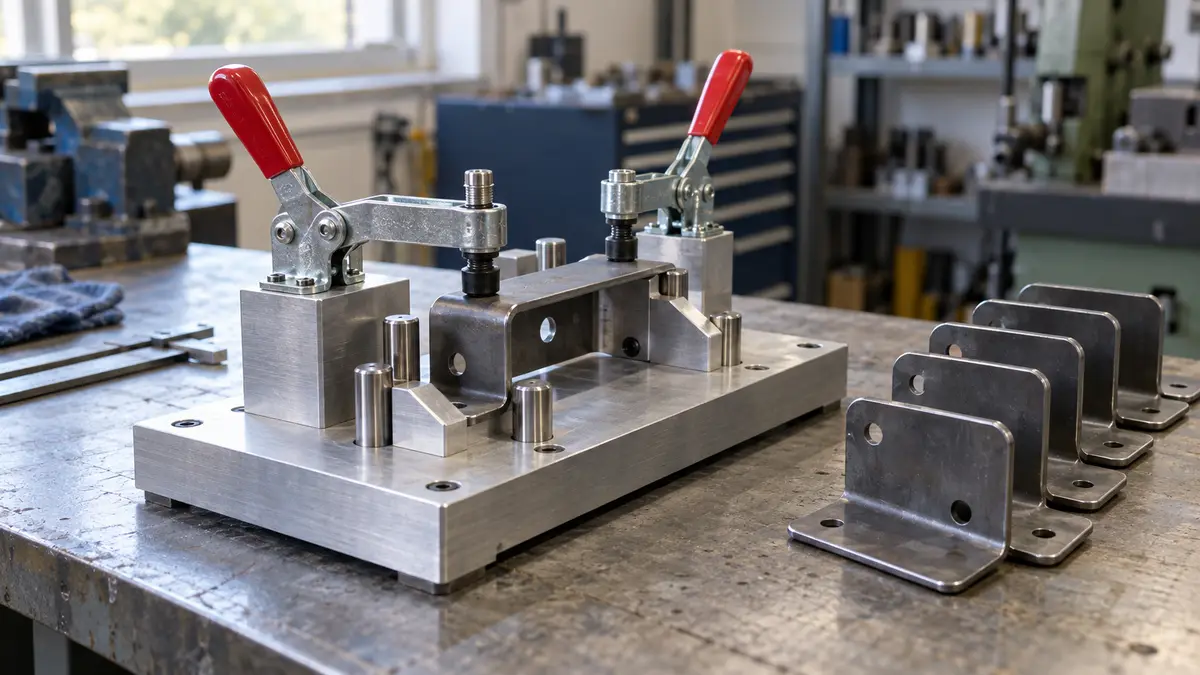
A checking jig holds a part in a defined position so an inspector can check selected features or fit. Consider it when repeated manual checks are slow, awkward or inconsistent. Keep manual measurement where the design changes frequently or where the jig would leave important defects unchecked.
Trial both methods on the same representative parts, using the same acceptance criteria and intended inspection coverage. Record preparation, loading, checking, unloading, recording results and resolving doubtful results. Include rejected parts and awkward variants, rather than timing only easy acceptable parts. The factory measurement guide helps you assess the existing method.
Compare the jig’s design, manufacture and validation cost with the expected saving across repeat orders. Include training, maintenance, storage, independent checks and modifications. Use measured time and your own labour costs; calculate how much repeat work would recover the initial cost. Treat forecast orders as uncertain, and ask whether the purchase still makes sense if repeat demand falls.
Commission against written acceptance limits
Send the approved drawing revision, dimensional limits, reference surfaces, product variants and defects the jig must detect. Ask for a design showing how parts locate, how clamping works and what indicates a pass or failure. Avoid clamping that bends an unacceptable part into an apparently acceptable shape. For assembled products, use the mating-parts guide to define the relevant fit.
Agree what the jig cannot check, such as material composition, strength or hidden defects. Define loading direction, permitted force, cleanliness and how doubtful results are referred for measurement. Ask a measurement specialist to set jig tolerances and decision limits with measurement uncertainty in mind, especially near the product’s acceptance boundary.
Put ownership, identification, drawings, storage location, maintenance, replacement wear parts and access for your inspectors in the purchase brief. Agree whether the jig may move to another factory and what files accompany it. Tie final acceptance to a witnessed validation report, rather than a photograph of the completed jig.
Prove it rejects unacceptable parts
Build a labelled challenge set whose status is established by an independent measurement method suitable for the feature. Include clearly acceptable parts, acceptable parts near the limits and unacceptable parts just beyond each relevant limit. Cover the defect types and variants the jig is meant to detect. An approved sample alone cannot demonstrate rejection performance.
Have the intended operators check the set repeatedly in a shuffled order without seeing the reference decisions. Remove and reload each part between checks. Record the jig decision against the independently established status, including unacceptable parts passed, acceptable parts rejected and changes between operators or repeated checks. Keep the reference identities separate from the operators’ results.
Agree the validation acceptance criteria before testing. Investigate every missed unacceptable part and any inconsistent result; correct the jig or method and repeat the affected trials before release. Where the reference method cannot confidently classify a boundary part, obtain better measurement evidence instead of treating the jig result as proof. Retain the results and challenge parts separately from saleable stock.
Keep the validated method working
Issue a work instruction with photographs of correct seating, loading force, pass and failure indications, cleaning and result recording. Identify the jig and drawing revision in inspection records. Check it against suitable reference parts before use and after suspected damage or adjustment; agree a review interval based on use, wear and the consequence of a missed defect.
If a reference check fails, stop using the jig and hold affected stock while you establish which results may be unreliable. Inspect suspect parts with an approved alternative method. Repair and revalidate before reuse. Require approval and renewed checks after changes to the product, locating surfaces, jig or inspection method; the repeat-order change guide helps control those changes.
A validated jig proves only its agreed checking capability. Keep checks for uncovered features and define which production parts will be inspected. Faster checking does not establish batch acceptance or justify reducing coverage; use the AQL sampling guide when agreeing a separate sampling plan.
Working out your own order? Send us the product on WhatsApp and we reply the same working day: WhatsApp us
Send a brief that can be quoted and witnessed
Send Cambridge China Bridge your drawing, expected repeat demand, current inspection records, observed checking effort and examples of unacceptable parts. Ask for separate jig and ongoing inspection costs, a validation proposal and a list of checks that remain outside the jig’s scope.
Ask our staff in China to arrange a factory demonstration and record the agreed challenge trials. Approve the report against your written criteria before authorising routine use. Factory audits and inspections are usually included in the quote; complex checks that need a third party are charged separately and agreed in advance.
Frequently asked questions
When is a checking jig worth buying?
When a stable repeat product needs enough checking to recover the jig’s design, validation and upkeep costs. Compare measured total inspection effort and use a cautious repeat-order forecast.
Can a factory jig replace manual inspection?
It can replace validated checks for specific features. Keep checks for defects it cannot detect, and agree inspection coverage separately.
How do I know the jig catches bad parts?
Use independently classified acceptable and unacceptable parts, including parts near the limits. Run blind repeated trials with the intended operators and investigate missed defects or inconsistent decisions.
Who should own the checking jig?
Agree ownership, custody, inspector access, maintenance and transfer arrangements in the purchase brief. Paying for manufacture alone leaves these practical arrangements unresolved.