Electrical goods: critical, major or minor defects?
Classify defects by consequence: critical for safety hazards, major for failures affecting intended use or agreed appearance, and minor for limited cosmetic departures. Record model-specific examples, checks and escalation rules before production. Cambridge China Bridge can coordinate the catalogue with its staff in China.
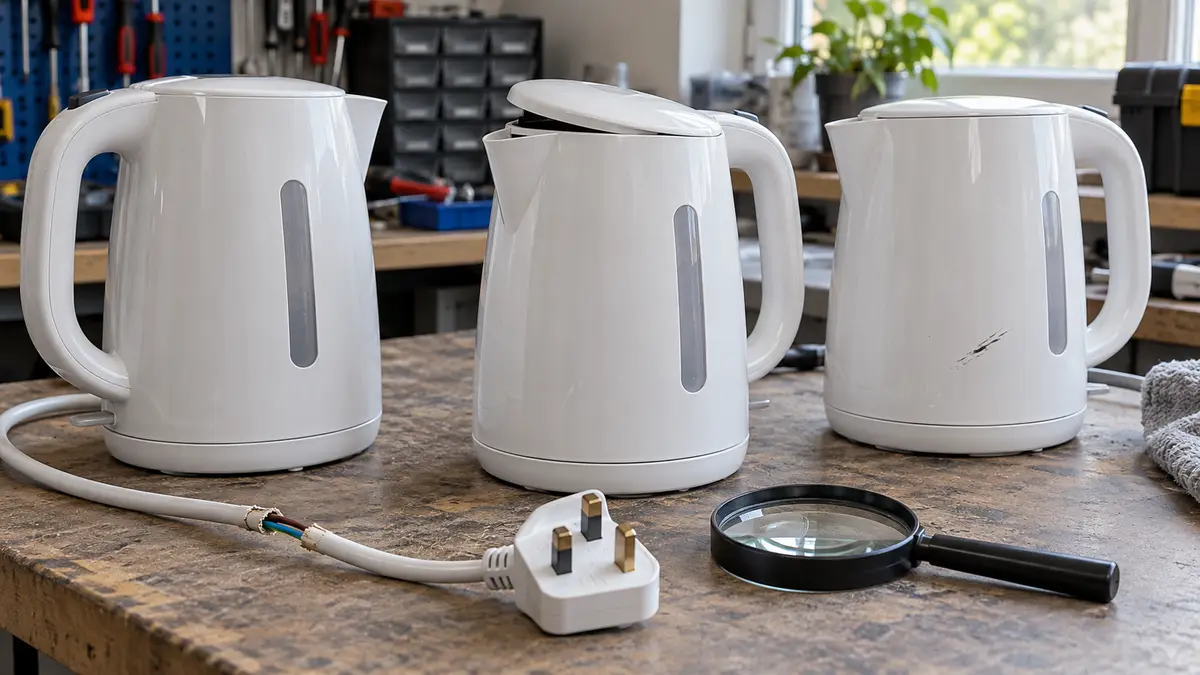
Agree the classes before production
Use these classes as agreed purchasing decisions. A critical defect creates a safety hazard; a major defect materially affects intended use or customer acceptance; a minor defect is a limited cosmetic departure without a safety or functional effect. Classify the consequence, rather than relying on the factory's description of the fault.
This catalogue defines what inspectors should recognise. Our AQL sampling guide explains sampling and acceptance decisions; our electrical import rules guide covers compliance documents. Neither a catalogue nor a sampling pass establishes electrical safety.
Classify electrical faults by their effect
Use the examples below as starting entries, then confirm them against the exact model's design and intended use. An operating failure becomes critical if it defeats a protective function. An insecure connection needs its own entry identifying what it connects and what happens if it loosens.
| Observed defect | Suggested class | Boundary to record |
|---|---|---|
| Accessible exposed mains conductor or damaged insulation exposing a hazardous live part | Critical | Record location, accessibility and the failed protective barrier; hold shipment approval. |
| Loose mains terminal, insecure protective earth connection or ineffective cable restraint | Critical | Identify the connection and its protective role; specify the approved connection or retention check. |
| Loose connector causing loss of an ordinary operating function | Major, unless safety is affected | Confirm whether disconnection can also defeat protection or create a hazard. |
| Product will not start or cannot perform its agreed ordinary function | Major, unless safety is affected | Describe the operating sequence and expected result; distinguish protection failures. |
| Protective shut-off fails during the approved test | Critical | Name the protective function and test reference; stop shipment approval. |
| Prominent scratch, dent or finish mismatch beyond the agreed appearance limit | Major | Record the surface zone and rejection boundary; assess any effect on safety or fit separately. |
| Small superficial mark outside prominent viewing areas | Minor only within the agreed minor-defect boundary | Confirm that insulation, enclosure integrity, fit, labels and operation are unaffected. |
Make each catalogue entry inspectable
Give each defect an identifier, class, description, component location, photograph and acceptance boundary. Name the model, revision, electrical rating, plug, cable and relevant component version. Add the inspection method, equipment, operating conditions and expected result. Use our product specification guide to keep the catalogue tied to the approved specification.
For connections, obtain the approved assembly drawing and connection-specific tightening or retention criteria rather than asking inspectors to judge whether something feels tight. For operating checks, define the supply, load, settings and sequence. For appearance, agree viewing conditions, surface zones and reference photographs showing acceptable and unacceptable examples.
Keep visual checks and powered tests distinct
HSE advises switching off and unplugging work equipment before visual checks. Start the catalogue's visual inspection with that instruction. Put powered functional and safety tests in a separate approved procedure for suitably competent personnel; do not energise a suspect unit merely to demonstrate the fault.
A product that runs may still have a dangerous connection or damaged protective barrier. Ask the responsible technical specialist which hazards require testing beyond visual inspection and how results will be recorded against the model and batch. Our quality inspection guide explains where production inspection fits.
Working out your own order? Send us the product on WhatsApp and we reply the same working day: WhatsApp us
Resolve uncertain findings before release
Tell inspectors to record every observed fault and escalate anything that does not match the catalogue. Keep shipment approval on hold where safety is uncertain. Ask for photographs, the affected unit identity, test results and the reason for the proposed class. A factory's claim that a defect is cosmetic is insufficient if it affects insulation, protective connections or enclosure integrity.
Agree how units with overlapping classes will be counted while retaining the full fault record. Keep any critical finding as a stop for shipment approval. After correction, require evidence of the cause, affected stock, rework and repeat checks. Update the catalogue through buyer approval, with a revision record; do not quietly downgrade defects to obtain a pass.
Frequently asked questions
Are exposed wires always a critical defect?
Accessible exposed mains conductors are critical. Visible insulated cores also need assessment of enclosure and cable restraint. An internal conductor intended by the design is not automatically a defect.
Is a loose electrical connection major or critical?
Treat unsafe mains terminals, protective earth connections and cable restraint failures as critical. A connection affecting only an ordinary operating function may be major once its safety implications have been assessed.
Is an appliance that does not work a major defect?
Usually, if an ordinary operating function fails without a safety consequence. A failed protective shut-off or another failure that creates a hazard belongs in the critical class.
When is cosmetic damage a major defect?
When it exceeds the agreed appearance limit and materially affects customer acceptance. Limited superficial marks may be minor. Damage affecting insulation or a protective enclosure needs a safety assessment.