Flat-pack furniture: critical, major or minor defects?
Classify by consequence: critical defects create a safety hazard; major defects prevent correct assembly, normal use or agreed customer acceptance; minor defects are tolerable cosmetic faults. Judge the affected part and its location, rather than the blemish alone. Cambridge China Bridge can brief its staff in China using your agreed defect examples.
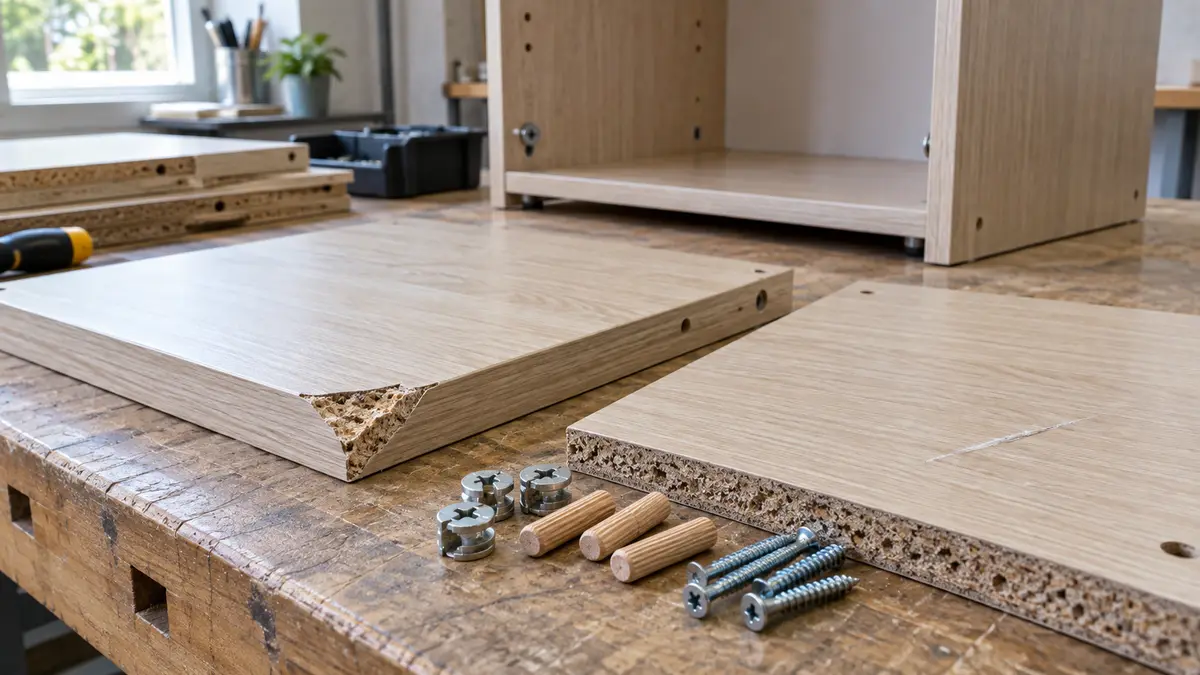
Agree the consequence before the defect label
For consumer products in Great Britain, the safety requirement covers normal and reasonably foreseeable use. Use safety as the starting point for classification. Treat a credible collapse, tip-over or injury hazard as critical. Agree major defects around assembly, function and saleable appearance, and minor defects around cosmetic departures within your agreed acceptance boundary.
Write these as purchasing classifications with product-specific examples. Start with the affected component, its position and the consequence. Our AQL sampling guide explains how agreed classes feed into shipment decisions; this guide supplies furniture examples for the inspection brief.
Unstable assemblies and damaged structural parts
Assemble sampled furniture using the supplied parts and instructions on a suitable level surface. Check whether movement comes from a loose joint, incorrect drilling, distorted panel or floor contact. Treat instability that creates a credible tipping or collapse hazard as critical. A drawer that binds without a safety hazard is major because normal use fails.
Inspect around chair leg joints, bed side-rail connections, shelf supports and cabinet fixing points. A split through a load-bearing joint or crushed board around its fixing is critical where it threatens collapse. A shallow mark on an unstressed underside may be cosmetic, but uncertain structural damage needs assessment before classification or release.
Classify missing fittings by their role
Compare the contents of each inspected pack with the approved fittings list, then assemble it without borrowing parts from another pack. Missing structural fasteners, shelf retainers or an anti-tip fitting are critical where their absence creates a safety hazard. Missing fittings that prevent correct assembly or normal use without creating that hazard are major.
A missing handle can be major when the door cannot be opened normally. A missing decorative screw cap may be minor where appearance remains within the agreed limit and no hazardous edge is exposed. Check fitting type and compatibility as well as quantity. Use our assembly-instructions guide to plan the assembly trial.
Judge finish faults at their actual location
Agree visible surfaces in the assembled position, viewing conditions and approved defect photographs before inspection. A finish fault can become critical if it leaves a hazardous splinter or sharp edge. Otherwise, judge appearance against the agreed boundary, including whether the defect is visible during ordinary use. Our visual-defect guide covers how to set that boundary.
| Fault and location | Suggested class | Reason |
|---|---|---|
| Deep scratch across a visible tabletop, beyond the agreed appearance limit | Major | The main display surface fails agreed customer acceptance. |
| Faint rub mark beneath a cabinet, within the agreed appearance limit | Minor | The concealed mark affects neither assembly nor use. |
| Chipped edge at a hand-contact point leaving a sharp projection | Critical | Normal handling presents an injury hazard. |
| Peeling edge banding on a visible door, without a sharp edge | Major | The visible finish fails agreed acceptance. |
| Small colour variation inside a concealed joint, within the agreed limit | Minor | The variation has no functional effect and is normally concealed. |
Working out your own order? Send us the product on WhatsApp and we reply the same working day: WhatsApp us
Make the report support a decision
Record the product version, affected part, exact location, assembly condition and observed consequence. Photograph the whole assembly and the defect close up; use video where movement matters. Explain why the class applies. Do not downgrade a dangerous fixing defect because it is hidden, or call a visible finish fault minor simply because the furniture still works.
Agree how overlapping defects are counted before inspection. A critical finding stops shipment approval. For other failures, agree sorting, replacement or rework and re-inspection against the original brief. Check corrected packs for complete, compatible fittings and repeat affected assembly checks. Finding no critical defect in a sample does not establish that every unit is safe.
Frequently asked questions
Is wobbling flat-pack furniture always a critical defect?
Judge the cause and consequence on a suitable level surface. Wobble that creates a tipping or collapse hazard is critical. Movement without that hazard may still be major if it fails agreed function or stability.
Are missing screws major or critical defects?
A missing screw is critical where its absence creates a safety hazard. It is major where it prevents correct assembly or normal use without that hazard. Classify by the screw's role and location.
Can a scratch on furniture be a major defect?
Yes. A scratch beyond the agreed appearance limit on a visible tabletop or door can be major. A tolerable mark on a concealed underside may be minor. Record its location and compare it with approved examples.
Can hidden damage be classified as minor?
Only after checking its consequence. Damage concealed inside a load-bearing joint may be critical. Concealment supports a minor cosmetic classification only when safety and function are unaffected.