China development costs: continue or stop?
Exclude unrecoverable development spending from the decision about your next payment. Compare continuing, redesigning and stopping using future cash outflows, realistic receipts, recoverable assets and delivery risks. Keep the historic loss visible separately. Cambridge China Bridge can help check the factory evidence behind that comparison.
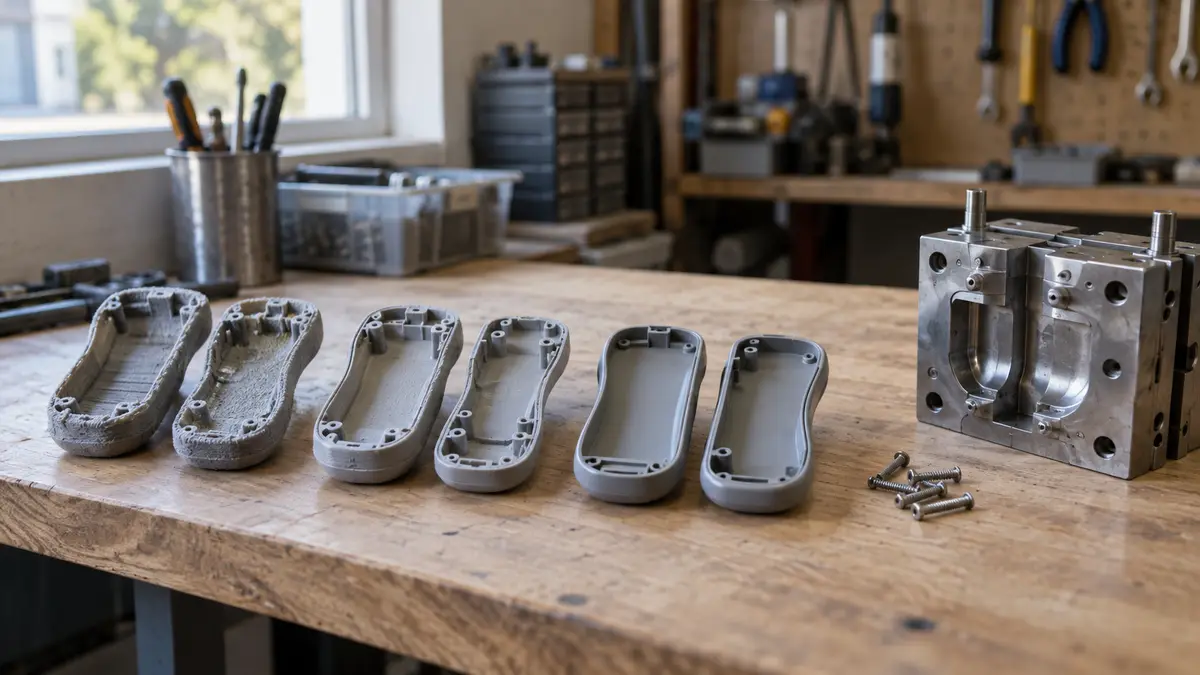
Separate the past loss from today's decision
A sunk cost is spending already incurred that cannot be changed. Paying for development does not make further spending worthwhile. Keep that expenditure in your programme history, but exclude it from the comparison of what to do next. Ask whether you would approve the remaining work today, given the assets and evidence now available.
Do not label every payment as lost. Check whether a deposit is refundable, a development credit remains usable, or tooling has a realistic alternative use. Treat uncertain recoveries separately from confirmed receipts. For the original development charge breakdown, see factory development charges.
Classify each remaining cash commitment
Build a payment ledger from invoices, accepted orders and written factory confirmations. For every item, record what triggers payment, whether it changes under each option, and what evidence supports cancellation or recovery. A future invoice is not automatically avoidable; ask what remains payable if you stop.
Include tooling completion, sample revisions, testing, production materials, inspection, freight, storage, finance and customer support where relevant. Show unavoidable future payments in the cash plan even when they are identical across options. Check disputed cancellation assumptions using cancelling or reducing an order.
| Item | Treatment in the decision |
|---|---|
| Paid development with no recovery | Record as historical loss; exclude from the forward comparison |
| Future payment identical under every option | Keep in the cash plan; it does not distinguish the options |
| Spending prevented by stopping or redesigning | Include against the option that triggers it |
| Refund, resale or reuse opportunity | Include only on an evidenced basis; separate uncertain recovery |
Compare complete routes from today
Use the same sales assumptions and assessment period for continuing, redesigning and stopping. Compare realistic customer receipts against all remaining cash outflows, including the costs of closing down. Use expected sellable output rather than the quantity ordered. For the delivery cost components, use understanding your landed price.
For redesign, include further development, replacement tooling, new samples and any testing needed for the changed design. For stopping, include cancellation, storage, handover and disposal costs where relevant, alongside evidenced refunds or asset sales. Test whether your preferred route still works with weaker demand, more defects or delayed receipts.
Value usable assets, not the money paid for them
Inspect what the development payment actually produced: usable drawings, tooling, approved samples, test results and manufacturing knowledge. Ask another capable factory what it can use and what it would need to repeat. Do not assume a paid mould is transferable, production-ready or worth its original price.
Get written confirmation of file access, tooling location, condition, release arrangements and transfer costs. Value reuse through the future work it genuinely saves; do not also count a resale receipt for an asset you intend to keep. Use development files and handover for the separate ownership and access questions.
Working out your own order? Send us the product on WhatsApp and we reply the same working day: WhatsApp us
Approve a bounded next step
Continue when the remaining route has credible demand, acceptable product evidence and fundable cash requirements. Redesign when a specific change could resolve the problem and its additional cost is justified. Stop when the remaining case fails, even if the historical loss is uncomfortable. A positive forecast alone is insufficient if you cannot fund the payments before receipts arrive.
If a decisive uncertainty remains, authorise a bounded check rather than open-ended development. Specify the question, deliverable, spending limit, review date and failure condition before paying. Record who approves the next commitment and what evidence would change the decision. Ask Cambridge China Bridge's staff in China to verify factory progress, asset condition and the remaining work.
Frequently asked questions
Should I continue because I have already paid for tooling?
Only if the remaining route is worthwhile. The payment itself is no reason to continue. Check whether the tooling works, can be accessed and saves future spending.
Is an unpaid factory balance a sunk cost?
Do not classify it by payment date alone. Check whether stopping changes what remains payable. Show unavoidable future payments in your cash plan.
Should I recover all development costs in the next order?
Track total programme profitability separately. Loading historical losses into the next-order decision can obscure whether that order makes a worthwhile contribution from today.
What if another sample could fix the problem?
Define the defect, proposed correction and acceptance evidence first. Approve a bounded revision only if its cost and likely benefit justify it, with a clear condition for stopping.