Check wood packaging on imports from China
For imports into Great Britain, check that solid wood pallets, crates and dunnage are treated and carry legible ISPM15 marks unless exempt. Check the actual materials and packaging before dispatch, rather than relying on a certificate. Arrange correction before loading if anything is doubtful. Cambridge China Bridge can coordinate these checks through its staff in China.
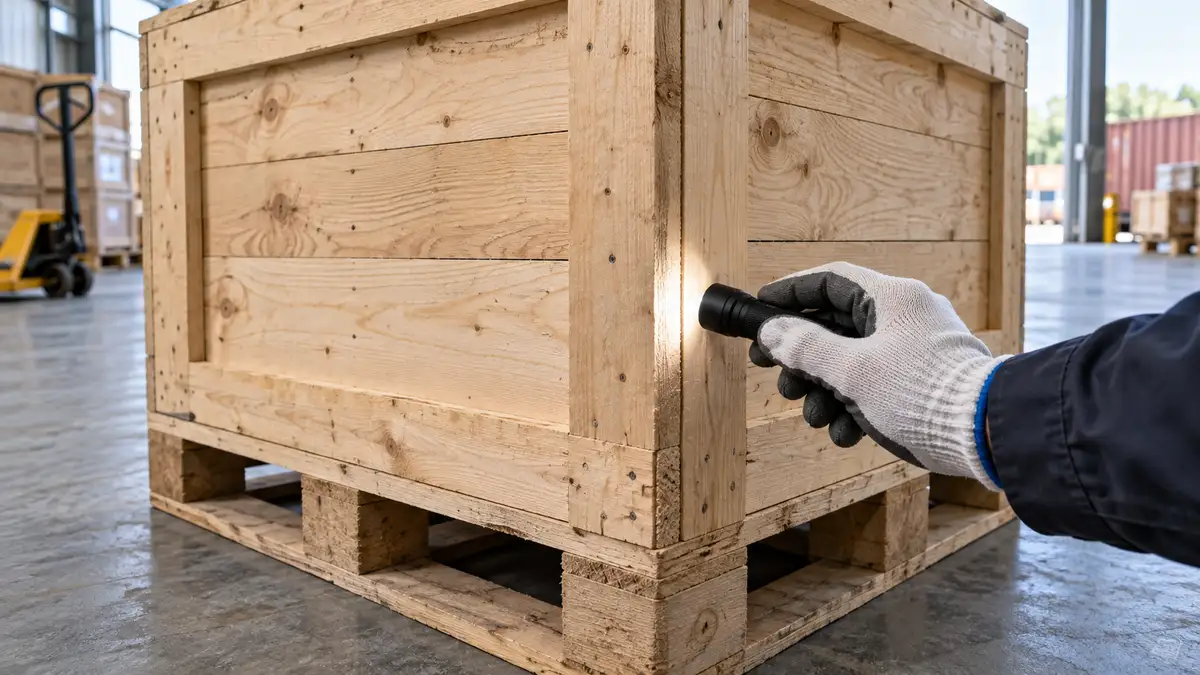
Identify every piece of wood packaging
This guide covers imports into Great Britain: England, Scotland and Wales. Northern Ireland has different wood packaging rules. Solid wood packaging imported to carry goods or supplied as packaging must meet ISPM15 requirements. Include loose blocks, wedges and bearers used to support cargo in your packing brief, rather than checking only the pallets.
Ask the factory and packing warehouse for a material list and photographs showing the complete packing arrangement. Buying pallets or crates as the product itself raises separate questions covered in our wooden pallets and crates guide. For mirrors, see our glass mirror packaging checks.
Check the mark on the actual packaging
The ISPM15 mark includes the country code, producer code, treatment applied and International Plant Protection Convention symbol. Ask for close photographs that let you read the complete mark, plus wider photographs linking it to the pallet or crate used for your order. Request the same evidence for loose support timber. For the pre-dispatch review, see our wood packaging mark checks.
Certification cannot replace the mark. Treatment records can help you investigate a doubtful stamp, but do not accept a supplier's certificate as the solution to missing marks. Check again after repacking or adding support timber, and include these photographs in the container loading check.
Check exemptions against the whole construction
The rules exclude processed, non-solid wood packaging such as plywood, and raw wood that is 6mm thick or less. Do not accept a description such as 'plywood crate' without checking its base, frame and internal supports. If solid timber is present, assess those components separately rather than assuming that the entire crate is exempt.
For a claimed exemption, ask for the material specification, construction drawing and photographs of exposed edges and supports. Keep these with the order. If a timber shipment uses associated dunnage and the supplier claims a special exclusion, ask the Forestry Commission to confirm the position for that shipment before dispatch.
Hold dispatch when the evidence fails
If marks are missing, unreadable or inconsistent with the supporting records, hold your shipping approval. Ask the supplier to replace the doubtful packaging with compliant packaging or arrange treatment and marking through an appropriate provider. Do not ask the factory merely to copy a stamp.
After correction, obtain fresh photographs of the finished packing, including any added wedges or bearers. Record who checked it and who authorised dispatch. Keep this packaging decision alongside the shipping documents covered in our UK customs clearance guide. For the wider shipment file, see import records to retain.
Working out your own order? Send us the product on WhatsApp and we reply the same working day: WhatsApp us
Follow the inspector's action if it arrives
Wood packaging may be checked at the border or inland premises. Non-compliant packaging could be rejected or destroyed, leaving you to arrange alternative transport for the goods. Plant health inspectors can issue statutory notices specifying remedial action.
If a problem is reported, ask your forwarder for the inspection finding and any notice, then contact the Forestry Commission for instructions. Keep the affected packaging separate and avoid moving, reusing or disposing of it while instructions are being clarified. Arrange replacement packing and cargo handling around the inspector's decision, and preserve photographs and correspondence for discussions with your supplier.
Frequently asked questions
Do pallets from China need an ISPM15 mark?
Solid wood pallets entering Great Britain must meet ISPM15 requirements, whether carrying goods or supplied as packaging. Check treatment and legible marks before dispatch.
Are plywood crates exempt from ISPM15?
Processed, non-solid packaging such as plywood is exempt. Check for solid wood bases, frames and supports before treating the whole crate as exempt.
Can a treatment certificate replace the pallet mark?
No. Certification cannot replace the ISPM15 mark. Ask for photographs of the actual packaging and investigate missing or unreadable marks before shipping.
What happens if imported wood packaging fails?
It could be rejected or destroyed, and you may need alternative transport for the goods. Obtain the inspection finding and follow any statutory notice and the inspector's instructions.