China-made blinds: child strangulation checks
Prefer a design without accessible operating cords or chains, then assess the complete sample throughout its movement. For corded blinds, check the exact safety device, fittings and instructions together, and plan installation away from beds and climbable furniture. Cambridge China Bridge can coordinate these checks with its own staff in China.
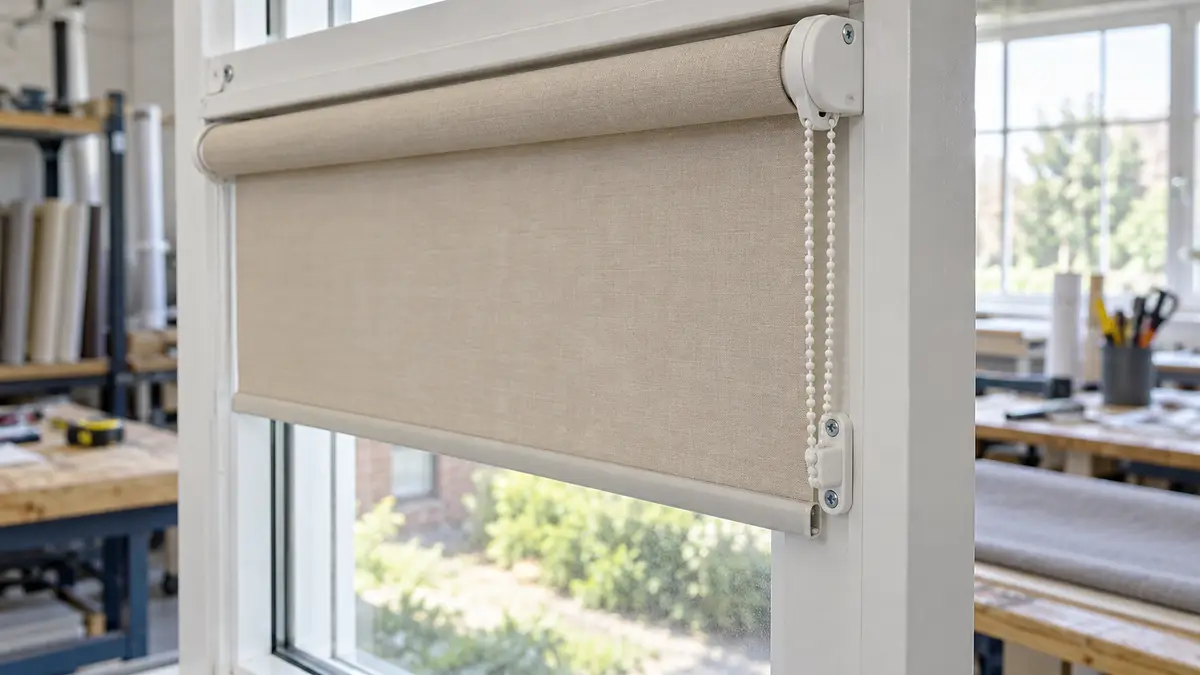
Specify the operating system before requesting quotes
Ask for cordless options such as a spring-operated bottom rail, wand or motorised mechanism. Treat “cordless” as a description to verify: request photographs of the front, back and inside the mechanism, and check whether lifting cords remain accessible. Choose a system the intended user can operate at the proposed window position.
Record the blind type, dimensions, operating system and intended setting in the enquiry. Ask a laboratory to identify the current applicable blind and strangulation test standards for that configuration. Our nursery-product safety guide covers broader product classification and testing; this guide focuses on the blind and its installation.
Look for loops throughout the blind’s movement
Mount the sample and examine it fully raised, lowered and between those positions. Inspect operating chains, pull cords and cords behind the fabric or slats. Ask whether loose cords can be pulled into a loop, whether joined cords separate as intended, and whether any accessible loop appears when the blind moves.
Request a continuous demonstration showing the back of the blind and its safety mechanism. Record concerns with photographs and send them to the laboratory. A factory demonstration helps identify what needs assessment; do not approve a design solely because someone pulls its cord and says it is safe.
Check the safety device with the actual blind
OPSS guidance says new blinds with looped cords must have child safety devices installed during manufacture or supplied with the blind. Make the specified device part of your order and packing checklist. For tensioners and tidies, the guidance calls for firm fixing to an adjoining surface so the cord or chain remains tight.
Ask for evidence covering the actual chain or cord, connector, tensioner, brackets and blind together. Check compatibility with cord thickness, chain construction and the proposed mounting arrangement. For a breakaway system, ask the laboratory to assess release and subsequent use. Use our test-report verification guide to check the report’s identity and scope before accepting substitutions.
Plan fitting around beds and furniture
OPSS advises keeping furniture away from blinds, including cots, beds, highchairs and play pens. Review the room layout before selecting the blind: include sofas, chairs, shelves and other climbing routes in your assessment. Do not treat distance from the floor alone as proof that a cord is beyond reach.
For a cleat system, OPSS advises positioning the cleat out of children’s reach on an adjacent surface at least 1.5 metres from the floor, then securing all spare cord in a figure of eight after use. Check that the proposed fitting position and cleat can accommodate the cord throughout operation. If the layout prevents suitable fitting, change the operating system or location before ordering.
Working out your own order? Send us the product on WhatsApp and we reply the same working day: WhatsApp us
Approve the packed kit and installation instructions
Have someone unfamiliar with the sample install it using only the supplied instructions and fittings. Check whether the safety device’s position, fixing method and use are clear, and ask the installer to identify unsuitable mounting surfaces. Our assembly-instruction testing guide explains how to organise this trial.
Approve a packed sample containing the specified blind, safety device, fittings, warnings and instructions. Put changes to safety components under written approval and ask the laboratory whether they affect the assessment. Before shipment, check production kits against that sample. Keep installation photographs and a handover record explaining operation, cord storage and checks for loose or damaged fittings.
Frequently asked questions
Are cordless blinds automatically child safe?
Verify the complete design. A blind without an external operating cord may still contain accessible lifting cords. Ask the laboratory to assess the actual sample and its movement.
Can I add a generic chain tensioner to imported blinds?
Do not assume compatibility. Ask for assessment of the tensioner with the actual chain, blind and mounting arrangement, then include the approved parts and fitting instructions in the order.
Can I fit a blind above a child’s bed?
OPSS advises keeping beds and other furniture away from blinds. Review the room layout and choose an operating system and fitting position that avoid accessible cords or chains.
What should I ask the Chinese blind factory for?
Request a complete sample, operating demonstration, component specification, relevant test evidence and a packed installation kit. Match these to the model and configuration you will buy.