Importing from China to Australia: Duties, Rules and Steps
Check product requirements, freight and customs arrangements before ordering. Consignments valued over AUD1,000 entering home consumption require an Import Declaration. Duty depends on classification and origin; taxable imports attract 10% GST on the taxable import value.
Buying from China for a business? How our UK China sourcing agent service works · China sourcing agent for businesses in Australia
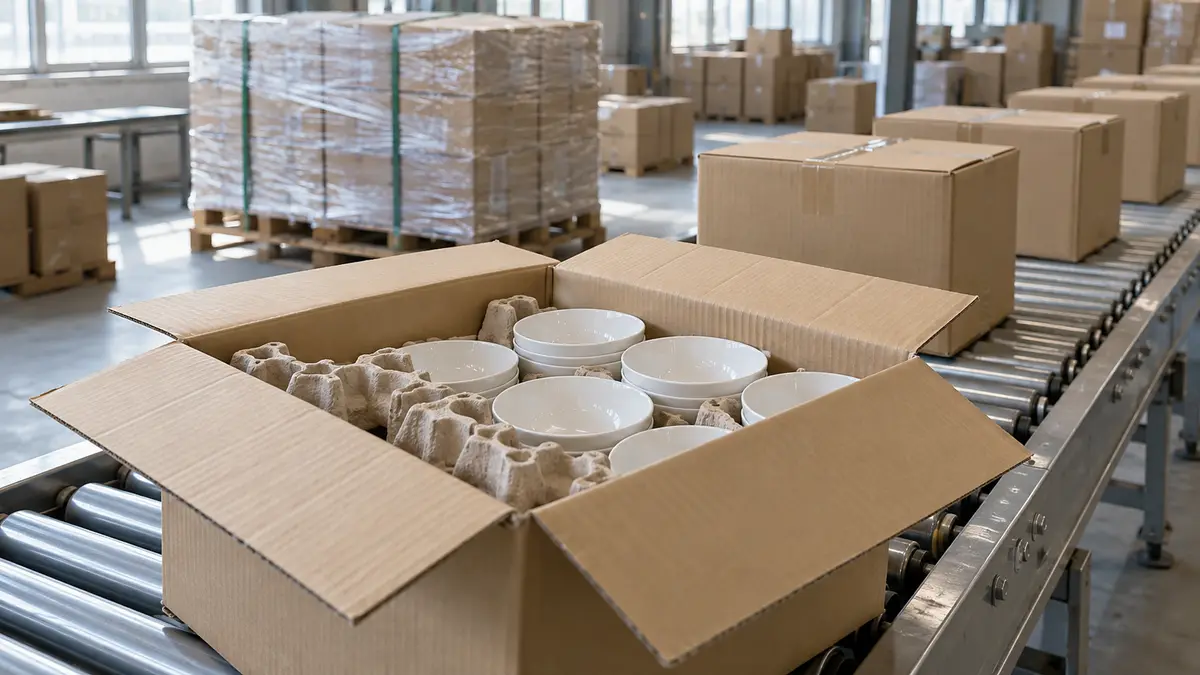
What Australian Border Force expects of an importer
Australian Border Force (ABF) requires an Import Declaration for consignments valued over AUD1,000 entering home consumption. Applicable duties, taxes and charges must be paid before release; approved GST deferral is an exception to immediate GST payment.
The goods' owner or an Australian licensed customs broker lodges the declaration. ABF accepts electronic lodgement through the Integrated Cargo System (ICS) and documentary lodgement at an ABF counter. ABF recommends a broker for first-time or infrequent importers.
Air or sea cargo valued at AUD1,000 or less generally requires a Self-Assessed Clearance (SAC) declaration. International mail uses a different process. Overseas sellers may collect GST on low-value consumer purchases at checkout; alcohol and tobacco have different border treatment.
Check restrictions and permissions before paying. Goods requiring an import permit need an Import Declaration or long-format SAC declaration. Biosecurity referrals may require further information.
Duties, GST and the landed cost
There is no single duty rate for everything bought from China. Ask your broker to confirm classification, customs value and duty treatment against the current working tariff and legislation. Check for anti-dumping or countervailing duties, including when claiming free-trade preferences.
The China–Australia Free Trade Agreement (ChAFTA) provides preferential treatment for qualifying originating goods. A Chinese seller or departure port alone does not establish eligibility. Confirm the origin rules and evidence required; a declaration of origin is subject to specific conditions.
GST on taxable imports is 10% of the taxable import value: customs value, applicable customs duty, transport and insurance to the place of consignment in Australia insofar as not already included, and applicable Wine Equalisation Tax. Ask your broker to calculate it. Preferential customs duty does not itself remove GST.
Request a landed-cost breakdown covering goods, collection, export handling, freight, insurance, Australian destination charges, clearance, applicable duty and GST, biosecurity work and final delivery. Identify fixed, estimated and excluded charges.
| Cost or requirement | What determines it | What to request |
|---|---|---|
| Customs duty | Tariff classification, origin and applicable concessions or additional duties | Written classification and duty treatment from your broker |
| ChAFTA preference | Origin qualification and supporting evidence | Confirmation of the evidence required for your goods |
| Import GST | Taxable import value and any applicable exemption; approved deferral affects payment timing | A calculation showing the valuation components and payment arrangements |
| Freight and destination charges | Route, transport mode, shipment measurements and delivery scope | An itemised quote naming the Australian receiving location |
| Biosecurity | Goods, materials, packaging and applicable import conditions | Confirmation of required permits, documents and possible inspection or treatment |
Check the product and biosecurity requirements before production
Before approving production, check the requirements for the exact product and intended use. Establish which mandatory safety, testing and labelling requirements apply. Ask for evidence of compliance rather than relying only on supplier assurances.
Use the government's Biosecurity Import Conditions system (BICON) to check entry conditions, documentation, treatment and permits. Check materials and packaging as well as the product, particularly timber, wooden articles and bamboo packaging.
Check that invoices, packing lists, transport documents, specifications, inspection records and required origin, permit or treatment documents describe the shipment consistently. Resolve discrepancies before dispatch.
What happens in China, and who does it
Agree the supplier checks, specification, approved sample, production checks and loading supervision before ordering. Specify who reports to you and how package counts and any container seal number will be recorded.
Ask Cambridge China Bridge to confirm whether it can support your Australian order and the delivery scope it can quote. Identify the importer and any appointed Australian licensed customs broker. If combining factory orders, agree warehouse receiving checks and loading responsibilities.
For inspection planning, see pre-shipment inspection for Australian buyers. Cambridge China Bridge's published pricing says audits and inspections are usually included for orders placed with it; complex third-party checks cost extra by prior agreement. Confirm the scope for your order.
| Step | You or your appointed Australian broker | Cambridge China Bridge, subject to written agreement |
|---|---|---|
| Factory choice | Approve the supplier and sample | Agree any factory search, checks and comparison |
| Quality | Set acceptance criteria and establish Australian product requirements | Agree production and pre-shipment checks |
| Loading and freight | Approve the delivery term, route and quote | Agree loading checks and transport quotation responsibilities |
| Import declaration | The goods' owner or licensed broker lodges the declaration and arranges applicable payments | Agree coordination of China-side shipping documents |
Choosing a freight forwarder from China to Australia
Give each forwarder the same enquiry: collection address, destination postcode, product and materials, package dimensions, gross weight, stackability, cargo-ready date and delivery requirements. Disclose batteries, liquids and other cargo requiring assessment. Ask whether the quote ends at a port, airport or final address.
Compare full container load (FCL) and less than container load (LCL). FCL uses a container for your shipment; LCL combines cargo from different shippers and requires consolidation and unpacking. Compare charges at both ends, including minimum charges. See how shared-container LCL from China works.
Request an air-freight comparison where appropriate. Ask for chargeable weight, routing, airport handling, clearance and delivery charges. Obtain a dated itinerary rather than relying on a generic transit estimate.
| Destination | Published route evidence | What to confirm before booking |
|---|---|---|
| Sydney | Maersk's Qilin launch notice lists Shanghai–Sydney–Melbourne. Its later temporary adjustment adds Hong Kong and alternates Australian calls. | Whether your booked sailing calls directly at Sydney or uses a connection |
| Melbourne | Maersk's launch notice includes Melbourne; its later temporary adjustment changes Qilin's rotation. | The actual vessel, connections and Melbourne arrival for your shipment |
| Brisbane | ANL's Central China service listing includes Shanghai, Ningbo, Sydney, Melbourne and Brisbane. | Port sequence, available sailing and whether the quoted movement involves transshipment |
| Fremantle | ANL's South East Asia to Australia service listing includes Singapore and Fremantle. | The China feeder, connection, Fremantle arrival and onward delivery |
Transit times: use dated carrier information
Maersk's 22 May 2026 launch notice lists Shanghai–Sydney transit times of 14 days on Qilin and 18 days on Dragon, and Shanghai–Melbourne times of 17 and 21 days respectively. These are historical service figures, not door-to-door delivery promises.
Maersk's 21 September 2026 notice temporarily changes Qilin to Shanghai–Hong Kong–Melbourne/Sydney, alternating Australian calls. Check whether your booking is affected before using the launch figures.
For every destination, obtain a dated itinerary for the booked departure and connections. Ask the forwarder to separate sea or flight transit from collection, consolidation, clearance, biosecurity and final delivery.
Working out your own order? Send us the product on WhatsApp and we reply the same working day: WhatsApp us
What to ask before appointing the forwarder
Who contracts with me, issues the transport document and acts as the Australian destination agent? Is a licensed customs broker included, or must I appoint one?
Which carrier, departure port, destination terminal and connections are quoted? How will sailing changes or missed connections be handled?
Are origin handling, destination terminal or warehouse charges, delivery orders, brokerage and delivery included? Which examination, treatment, storage, demurrage or detention charges could be additional?
What free time applies and when does it start? Who arranges container return or LCL collection? Can the delivery vehicle access the address, and who unloads?
What cargo insurance is available, what does it exclude, and how are claims handled? Record the scope and exclusions before paying.
Who you contract with
Establish whether the factory sells directly to you or another business purchases and resells the goods. Record the seller, sourcing provider, payment recipient and responsibilities for defects, inspection, documents and shipping.
Keep the goods contract, sourcing scope and freight quotation consistent. For a port quotation, name the port and delivery term, and identify the destination work you must arrange.
Before commissioning sourcing or quotation checks, request a written scope and fee breakdown. For larger or multi-factory orders, specify supplier comparison, production checks and consolidation responsibilities.
Frequently asked questions
I'm buying for myself. Do I still need an import declaration?
Personal use alone does not remove declaration requirements. ABF's online-shopping guidance requires an Import Declaration for goods valued over AUD1,000. Check applicable payments and the process for your delivery method.
Can my freight forwarder clear customs for me?
Ask whether the service includes an Australian licensed customs broker. The goods' owner or a licensed broker can lodge the Import Declaration; booking freight does not establish that clearance is included.
Does ChAFTA mean everything I buy from China is duty-free?
No. Confirm the goods' originating status, tariff treatment and required evidence before relying on preferential duty.
Do I pay GST if the customs duty is zero?
Zero customs duty does not itself exempt an import from GST. Taxable imports attract 10% GST on the taxable import value.
Should I choose LCL, a full container or air freight?
Compare complete quotes against cargo size, handling needs and deadlines. Check LCL destination charges, FCL delivery and container return, and air-freight chargeable weight.
How long will shipping from China to Australia take?
Obtain a current itinerary for your booked service. The historical carrier figures above are route-specific; allow separately for collection, consolidation, clearance and delivery.
Can a UK sourcing company arrange goods for Sydney or another Australian port?
Ask Cambridge China Bridge to confirm availability and quote the exact Australian destination and scope. Identify who will import the goods and lodge the Australian declaration.
Can I combine furniture from several Chinese factories?
Ask for a consolidation proposal. Before sending goods to a warehouse, agree receiving checks, packaging, storage, loading records and shipping documents.
Sources
- Australian Border Force — Import declarations, SAC declarations and lodgement
- Australian Border Force — Buying online, low-value goods and border payments
- Australian Border Force — GST and other taxes when importing
- Australian Border Force — Current working tariff
- Australian Border Force — China–Australia Free Trade Agreement
- Australian Border Force — Types of imports
- Australian Department of Agriculture, Fisheries and Forestry — Biosecurity Import Conditions system
- Maersk — Qilin launch and Shanghai transit comparisons, 22 May 2026
- Maersk — Temporary Qilin routing adjustment, 21 September 2026
- ANL — Asia–Australia service listings
- ONE — Linked schedule PDF; contents not verified or relied on here
- Australian Border Force — Licensed customs brokers
- Australian Border Force — Dumping and countervailing duties
- Australian Department of Foreign Affairs and Trade — Guide to using ChAFTA
- ACCC Product Safety — Product safety standards and how to comply
- Australian Department of Agriculture, Fisheries and Forestry — Timber and bamboo packaging
- Australian Department of Agriculture, Fisheries and Forestry — Importing timber and related products
- Maersk — How LCL works
Buying from China for a business outside the UK? China sourcing agent for businesses in Australia →