Is a China-bought respirator safe for DIY?
Identify the actual dust or vapour, confirm the manufacturer's approved mask and filter combination, and arrange competent face-fit testing for the wearer. Facial hair can defeat the seal; seller demonstrations cannot establish your protection. Supplier evidence can be checked by Cambridge China Bridge.
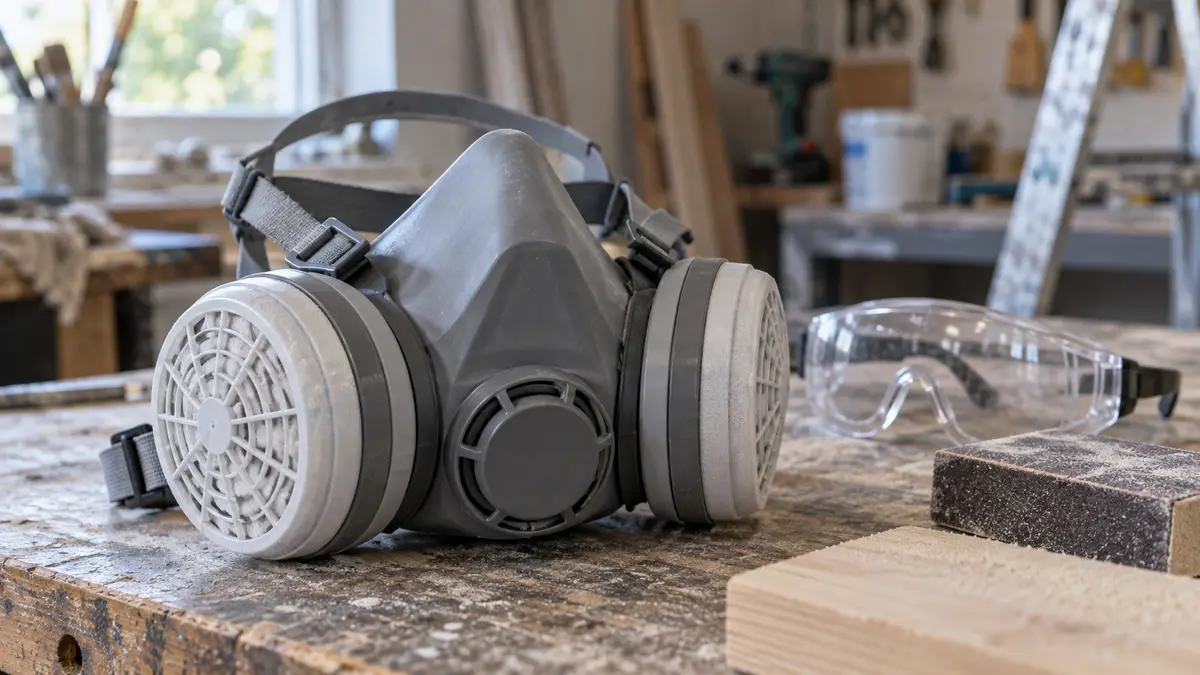
Start with the material and task
Write down what you will cut, sand, mix or spray, the material or chemical involved, and where the work happens. For coatings, adhesives and solvents, obtain the safety data sheet and describe how you will use the product. Ask a competent adviser to assess the exposure and controls needed, rather than choosing a mask from a listing headed 'renovation' or 'hobby'.
Plan how to reduce dust or vapour at source and keep other people away from exposure. If old building materials may contain asbestos, stop disturbing them and seek specialist advice. Treat spray painting and unidentified chemicals as reasons to obtain task-specific advice before buying or using a respirator.
Match the filter and its connection
Particle filters do not protect against gases or vapours. Gas and vapour filters alone do not protect against particles or oxygen-deficient atmospheres. Ask the manufacturer to identify the filter suitable for the named substance and task, including whether combined protection is needed. A cartridge labelled 'organic vapour' is not enough information to approve every coating or spraying process.
Request written confirmation of the exact facepiece, cartridge, prefilter, retainer and adaptor combination. A matching thread or bayonet connection does not establish compatibility. Ask for replacement instructions, storage conditions, expiry information and a task-specific filter-change plan. Check replacement availability before ordering; our respirator cartridge guide covers the sourcing side.
Arrange a competent face-fit test
HSE guidance recommends face-fit testing for tight-fitting facepieces and says testing should be conducted by a competent person. For home or hobby use, arrange this as a practical safety check. Ask the tester about relevant training, experience and the suitability of their method for your facepiece. A seller fitting a mask to somebody else cannot establish that it fits you.
Take the actual make, model and size you intend to use, together with any spectacles or protective equipment worn during the task. Ask for a record identifying the wearer, facepiece, method and result. Learn the manufacturer's seal check for every fitting, but do not treat that check as a substitute for face-fit testing. Seek reassessment if the facepiece or your facial fit changes.
Resolve facial hair before use
Stubble and beards prevent a good seal with a tight-fitting mask. Do not accept tighter straps or a seller's demonstration as a solution to hair beneath the sealing surface. Plan to be clean-shaven where the mask seals whenever you use it, rather than only for the fit-test appointment.
If you intend to keep facial hair, ask a competent adviser about a suitable loose-fitting powered hood or another system that does not depend on a face seal. Specify the hazard and task before buying it. A fan attached to a tight-fitting mask does not remove the need to assess its fit.
Working out your own order? Send us the product on WhatsApp and we reply the same working day: WhatsApp us
Use seller demonstrations only for limited checks
A video can show assembly, strap adjustment or the supplied parts. Smoke tricks, blocked-inlet suction checks and claims that the demonstrator cannot smell a substance do not establish protection for your hazard and face. Do not recreate demonstrations using hazardous dust, solvents or smoke. Keep product evidence, filter suitability and wearer fit as separate approval questions.
For the import and certification questions, use our medical devices and PPE guide. For checking report identity and scope, use how to verify a product test report. Send the factory the agreed configuration and prohibit unapproved substitutions. Cambridge China Bridge's staff in China can check supplied units and documents against that specification; this does not replace the wearer's assessment or fit test. For a recall notice, see our guide to UK recalls of China-bought items.
Frequently asked questions
Will a dust filter protect me from paint vapour?
Particle filters do not protect against gases or vapours. Give an adviser the coating's safety data sheet and application method so they can assess the protection needed.
Can I use another brand's respirator cartridges?
Ask for written manufacturer confirmation covering the exact mask, cartridge and any adaptor. Being able to attach the cartridge does not establish compatibility.
Can I wear a tight-fitting respirator with a beard?
Hair beneath the sealing surface prevents a good seal. If you keep facial hair, seek advice on a suitable system that does not rely on a face seal.
Does a seller's smoke test prove a respirator works?
It does not establish suitability for your substance, exposure or face. Check the product evidence and filter combination, then arrange competent face-fit testing for a tight-fitting mask.