Sourcing worsted wool flannel from China
Worsted wool flannel fabric from China carries 6% to 8% UK duty, depending on its blend. Textile labels must show fibre content; confirm animal-hair identity where the tariff flags CITES. Specify the raised finish and check pilling, shade and shrinkage. Cambridge China Bridge sources worsted wool flannel fabric.
Buying from China for a business? How our UK China sourcing agent service works · China sourcing agent for small orders and first imports
Duty by fibre blend and finished weight
Read from the UK Trade Tariff on 4 October 2026, heading 5112 covers woven fabrics of combed wool or combed fine animal hair. Worsted wool flannel is bought as a raised-finish fabric within this family. The supplied extract records 8% duty for goods from China, or 6% in the other-fabrics category containing more than 10% silk. It records no anti-dumping or countervailing duties and no suspensions.
The tariff attaches CITES import and export controls throughout these lines. For animal hair within the CITES permit categories, obtain the required permit and ask your customs broker to confirm the species-specific documentation for import from China. Code 5112 19 00 00 also carries cat and dog fur import and export controls. Imports and exports of cat and dog fur, including products made from it, are banned; obtain clear fibre identification from the mill.
Confirm the commodity code using the combed-yarn construction, fibre percentages and finished weight. The raised surface alone does not establish the code. See the worsted wool fabrics guide for the wider heading.
| Goods | Commodity code | Duty | Anti-dumping or countervailing duty on China |
|---|---|---|---|
| Worsted flannel with at least 85% wool, not exceeding 200 g/m² | 5112 11 00 00 | 8% | None |
| Worsted flannel with at least 85% wool, exceeding 200 g/m² | 5112 19 00 00 | 8% | None |
| Worsted flannel mixed mainly or solely with man-made filaments | 5112 20 00 00 | 8% | None |
| Worsted flannel with man-made staple fibres, not exceeding 200 g/m² | 5112 30 10 00 | 8% | None |
| Worsted flannel with man-made staple fibres, exceeding 200 g/m² | 5112 30 80 00 | 8% | None |
| Other worsted wool flannel containing more than 10% silk | 5112 90 10 00 | 6% | None |
Specify the flannel nap and underlying cloth
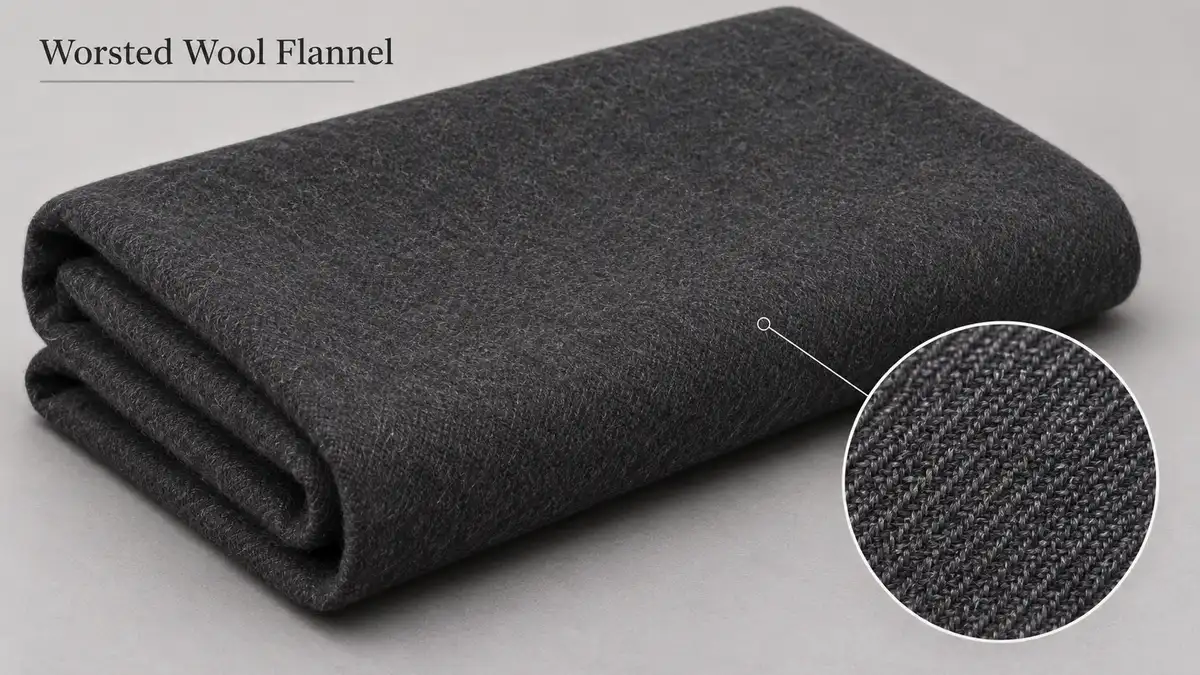
Specify combed wool yarn, the full fibre blend, yarn count, weave, finished weight and usable width. Agree whether the face or both sides are raised, the nap direction, surface coverage and softness. Keep an approved swatch showing the required finish and shade, including any mélange effect.
Agree pilling, rubbing fastness and dimensional stability checks for the intended care method. Trial the cloth through cutting, pressing and garment making, since a soft surface can conceal an unstable base cloth. Arrange testing and certification support around the actual blend and finish.
Textile labels must show fibre content, including fur and other animal parts. REACH restrictions can limit, ban or set conditions on substances placed on the market or used. Ask the mill to identify dyes and finishing treatments, and agree a laboratory assessment of applicable restrictions.
Worked duty example
Illustrative example, not a quote: Illustrative order: 5,000 m² of worsted wool flannel, 180 g/m² under 5112 11 00 00, invoiced at £60,000 free on board, with £1,500 of freight and insurance to the UK. The customs value is £61,500. Duty at 8% is £4,920. Import VAT at 20% is charged on the customs value plus duty, £66,420, so it is £13,284. Import taxes total £18,204; a VAT-registered importer can usually reclaim the VAT, so the lasting cost is the £4,920 of duty. The import duty and VAT guide explains each step.
Inspection checklist
Fibre and weight: compare lot test results with the agreed blend and finished weight; check usable width and piece lengths against the packing list.
Nap and shade: compare rolls with the approved swatch in the same nap direction; look for patchy raising, flattened areas and shade changes across the width.
Wear and care: check pilling, rubbing colour transfer and dimensional change after the intended cleaning method; inspect the surface again after testing.
Roll condition: inspect for weaving faults, creases, dampness and mildew; match roll labels and dye-lot references to the order.
Working out your own order? Send us the product on WhatsApp and we reply the same working day: WhatsApp us
What goes wrong
Heavy raising can make a sample feel soft while hiding uneven cloth or weak areas. Production rolls may have a shorter nap, shed loose fibres or develop pills. Opposing nap directions can make garment panels look different even when they came from the same roll.
Shade variation between dye lots and shrinkage after cleaning can spoil a tailoring order. Retain approved and production samples, keep dye lots identifiable and test the finished cloth before cutting the bulk order.
Cambridge China Bridge sources these products for UK businesses, checking the factory and the documents before shipment. See factory verification. For repeat volumes, see container programmes.
Frequently asked questions
What is the UK import duty on worsted wool flannel from China?
The supplied tariff extract records 8% for the wool and man-made-fibre categories, or 6% for other fabrics containing more than 10% silk. It records no anti-dumping or countervailing duties.
How do I confirm that flannel is worsted?
Ask the mill to identify the combed yarn and underlying weave. Keep its construction specification with the approved swatch; the raised surface alone does not identify the yarn preparation.
Which tests matter for worsted wool flannel?
Check fibre composition, finished weight, pilling, rubbing fastness and dimensional change after the intended cleaning method. Compare the nap and shade before and after testing.
Why do flannel garment panels look different?
Nap direction changes how the surface reflects light. Compare panels in the same direction and check whether different rolls or dye lots were mixed during cutting.