Sourcing women's woven Oxford shirts from China
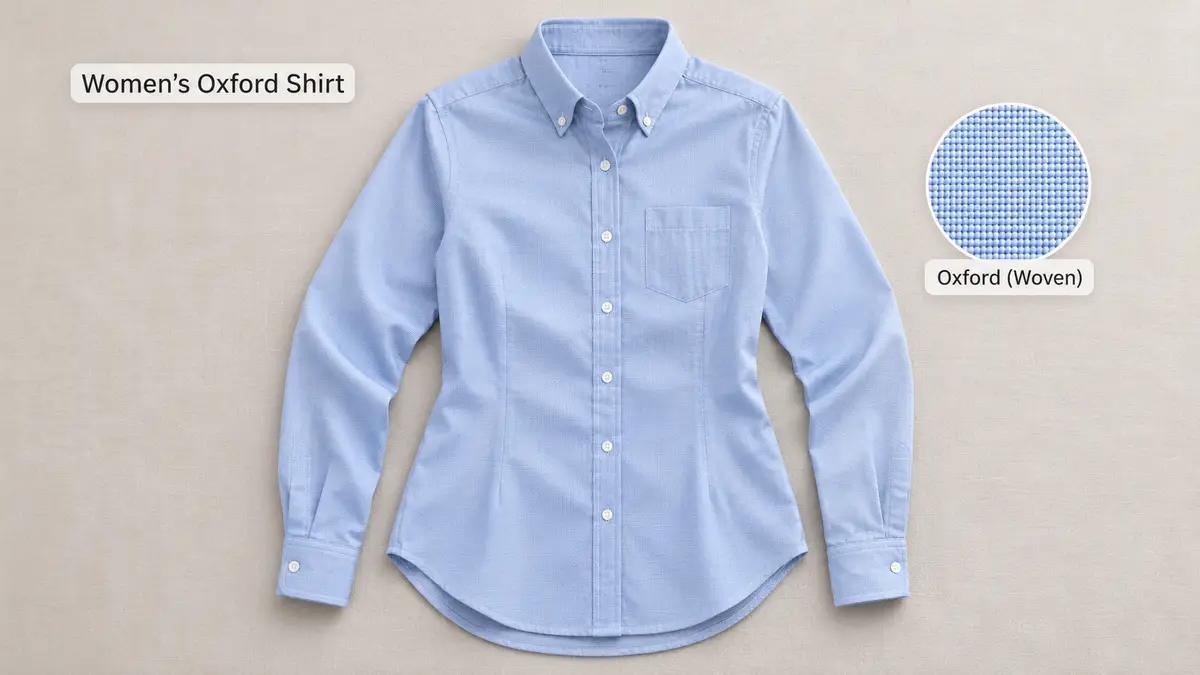
Women's woven Oxford shirts from China carry 12% UK duty across the listed fibre categories, with no trade remedies or suspensions in the supplied tariff snapshot. Fibre composition must be labelled correctly. Specify the Oxford weave, collar construction and fit before ordering. Cambridge China Bridge sources women's woven Oxford shirts.
Buying from China for a business? How our UK China sourcing agent service works · China sourcing agent for small orders and first imports
12% duty on women's woven Oxford shirts
Read from the UK Trade Tariff on 1 October 2026, heading 6206 covers women's or girls' woven blouses, shirts and shirt-blouses. All supplied lines carry 12% duty for goods from China, with no anti-dumping or countervailing measures and no suspensions recorded. This guide focuses on women's woven Oxford shirts; see the wider blouse and shirt guide for the rest of the heading.
The snapshot attaches CITES import and export controls to the wool or fine animal hair line and the other textile materials line. For any potentially listed material, check permit requirements and restrictions for the species and country of origin. The species-specific requirement for a particular shirt is not established here: ask your customs broker to confirm it before ordering.
Oxford describes the weave, so do not choose a code from the fabric name alone. Give your broker the garment construction, tested fibre composition and any printing details, then confirm the line using the commodity code guide. The cotton batik line is specifically for hand-printed batik goods.
| Goods | Commodity code | Duty | Anti-dumping or countervailing duty on China |
|---|---|---|---|
| Women's cotton Oxford shirts, other than hand-batik printed | 6206 30 00 90 | 12% | None |
| Women's Oxford shirts of man-made fibres | 6206 40 00 00 | 12% | None |
| Women's flax or ramie Oxford shirts, other than hand-batik printed | 6206 90 10 90 | 12% | None |
| Women's cotton Oxford shirts, hand-printed by the batik method | 6206 30 00 10 | 12% | None |
Specify the Oxford weave, collar and women's fit
Approve a fabric swatch showing the basket-weave texture, fibre composition, weight and shade. State whether the shirt is cotton or a blend, and agree shrinkage and colour-fastness limits. Specify collar shape, collar stand, interlining, button-down points if used, cuffs, placket, darts, pocket position and curved hem. Approve the size set with chest, waist, hip, shoulder and sleeve measurements, checking bust coverage when seated and reaching.
For sale in Great Britain, the label must show fibre content, including fur and other animal parts. Check the bulk fabric against the composition artwork before printing labels. Agree care instructions that match the wash tests. UK businesses importing or selling consumer products are responsible for their safety; include loose buttons, sharp trim and retained needles in your checks.
Worked duty example
Illustrative example, not a quote: Illustrative order, not a quote: 1,000 women's cotton woven Oxford shirts under 6206 30 00 90, invoiced at £4,000 free on board, with £600 of freight and insurance to the UK. The customs value is £4,600. Duty at 12% is £552. Import VAT at 20% is charged on the customs value plus duty, £5,152, so it is £1,030.40. Import taxes total £1,582.40; a VAT-registered importer can usually reclaim the VAT, so the lasting cost is the £552 of duty. The import duty and VAT guide explains each step.
Inspection checklist
Fabric: compare the bulk Oxford texture, weight, fibre composition and shade with the approved swatch; check for weaving faults and colour variation between panels.
Fit: measure garments across the size range, check bust gaping, dart position, sleeve movement and hem balance, then remeasure washed samples against the agreed tolerances.
Construction: check collar symmetry and roll, interlining bubbles, cuff alignment, straight plackets, button attachment and clean buttonholes.
Labels and packing: compare fibre labels and care instructions with approved artwork, verify size labels and carton assortments, and check arrival stock for dampness or mould. Use the inspection guide to agree the inspection scope.
Working out your own order? Send us the product on WhatsApp and we reply the same working day: WhatsApp us
What goes wrong
A sample can have the right chest measurement but still gape at the bust because button spacing or dart placement is wrong. Test the fit in movement before approving production. Collar points can twist, and interlining can bubble after washing; inspect washed samples rather than relying only on pressed factory samples.
Bulk fabric substitutions change the Oxford texture, shrinkage and fibre composition. Keep an approved swatch and sealed garment sample, and compare arrival stock with both. Check pale shirts for opacity and dark or contrasting yarns for colour transfer onto collars and cuffs.
Cambridge China Bridge sources these products for UK businesses, checking the factory and the documents before shipment. See factory verification. For own-brand ranges, see sourcing for brands.
Frequently asked questions
What is the UK import duty on women's Oxford shirts from China?
The supplied UK Trade Tariff snapshot shows 12% duty across heading 6206, with no anti-dumping or countervailing measures and no suspensions recorded.
Which commodity code covers cotton women's Oxford shirts?
The supplied cotton line for goods other than hand-printed batik is 6206 30 00 90. Confirm the finished garment and fibre composition before declaring the code.
What labels do women's Oxford shirts need?
Check the bulk fabric against the approved label artwork.
What should I check on women's Oxford shirt samples?
Check bust gaping, dart placement, collar roll, sleeve movement and hem balance. Wash samples to check shrinkage, colour transfer and interlining bubbles.