Sourcing USB video capture cards from China
The relevant heading 8543 lines carry 0% to 2% duty from China: other parts are 0% and other apparatus is 2%, subject to classification. For GB sale, conformity marking must be visible, legible and indelible. Specify recorded output separately from accepted input. Cambridge China Bridge sources USB video capture cards.
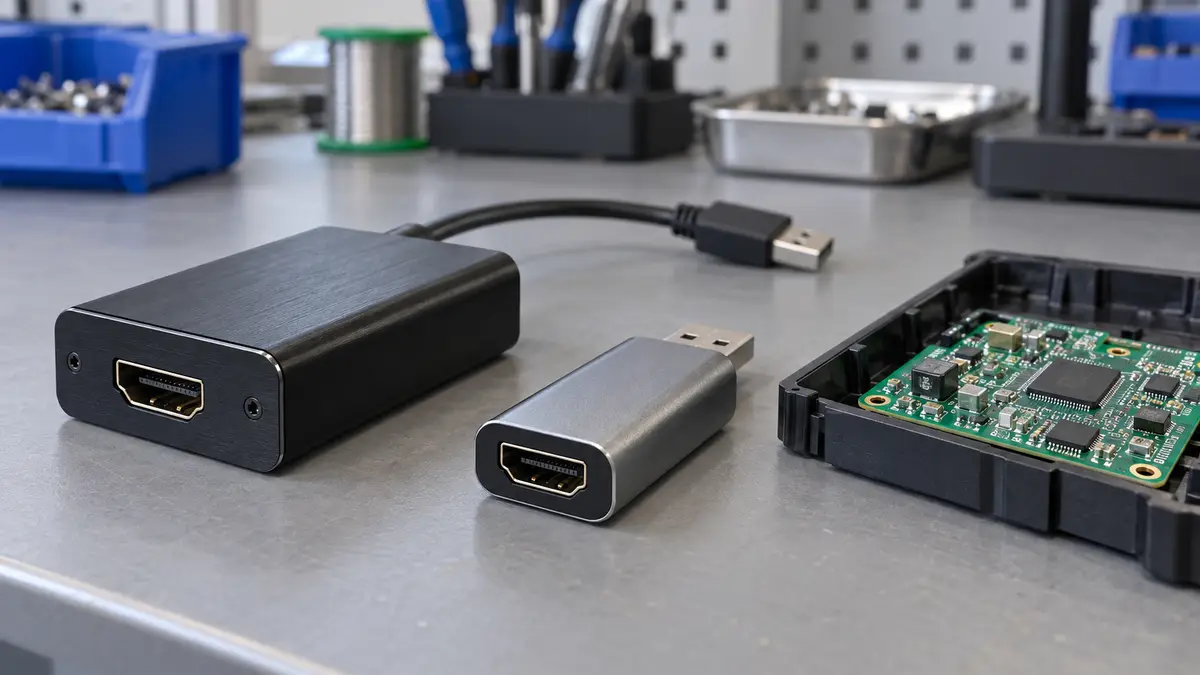
Duty depends on the card's function
Read from the UK Trade Tariff on 30 September 2026, heading 8543 covers electrical apparatus with individual functions not specified elsewhere in the chapter. Other apparatus under 8543 70 90 99 carries 2% duty from China; other parts under 8543 90 90 00 carry 0%. The table repeats the apparatus line for different buying specifications, rather than implying separate tariff subdivisions. Neither line shows anti-dumping or countervailing duty.
The apparatus line has a narrowly described suspension for named products, not a general capture-card exemption. Its supplied footnote is truncated, so confirm the complete scope before claiming relief. The tariff also attaches torture-goods import prohibition, fluorinated greenhouse gas import control and torture-goods export restriction; the parts line has the export restriction. Ask your customs broker to confirm the requirements for the actual goods.
Confirm the commodity code using the signal path, interfaces, recording function and datasheet. This guide does not establish that every device sold as a capture card belongs in this heading. See the wider electronics guide for related sourcing issues.
| Goods | Commodity code | Duty | Anti-dumping or countervailing duty on China |
|---|---|---|---|
| Other apparatus: external USB video capture cards, subject to classification | 8543 70 90 99 | 2% | None |
| Other parts of heading 8543 apparatus, subject to classification | 8543 90 90 00 | 0% | None |
Specify the recorded output
Write down the video input connector, computer connection, accepted input formats and actual captured resolution and frame rate. State whether the card captures audio, offers loop-through, needs an external power supply or requires a driver. Name the operating systems and recording applications used by your customers, and test an approved sample with that exact setup.
Ask for electromagnetic compatibility and hazardous-substance assessment documents matched to the production model, circuit board and supplied cable. GB guidance recognises CE marking indefinitely, and conformity marking must be visible, legible and indelible. Under hazardous-substance rules, individual products must show the importer's name or trademark and a contactable address on the product or packaging. Electrical equipment producers must register annually; plan your registration route before sale.
Worked duty example
Illustrative example, not a quote: 50 USB video capture cards; illustrative order, assuming this classification under 8543 70 90 99, invoiced at £1,500 free on board, with £600 of freight and insurance to the UK. The customs value is £2,100. Duty at 2% is £42. Import VAT at 20% is charged on the customs value plus duty, £2,142, so it is £428.40. Import taxes total £470.40; a VAT-registered importer can usually reclaim the VAT, so the lasting cost is the £42 of duty. The import duty and VAT guide explains each step.
Inspection checklist
Capture: record from the agreed source and inspect the saved file's resolution, frame rate, colour and audio synchronisation.
Compatibility: connect sampled units to the agreed computers and applications; check detection, driver installation, reconnection and audio selection.
Stability: run continuous recording until the enclosure warms up; check dropped frames, freezes, noise and intermittent connections.
Arrival: compare the circuit board, cable, connectors, model labels and packaging with the approved sample; inspect connector looseness and repeat functional checks on received stock.
Working out your own order? Send us the product on WhatsApp and we reply the same working day: WhatsApp us
What goes wrong
A headline input specification can hide lower recorded output. Other failure points include audio drift, colour changes, unstable drivers and recording that stops as the card heats up. Loop-through output can remain clear while the captured file is faulty, so assess the saved recording.
A changed chipset, cable or circuit board can invalidate sample approval even when the casing looks identical. Agree production-change approval and inspect bulk units against the approved hardware and software setup. Use testing and certification support to review the model evidence.
Cambridge China Bridge sources these products for UK businesses, checking the factory and the documents before shipment. See factory verification. For components and parts, see sourcing for manufacturers.
Frequently asked questions
What is the UK import duty on USB video capture cards from China?
If classified under 8543 70 90 99, the supplied tariff snapshot gives 2%. Other parts under 8543 90 90 00 carry 0%. Confirm the exact classification before ordering.
Does the advertised input resolution equal recording resolution?
Ask for separate input and captured-output specifications. Record a sample with your intended software and inspect the saved file rather than relying on the preview or loop-through display.
Can a USB capture card use CE marking in Great Britain?
GB electromagnetic compatibility guidance recognises CE marking indefinitely. Ask for the conformity documents and assessment evidence for the exact production model before approving its marking.
How should I check a batch of capture cards?
Sample bulk units using the agreed source, computer, cable and software. Check saved video, audio synchronisation, reconnect behaviour and warm-running stability, then repeat checks on arrival.