Sourcing unformulated edible propolis from China
Unformulated edible propolis from China carries 6% UK duty under 0410 90 00 00, with no trade remedy shown. Imports into Great Britain need the Chinese authority's declaration covering pre-dispatch chemical testing, alongside applicable animal-product documents. Cambridge China Bridge sources unformulated edible propolis.
Buying from China for a business? How our UK China sourcing agent service works · China sourcing agent for small orders and first imports
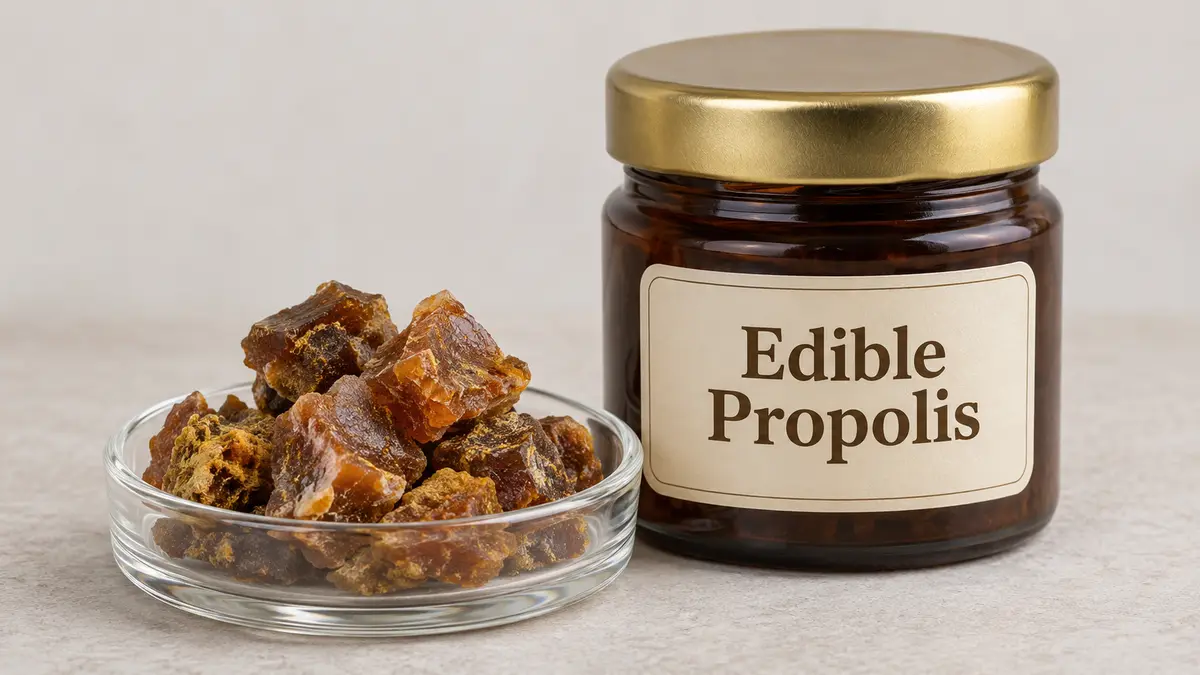
Duty and import controls for edible propolis
Read from the UK Trade Tariff on 29 September 2026, heading 0410 covers insects and other edible products of animal origin not elsewhere specified or included. Its Other line, 0410 90 00 00, carries 6% duty for goods from China, with no anti-dumping or countervailing duty and no suspension shown. The table describes forms sharing that line, rather than separate tariff subdivisions.
The supplied line attaches organic import control and CITES import and export controls, but does not show a veterinary-control measure. That omission does not settle animal-product requirements. Chinese propolis is listed among products permitted into Great Britain subject to a Chinese competent-authority declaration covering pre-dispatch chemical testing. For organic consignments from China, obtain the required inspection certificate and check the exporter’s control body and country against the organic registers.
Have your broker confirm the commodity code using composition, processing and intended use. Ask them to confirm how the attached CITES controls apply to the declared species and ingredients. This guide covers propolis without added carriers or other formulation ingredients; submit extracts, tinctures and blends for separate classification advice. See unformulated royal jelly for another product within the wider heading.
| Goods | Commodity code | Duty | Anti-dumping or countervailing duty on China |
|---|---|---|---|
| Unformulated edible propolis, raw pieces | 0410 90 00 00 | 6% | None |
Specify the resin, wax and processing
Describe the supplied material precisely: raw or cleaned pieces, granules or powder, intended for human consumption. Ask for bee species, collection origin, cleaning method and a complete account of processing. Record whether solvents, carriers, oils or other ingredients are used. Agree wax content, foreign matter, moisture, particle size and the analytical method for any resin or flavonoid specification.
For imports covered by the official apiculture guidance, the establishment must be registered by the competent authority in the country of origin. Confirm country eligibility and the applicable risk category before ordering. Medium and high risk imports need a health certificate. Animal products must enter through a suitable border control point; products subject to veterinary checks need advance notification through IPAFFS.
Worked duty example
Illustrative example, not a quote: Illustrative order: 20 kg of cleaned, unformulated edible propolis under 0410 90 00 00, invoiced at £3,500 free on board, with £253 of freight and insurance to the UK. The customs value is £3,753. Duty at 6% is £225.18. Import VAT at 20% is charged on the customs value plus duty, £3,978.18, so it is £795.64. Import taxes total £1,020.82; a VAT-registered importer can usually reclaim the VAT, so the lasting cost is the £225.18 of duty. The import duty and VAT guide explains each step. This assumes the goods are standard-rated for VAT. Most food for human consumption is zero-rated, and animal feed can be too, in which case no import VAT is due, so check the rate for your product in HMRC's VAT Notice 701/14.
Inspection checklist
Identity: compare the delivered form, colour, odour and wax content with the approved sample; check for wood, bee debris, mould and unexpected added material.
Batch tests: match laboratory reports to the shipment lot. Check the Chinese authority’s declaration and pre-dispatch results, including chloramphenicol, nitrofuran and its metabolites. Agree additional pesticide, heavy-metal and microbiological testing with your laboratory.
Packing: check liners, seals, net weight and lot identification; look for water ingress, contamination and material that has softened or stuck together during transport.
Labels and records: compare packaging with the agreed artwork and batch documents. Food packaging must include the name and address of the business marketing or importing it. Use quality inspection to organise arrival checks.
Working out your own order? Send us the product on WhatsApp and we reply the same working day: WhatsApp us
What goes wrong
Buying against a flavonoid result alone leaves important gaps. A report may describe an extract while the shipment contains raw, wax-rich propolis, or a powder may contain an undeclared carrier. Specify the test method and supplied form together, retain a sealed reference sample and compare shipment results with the agreed specification.
A supplier’s analysis report does not replace the required Chinese competent-authority declaration. The declaration must include the chemical-test results. Confirm the complete document set before dispatch, and keep suspect or mismatched batches apart while investigating. Check organic documentation before accepting organic descriptions on packaging.
Cambridge China Bridge sources these products for UK businesses, checking the factory and the documents before shipment. See factory verification. For repeat volumes, see container programmes.
Frequently asked questions
What is the UK import duty on edible propolis from China?
The supplied tariff facts show 6% duty under 0410 90 00 00 for unformulated edible propolis from China, with no anti-dumping or countervailing duty and no suspension shown.
Can Chinese edible propolis be imported into Great Britain?
Yes, subject to the applicable import conditions. Propolis is listed in the permitted-products annex, with a Chinese competent-authority declaration covering pre-dispatch chemical testing.
Is a factory test report enough for Chinese propolis?
No. The required declaration comes from the Chinese competent authority and must include the chemical-test results. Confirm the applicable health certificate and border arrangements before shipment.
What should I specify for unformulated propolis?
State the supplied form, bee species, origin and processing. Agree wax content, foreign matter, moisture, particle size and analytical methods, and obtain a declaration of any added ingredients.
Sources
- UK Trade Tariff — commodity codes and duty
- Decision on protective measures for animal products imported from China
- Import conditions for honey, royal jelly and other edible apiculture products
- Importing animal products from non-EU countries to Great Britain
- Importing organic food, feed and seed to the UK
- Food labelling: what you must show
- HMRC — Food products (VAT Notice 701/14)