Sourcing demineralised whey powder from China
Unsweetened demineralised whey powder has tariff rates of £5.80 to £139.00 per 100 kg, depending on composition. Dairy products from China cannot be imported into Great Britain for human consumption. Cambridge China Bridge checks whether a product can be imported before any order is placed.
Buying from China for a business? How our UK China sourcing agent service works · China sourcing agent for small orders and first imports
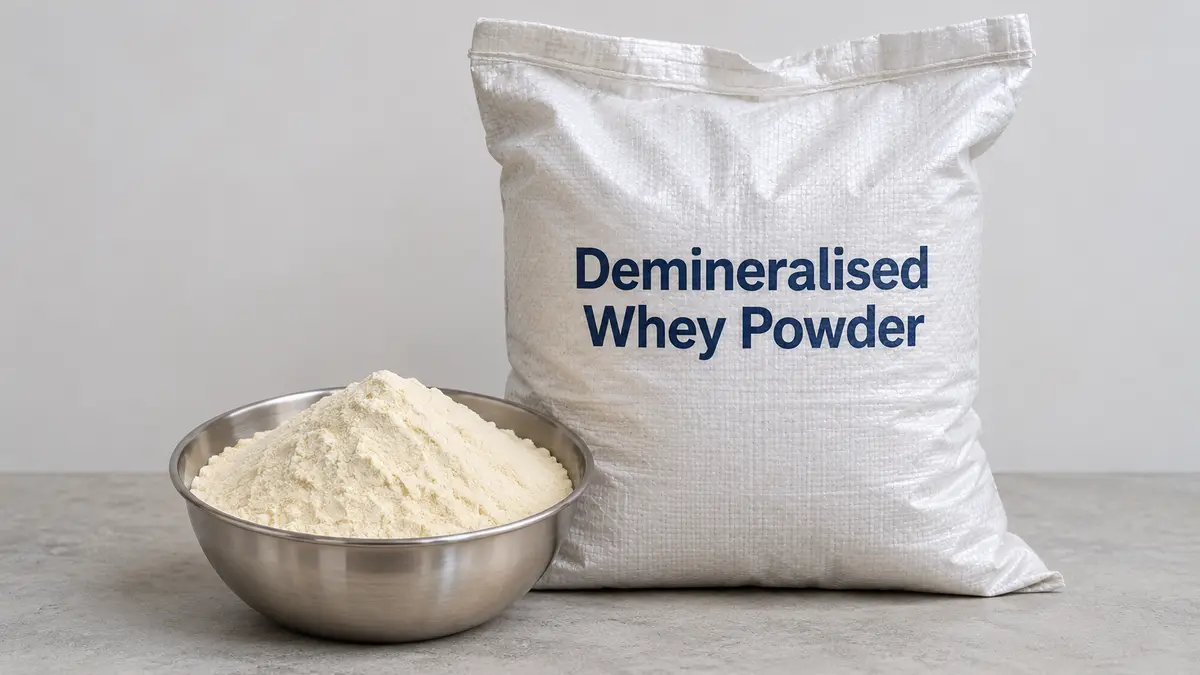
Weight-based duty and the food import prohibition
Read from the UK Trade Tariff on 29 September 2026, heading 0404 covers whey, modified whey and certain products consisting of natural milk constituents. For demineralised whey powder, establish whether sweetening matter is added and obtain the protein and fat composition. The table shows relevant unsweetened powder alternatives; it does not establish permission to import.
Unsweetened powder lines range from £5.80 to £139.00 per 100 kg. The listed low-fat line with added sweetening matter carries £14.00 per 100 kg; other sweetened powder lines use compound duties. The supplied tariff data records no anti-dumping or countervailing duty and no suspensions. It attaches veterinary control and organic import control. Dairy products from China are prohibited for human consumption in Great Britain, regardless of where their milk originated.
Ask your customs broker to confirm the attached veterinary requirements and prohibition before ordering. Organic consignments also need an inspection certificate from the relevant overseas control body; this does not remove the dairy prohibition. Confirm the commodity code against the actual formulation, and consult the wider whey guide. No percentage-duty worked order is applicable to these powder lines.
| Goods | Commodity code | Duty | Anti-dumping or countervailing duty on China |
|---|---|---|---|
| Unsweetened whey powder, protein ≤15%, fat ≤1.5% | 0404 10 02 00 | £5.80 per 100 kg | None |
| Unsweetened whey powder, protein ≤15%, fat >1.5% and ≤27% | 0404 10 04 00 | £113.00 per 100 kg | None |
| Unsweetened whey powder, protein >15%, fat ≤1.5% | 0404 10 12 00 | £84.00 per 100 kg | None |
| Unsweetened whey powder, protein >15%, fat >1.5% and ≤27% | 0404 10 14 00 | £113.00 per 100 kg | None |
Specify mineral removal and powder performance
For a supply route confirmed as permitted, specify the required degree of demineralisation and how it is measured. Agree limits for ash, individual minerals, moisture, protein, lactose and fat, with the reporting basis and test methods. Ask whether the powder comes from sweet or acid whey and whether ingredients have been added.
Describe the intended food process and agree checks for solubility, sediment, flavour and colour using your own recipe. Request batch-specific analysis, microbiological testing, heat-treatment information and storage instructions. A mineral-removal grade name alone is not a complete purchasing specification.
Inspection checklist
Supply route: check the manufacturing country, dispatch country and intended use before commissioning production. Chinese dairy powder for human consumption cannot enter Great Britain.
Composition: compare batch results for ash, minerals, protein, fat and moisture with the agreed specification. Match the report and sealed sample to the batch marks.
Powder performance: check dispersibility, sediment, odour and flavour against the retained reference sample. Investigate hard caking or discolouration.
Arrival condition: for a permitted supply, inspect bag seals, inner liners, moisture damage and batch identification before releasing stock. Keep suspect bags separate while investigating.
What goes wrong
The first failure can be the supply route itself. A supplier may offer Chinese-made powder using milk from an approved overseas source, but the official prohibition covers dairy products from China regardless of their origin. Do not place a food order for Great Britain on the strength of a tariff code or laboratory report.
Quality disputes arise when a demineralisation claim lacks an agreed measurement basis or the sample performs differently from the production batch. Moisture ingress can cause caking, while mineral differences can change flavour and processing performance. Agree batch tests and retain sealed samples before accepting a permitted supply.
Cambridge China Bridge sources these products for UK businesses, checking the factory and the documents before shipment. See factory verification. For repeat volumes, see container programmes.
Frequently asked questions
What is the UK import duty on demineralised whey powder from China?
Unsweetened powder lines carry £5.80 to £139.00 per 100 kg, depending on protein and fat. Sweetened powder can have compound duties. These tariff rates do not override the food import prohibition.
Can I import Chinese demineralised whey powder for food use?
No. Dairy products from China are prohibited for human consumption in Great Britain. Confirm another permitted supply route before ordering.
Does using imported milk in a Chinese factory avoid the prohibition?
No. Official guidance says dairy products from China are prohibited regardless of where they originate. Overseas milk does not make Chinese-made powder an acceptable food import into Great Britain.
What should a demineralised whey powder specification include?
Specify mineral removal and its measurement basis, ash, individual minerals, moisture, protein, lactose and fat. Agree batch testing, solubility, flavour, packaging and storage conditions for a permitted supply.