Sourcing uncarded alpaca fibre from China
Uncarded alpaca fibre from China carries 0% UK duty. Treatment determines the veterinary import route: qualifying treated hair can enter Great Britain with a commercial document and without veterinary checks. Confirm species and the tariff's CITES control before shipment. Cambridge China Bridge sources uncarded alpaca fibre.
Buying from China for a business? How our UK China sourcing agent service works · China sourcing agent for small orders and first imports
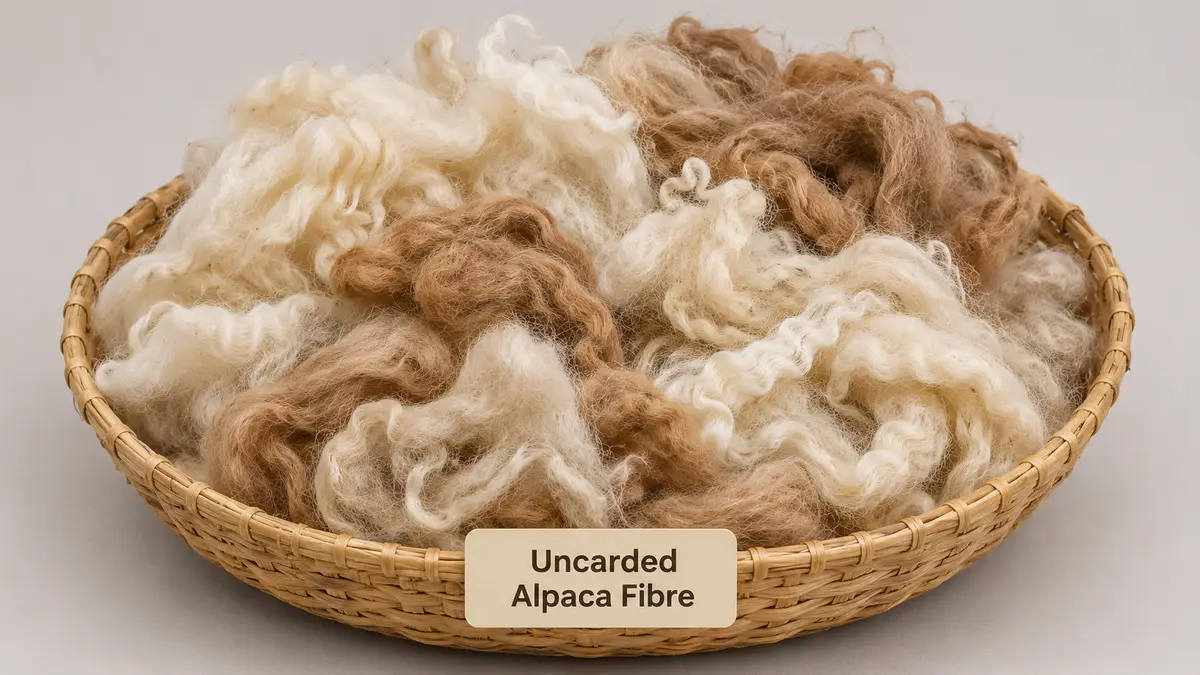
Zero duty, with animal-hair import controls
Read from the UK Trade Tariff on 9 November 2026, uncarded alpaca fibre falls within heading 5102, under 5102 19 30 00 alongside llama and vicuna hair. The China duty is 0%, with no listed anti-dumping or countervailing duty and no suspension. The table shows buying forms covered by the same tariff line, rather than separate codes.
The tariff attaches veterinary and CITES import and export controls. Qualifying treated hair may come from any country, needs no health certificate and is not subject to veterinary checks. Its commercial document must identify the parties, origin, quantity, species and treatment. For untreated Chinese fibre, confirm country eligibility, establishment approval, destination and border paperwork with the customs broker and the Animal and Plant Health Agency before ordering. Ask the broker to confirm the CITES requirement for the declared species.
Uncarded does not mean untreated: factory-washed fibre can remain uncarded. Carded or combed hair belongs in heading 5105. Confirm the processing stage through finding your commodity code. For the wider animal-hair heading, see the uncarded yak hair guide.
| Goods | Commodity code | Duty | Anti-dumping or countervailing duty on China |
|---|---|---|---|
| Unwashed alpaca fibre, not carded or combed | 5102 19 30 00 | 0% | None |
Specify alpaca identity, fineness and treatment
Specify alpaca fibre explicitly, with its source country and processing history. Agree mean fibre diameter and variation, fibre length, short-fibre content, residual coarse hair, vegetable matter, natural colour or dyeing, moisture and the weight basis for settlement. Keep an approved lot sample and agree how samples will be taken across bales.
Ask the processor for the actual treatment record, rather than accepting 'cleaned' as a description. Keep treatment records separate from evidence that the fibre remains uncarded and uncombed. For textile resale in Great Britain, labels must show fibre content. Match composition claims to the tested material and arrange testing and certification around the agreed specification.
Worked duty example
Illustrative example, not a quote: Illustrative order: 2 tonnes of factory-washed, uncarded alpaca fibre under 5102 19 30 00, invoiced at £50,000 free on board, with £1,800 of freight and insurance to the UK. The customs value is £51,800. Duty at 0% is £0. Import VAT at 20% is charged on the customs value plus duty, £51,800, so it is £10,360. With no duty, the only import tax is the VAT, which a VAT-registered importer can usually reclaim. The import duty and VAT guide explains each step.
Inspection checklist
Identity: sample across bales and test fibre composition for undeclared wool or other animal hair; match lot identifiers to the retained sample.
Fineness and length: compare measured diameter, variation, length and short-fibre content with the contract; inspect residual coarse hair.
Colour and cleanliness: compare each sampled bale with the approved colour; check vegetable matter, staining, odour and uneven washing.
Weight and paperwork: check moisture, bale weights, wrapping and marks against the packing list; match species, origin and treatment records to the shipment.
Working out your own order? Send us the product on WhatsApp and we reply the same working day: WhatsApp us
What goes wrong
A soft handful can conceal coarse hair, short fibres or a blend elsewhere in the bale. Mixed natural colours can produce uneven yarn, while excess moisture inflates the invoiced weight. Check the shipment across bales and retain samples before opening it for production.
A supplier may describe washed fibre as raw, or call lightly rinsed fibre treated without supporting records. That leaves the import route unresolved. Settle treatment evidence and the broker's control checks before dispatch, then compare arrival samples with the approved lot.
Cambridge China Bridge sources these products for UK businesses, checking the factory and the documents before shipment. See factory verification. For repeat volumes, see container programmes.
Frequently asked questions
What is the UK import duty on uncarded alpaca fibre from China?
The supplied tariff reading shows 0% under 5102 19 30 00, with no listed anti-dumping or countervailing duty. Veterinary and CITES controls are attached.
Can washed alpaca fibre still be uncarded?
Yes. Washing and carding are different processes. Confirm that the fibre has not been carded or combed, and obtain records showing which treatment it received.
Does treated alpaca fibre need a health certificate?
Qualifying treated hair needs no health certificate or veterinary checks, but must travel with a commercial document identifying the parties, origin, quantity, species and treatment.
Does alpaca fibre need a CITES permit?
The tariff line carries a CITES control. Confirm the species and requirement with your broker. Moving a CITES-listed specimen into or out of Great Britain requires the appropriate permit.