Sourcing ultrasonic machining systems from China
Ultrasonic machining systems from China carry a single UK duty rate of 2% under 8456 20 00 00. Complete machines supplied in Great Britain need CE or UKCA marking, a declaration of conformity and English instructions. Agree machining trials on your own material before ordering. Cambridge China Bridge sources ultrasonic machining systems.
Buying from China for a business? How our UK China sourcing agent service works · China sourcing agent for small orders and first imports
Duty on ultrasonic machining systems
Read from the UK Trade Tariff on 1 October 2026, ultrasonic machine tools under 8456 20 00 00 carried 2% duty for goods from China. The supplied tariff record lists no anti-dumping or countervailing measure, suspension or attached import control for this line.
Heading 8456 covers machine tools that remove material using ultrasonic and other specified processes. This guide concerns ultrasonic material removal. The table includes neighbouring processes for comparison because the tariff contains a single ultrasonic line. See the wider heading guide.
Send the broker the machining method, machine specification and intended workpieces to confirm the commodity code. Do not classify a system solely from the word ultrasonic in its sales description.
| Goods | Commodity code | Duty | Anti-dumping or countervailing duty on China |
|---|---|---|---|
| Ultrasonic machining systems | 8456 20 00 00 | 2% | None |
| Comparison: numerically controlled wire-cut electrodischarge machines | 8456 30 11 00 | 2% | None |
| Comparison: other numerically controlled electrodischarge machines | 8456 30 19 00 | 2% | None |
| Comparison: other material-removal machine tools within this heading | 8456 90 00 00 | 2% | None |
Specify the machining process and acceptance sample
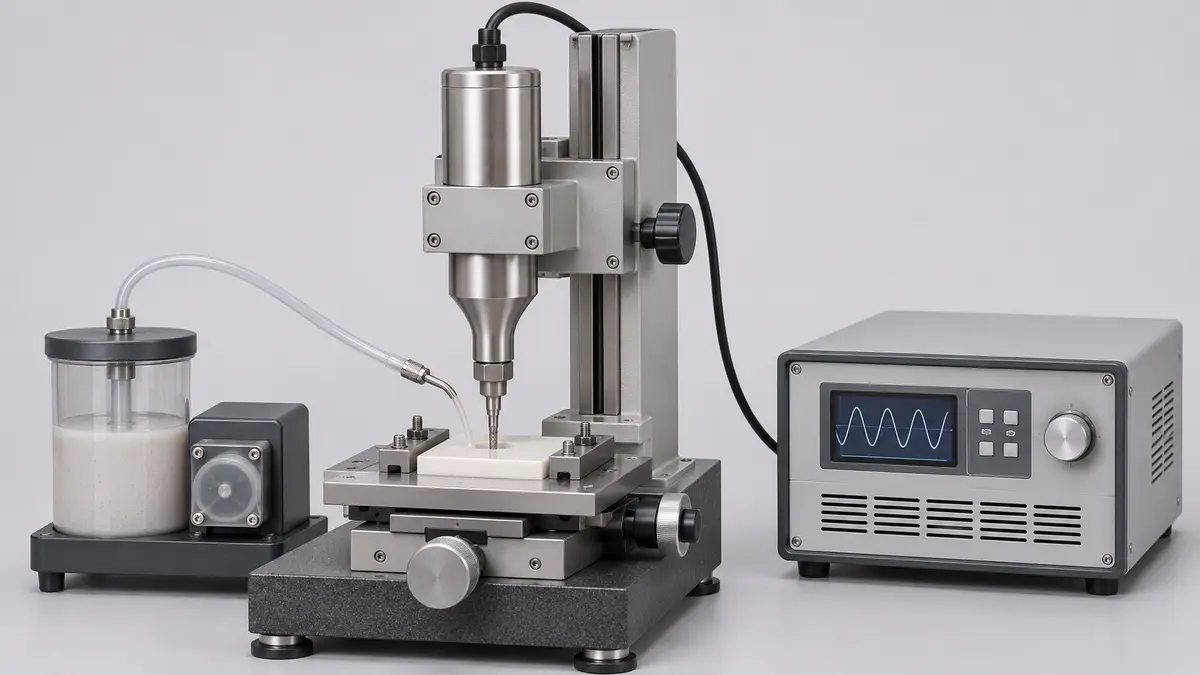
State the workpiece material, drawing, hole or cavity geometry, surface finish and permitted edge chipping. Ask whether the system uses abrasive slurry or ultrasonic assistance to a rotating tool. Identify the generator, transducer, tool holder and tooling supplied, and agree the frequency, amplitude and power evidence the factory will provide.
For slurry systems, specify abrasive type, circulation, filtration and containment. For rotating systems, agree spindle interfaces, tool compatibility and coolant arrangements. Confirm electrical supply, controller language, software access, installation support and replacement tooling. Require a witnessed trial on your material, including inspection of the finished feature and tool wear.
For complete machinery supplied in Great Britain, confirm the applicable CE or UKCA marking, declaration of conformity and English-instruction requirements with the relevant authority. The responsible person must ensure the technical file is compiled and available on request. Review these arrangements before shipment through testing and certification.
Worked duty example
Illustrative example, not a quote: An ultrasonic machining system for a small ceramics workshop, illustrative only under 8456 20 00 00, invoiced at £38,000 free on board, with £4,000 of freight and insurance to the UK. The customs value is £42,000. Duty at 2% is £840. Import VAT at 20% is charged on the customs value plus duty, £42,840, so it is £8,568. Import taxes total £9,408; a VAT-registered importer can usually reclaim the VAT, so the lasting cost is the £840 of duty. The import duty and VAT guide explains each step.
Inspection checklist
Identity: compare the machine, generator and transducer labels with the agreed specification and paperwork.
Machining trial: measure the agreed features, finish and edge damage on your material; retain the samples and settings.
Fluid handling: run circulation and filtration, check hoses and seals for leaks, and inspect deposited abrasive around moving parts.
Arrival: check transport damage, tool-holder alignment, supplied tooling and documents; test guards, interlocks and emergency stops before an acceptance run.
Working out your own order? Send us the product on WhatsApp and we reply the same working day: WhatsApp us
What goes wrong
A demonstration on easy material can conceal chipping, tapered holes or poor results on the buyer's actual workpiece. Generator input power can also be presented as proof of machining performance. Accept the system against measured parts and recorded settings, with tool wear included in the assessment.
Unspecified tooling interfaces, inaccessible controller settings and poorly contained slurry can make commissioning difficult. Agree consumables, spare transducers, maintenance instructions and acceptance responsibilities before ordering. Recheck alignment and machining results after transport rather than relying solely on the factory video.
Cambridge China Bridge sources these products for UK businesses, checking the factory and the documents before shipment. See factory verification. For machinery and equipment, see machinery imports.
Frequently asked questions
What is the UK import duty on ultrasonic machining systems from China?
The supplied tariff record gives 2% under 8456 20 00 00, with no anti-dumping or countervailing measure, suspension or attached import control. Confirm that the machine removes material by an ultrasonic process.
Can I buy an ultrasonic machining system with CE marking?
CE marking continues to be recognised in Great Britain. Confirm with the relevant authority the applicable CE or UKCA marking, declaration of conformity and English-instruction requirements for the complete machinery; a mark alone does not establish that the machine is suitable.
How should I test an ultrasonic machining machine before shipment?
Use your own workpiece material and drawing. Measure feature geometry, surface finish and edge chipping, record the settings, and inspect tool wear after the agreed trial.
What should the supplier include with the system?
Agree the generator, transducer, tool holders, tooling, fluid equipment, controller access, English instructions and replacement parts. Record which installation and acceptance tasks each party will perform.