Sourcing structural acrylics from China
Two-part structural acrylic adhesives from China normally attract 6% UK duty; heading 3506 also contains specialist goods at 0%. Confirm with HSE the appropriate English hazard labels and safety data sheet requirements for hazardous reactive adhesives supplied to business customers. Cambridge China Bridge sources two-part structural acrylic adhesives.
Buying from China for a business? How our UK China sourcing agent service works · China sourcing agent for small orders and first imports
Normally 6% duty
Read from the UK Trade Tariff on 30 September 2026, heading 3506 covers prepared glues and adhesives. Relevant routes for structural acrylics include retail adhesive packs not exceeding 1 kg and other polymer-based adhesives. The table repeats these commodity lines for different packaging formats; the formulation and presentation determine classification.
The relevant lines carry 6% duty from China, with no anti-dumping or countervailing measure recorded. Heading-wide rates include 0% for specialist display adhesives. A restricted suspension appears under 3506 91 90 99; the supplied extract is incomplete, so do not assume a structural acrylic qualifies. Waste controls are attached, and the bulk polymer line also lists fluorinated greenhouse gas import control: confirm applicability with your customs broker.
Waste shipment controls apply only to waste. For notified waste from China into England, the exporter must apply to the dispatch country's competent authority for consent. Confirm the commodity code using the composition, component presentation and pack weight. See the epoxy adhesive guide for another adhesive family within this heading.
| Goods | Commodity code | Duty | Anti-dumping or countervailing duty on China |
|---|---|---|---|
| Structural acrylic adhesive kits, retail packs not exceeding 1 kg | 3506 10 00 00 | 6% | None |
| Other polymer-based structural acrylic adhesives in cartridges | 3506 91 90 99 | 6% | None |
Specify the bond and dispensing system
Specify the actual substrates, surface preparation, bond gap, loading direction and exposure to heat, moisture or chemicals. Agree the mixing ratio by weight or volume, working time, fixture time and full-cure conditions. Require test results on your materials, with the preparation and failure mode recorded.
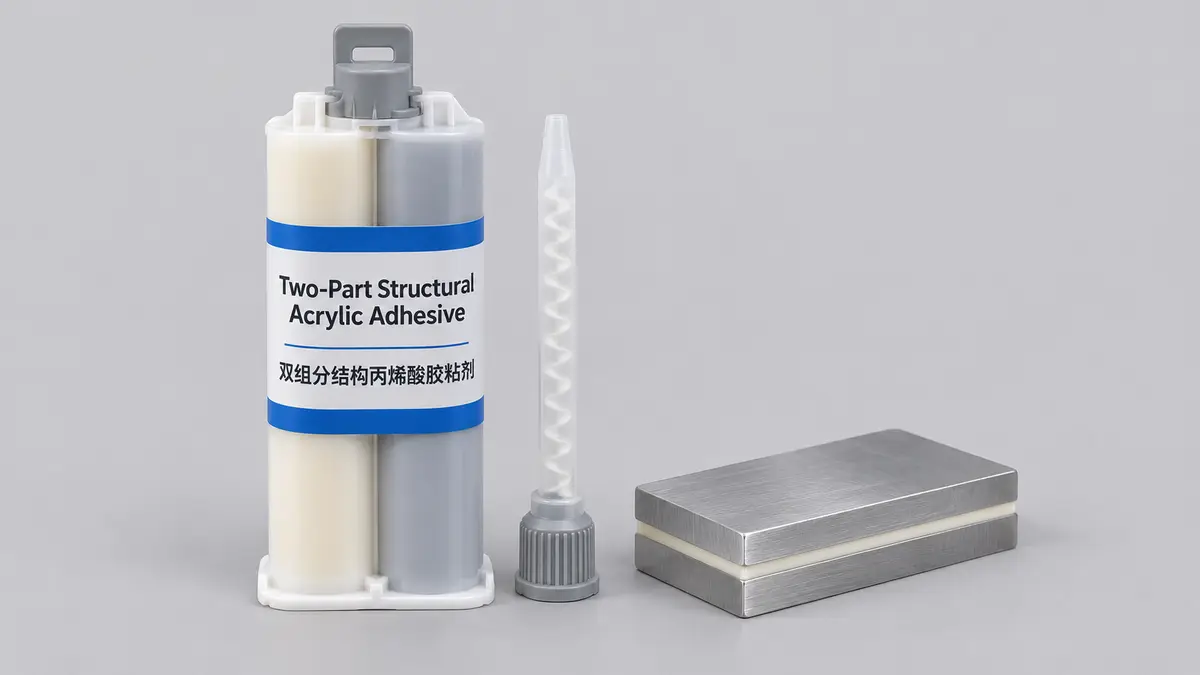
For cartridges, match the chamber arrangement, dispenser and static mixer. For bulk supply, agree metering equipment and component identification. Set an arrival shelf-life requirement and storage conditions. Confirm with HSE the English hazard-labelling and safety data sheet requirements for each reactive adhesive component and its supply to business customers; obtain documents for each component before approving artwork.
Worked duty example
Illustrative example, not a quote: Illustrative order: bulk containers of matched structural acrylic adhesive components under 3506 91 90 99, invoiced at £18,000 free on board, with £1,500 of freight and insurance to the UK. The customs value is £19,500. Duty at 6% is £1,170. Import VAT at 20% is charged on the customs value plus duty, £20,670, so it is £4,134. Import taxes total £5,304; a VAT-registered importer can usually reclaim the VAT, so the lasting cost is the £1,170 of duty. The import duty and VAT guide explains each step.
Inspection checklist
Components: check matched batch identities, manufacture and expiry markings, seals and evidence of leakage or premature curing.
Dispensing: check dispenser fit, mixer attachment and even delivery of both components against the agreed mixing method.
Bond performance: prepare sample joints on your production substrates and check cure, bond strength and failure mode against the agreed acceptance criteria.
Documents: check component labels and safety data sheets against the supplied formulation, and confirm the stated storage and transport conditions.
Working out your own order? Send us the product on WhatsApp and we reply the same working day: WhatsApp us
What goes wrong
A bond test on clean laboratory metal can conceal failure on coated, oily or differently prepared production parts. A mismatched mixer or uneven component delivery can leave uncured material inside an apparently firm joint. Changing bond gap or cure conditions can also invalidate the supplier's test comparison.
Agree production-representative samples before ordering, retain batch samples and test incoming material using the approved process. Separate leaking, partly cured or unidentified components while investigating. Treat remaining shelf life as an acceptance condition, rather than relying on the expiry date alone.
Cambridge China Bridge sources these products for UK businesses, checking the factory and the documents before shipment. See factory verification. For repeat volumes, see container programmes.
Frequently asked questions
What is the UK import duty on structural acrylic adhesive from China?
The relevant retail and other polymer-based adhesive lines carry 6% duty. No anti-dumping or countervailing measure is recorded. Confirm the code and any narrowly defined suspension before shipment.
Can I use the supplier's bond-strength result?
Use it only as a comparison after checking the substrates, preparation, bond gap and cure conditions. Agree acceptance tests on your production materials.
What paperwork should I request for both components?
Request component-specific safety data sheets, proposed English hazard labels, batch identification, storage conditions and technical instructions for mixing and curing.
How do I check cartridge compatibility?
Test the supplied cartridge with your dispenser and specified static mixer. Check attachment, even component delivery and the cured joint using the agreed mixing procedure.