Sourcing UV-curing adhesives from China
UV-curing adhesives from China carry UK duty of 0% to 6%, depending on packaging, composition and use. The zero-duty display line has a specific scope. Before sale in Great Britain, check chemical classification, compliant labels and packaging, and the safety data sheet. Cambridge China Bridge sources UV-curing adhesives.
Buying from China for a business? How our UK China sourcing agent service works · China sourcing agent for small orders and first imports
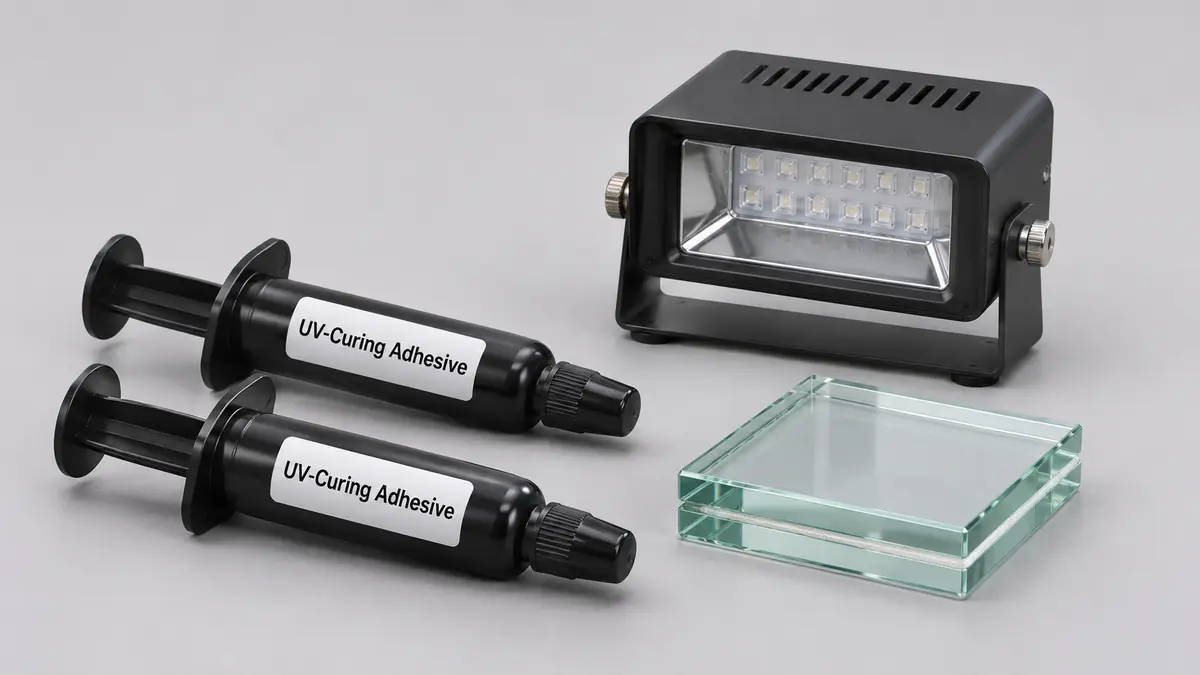
Usually 6%, with a specific display line at 0%
Read from the UK Trade Tariff on 30 September 2026, heading 3506 covers prepared adhesives and retail adhesive packs not exceeding 1 kg. Relevant Chinese-origin lines carry 6%, except qualifying optically clear adhesives for display or touch-panel manufacture at 0%. The supplied data lists no anti-dumping or countervailing duty. Packaging, formulation and intended use determine the line. For wider heading coverage, see two-part epoxy adhesives.
Conditional 0% suspensions are listed under 3506 91 90 99 and 3506 99 00 00 for specified products, including temporary wafer-bonding materials and a specified polyurethane cartridge adhesive. UV curing alone does not establish eligibility. The supplied wafer-bonding footnote is incomplete, so have your customs broker verify the full description before claiming relief. Confirm the commodity code using the composition, packaging and application.
The tariff attaches waste import and export controls to these lines. Waste shipment controls apply only if the material is waste; confirm requirements for any China-origin waste shipment with your customs broker. It also attaches fluorinated greenhouse gas import controls to 3506 91 90 99. Confirm applicability and any required exemption evidence with your broker. Products containing banned fluorinated gases must not be placed on the Great Britain market.
| Goods | Commodity code | Duty | Anti-dumping or countervailing duty on China |
|---|---|---|---|
| UV-curing adhesives in retail packs with net weight not exceeding 1 kg | 3506 10 00 00 | 6% | None |
| Optically clear curable liquid adhesives principally for displays or touch panels | 3506 91 10 00 | 0% | None |
| Other polymer or rubber-based UV-curing adhesives | 3506 91 90 99 | 6% | None |
| Other prepared UV-curing adhesives, where composition fits this residual line | 3506 99 00 00 | 6% | None |
Specify the adhesive and the curing process together
Name the substrates, surface preparation, bond gap and dispensing method. Agree viscosity, cured flexibility, bond strength and any optical clarity or yellowing acceptance criteria. Specify the lamp spectrum, exposure, distance and how light reaches the entire joint. Ask whether shaded areas need a secondary curing process. Approve samples using your actual parts and production lamp.
Obtain the formulation information needed to assess UK REACH; registration is per substance and legal entity. Check classification, English hazard labels and the safety data sheet before artwork approval. Labels and packaging must comply before supply in Great Britain. Agree light-protective containers, storage conditions, batch identification and remaining shelf life at arrival.
Worked duty example
Illustrative example, not a quote: Illustrative order of retail UV-curing adhesive tubes for a trade distributor under 3506 10 00 00, invoiced at £18,000 free on board, with £1,500 of freight and insurance to the UK. The customs value is £19,500. Duty at 6% is £1,170. Import VAT at 20% is charged on the customs value plus duty, £20,670, so it is £4,134. Import taxes total £5,304; a VAT-registered importer can usually reclaim the VAT, so the lasting cost is the £1,170 of duty. The import duty and VAT guide explains each step.
Inspection checklist
Identity: match the product grade, batch, manufacture date and remaining shelf life to the approved specification and documents.
Containers: check seals, leakage, light protection and dispensing tips; inspect samples for gel particles, separation or unexpected colour.
Cure: use the agreed lamp and joint geometry; check exposed and shaded areas for tack, liquid pockets and incomplete through-cure.
Bond: test actual substrates for strength and appearance after the agreed conditioning; compare viscosity and optical clarity with the approved sample.
Working out your own order? Send us the product on WhatsApp and we reply the same working day: WhatsApp us
What goes wrong
A clear adhesive can cure on an open sample yet remain liquid beneath an opaque part or inside a deep joint. A changed lamp, tinted substrate or wider bond gap can alter the result. Keep the approved lamp settings and joint geometry with the purchase specification, and repeat the application test on received batches.
Light exposure during filling or storage can leave gel in the bottle and block dispensing tips. Bubbles, shrinkage and yellowing can spoil an optical bond despite acceptable initial strength. Agree container protection and acceptance tests before shipment, and investigate batch changes before releasing stock.
Cambridge China Bridge sources these products for UK businesses, checking the factory and the documents before shipment. See factory verification. For repeat volumes, see container programmes.
Frequently asked questions
What is the UK import duty on UV-curing adhesive from China?
Relevant heading 3506 lines carry 6%, with 0% for qualifying optically clear display or touch-panel adhesives. Specified products have conditional suspensions. UV curing alone does not qualify an adhesive for relief.
Does clear UV glue qualify for zero duty?
Clarity alone is insufficient. The display line covers optically clear curable liquid adhesives used solely or principally to manufacture flat panel displays or touch-sensitive screen panels.
Can I use my existing curing lamp?
Have the factory test the adhesive with your lamp spectrum, exposure and joint geometry. Check light access through the actual substrate and test shaded areas before approving the grade.
What documents should I request from the factory?
Request the safety data sheet, technical specification, formulation information for chemical checks, batch test results and proposed English labels. Match them to the exact grade and your application trial.