Sourcing tracing cloth from China
Tracing cloth from China carries 6% UK duty under 5901 90 00 00, with no additional trade remedy recorded in the supplied tariff data. Cloth sold for consumer use must be safe; specify transparency, surface finish and dimensional stability. Cambridge China Bridge sources tracing cloth.
Buying from China for a business? How our UK China sourcing agent service works · China sourcing agent for small orders and first imports
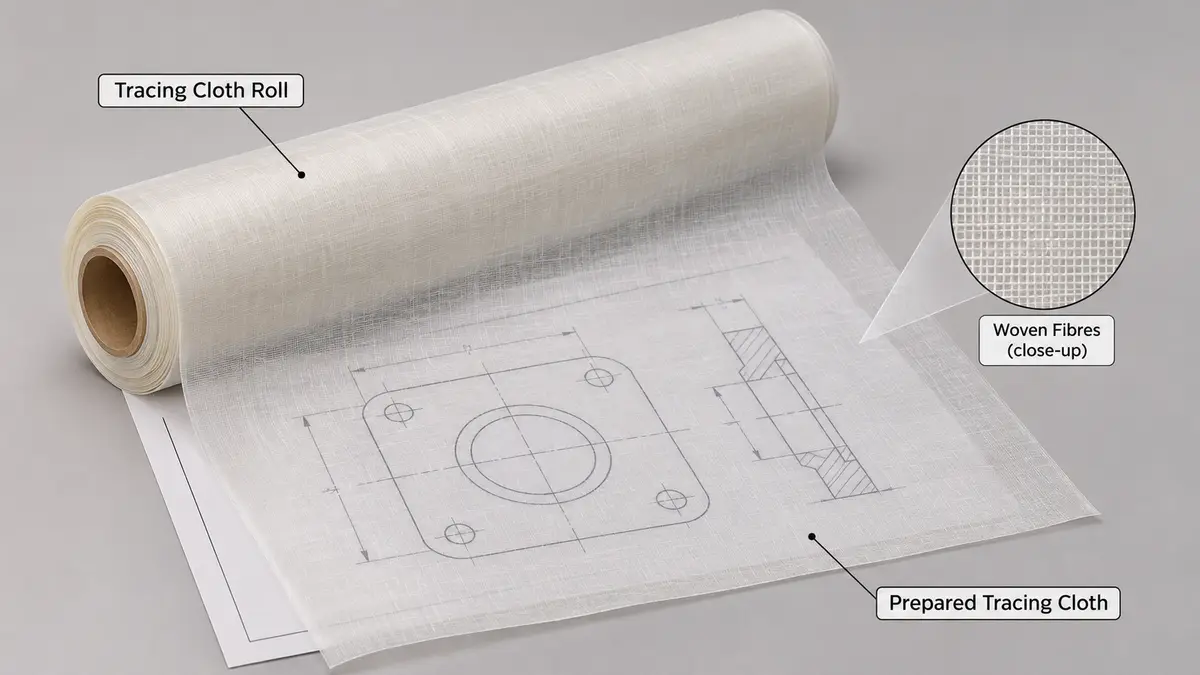
Tracing cloth: 6% UK duty
Read from the UK Trade Tariff on 9 November 2026, tracing cloth falls within heading 5901 and its other goods line, 5901 90 00 00, carries 6% duty for goods from China. The supplied tariff record lists no anti-dumping or countervailing duty, suspension or attached import control for this line.
This guide covers textile tracing cloth. Heading 5901 also covers book-cover fabrics, prepared painting canvas and certain stiffened fabrics. See the wider bookbinding cloth and artist canvas guide. Only the tracing-cloth commodity line is shown here.
Confirm the commodity code using the base fabric, coating description, intended use and supplied form. Include a sample rather than relying on the supplier's name for the material. Plastic-coated fabrics need separate classification checking.
| Goods | Commodity code | Duty | Anti-dumping or countervailing duty on China |
|---|---|---|---|
| Tracing cloth | 5901 90 00 00 | 6% | None |
Specify transparency and drawing performance
Specify the base fibre and weave, fabric weight, coating or sizing, thickness, roll width and length, shade and surface finish. Approve a sample over the drawings you intend to trace. Agree how clearly fine lines should show through and whether the drawing surface is on a particular side.
Test the sample with your intended pens and pencils, including ink drying, smudging and erasing. Compare dimensions before and after conditioning in your working environment. For consumer sales in Great Britain, the cloth must be safe under the General Product Safety Regulations 2005. Textile labels must show fibre content.
Worked duty example
Illustrative example, not a quote: Illustrative order: 2,500 metres of tracing cloth in rolls under 5901 90 00 00, invoiced at £14,000 free on board, with £1,200 of freight and insurance to the UK. The customs value is £15,200. Duty at 6% is £912. Import VAT at 20% is charged on the customs value plus duty, £16,112, so it is £3,222.40. Import taxes total £4,134.40; a VAT-registered importer can usually reclaim the VAT, so the lasting cost is the £912 of duty. The import duty and VAT guide explains each step.
Inspection checklist
Transparency: compare samples from across the roll against the approved sample over the same drawing; check for cloudy patches and coating streaks.
Drawing surface: check pencil grip, ink spreading, drying and smudging with the agreed drawing tools; look for loose coating after gentle flexing.
Dimensions and condition: check width, supplied length, weave alignment and flatness; look for creases, edge damage and distortion when unrolled.
Packing and identification: check rigid cores, moisture protection and batch identification. Check fibre information against the agreed material. Use the quality inspection guide to brief the inspector.
Working out your own order? Send us the product on WhatsApp and we reply the same working day: WhatsApp us
What goes wrong
A sample may look translucent while the production roll has cloudy bands that obscure fine lines. A changed finish can make ink spread or remain easy to smudge. Excessive stiffness, curl or creasing can stop the cloth lying flat over the original drawing.
Approve drawing tests alongside the physical sample and keep a reference length. Check production material before dispatch and repeat the comparison on arrival. Record defects by batch so that a satisfactory roll does not hide problems elsewhere in the shipment.
Cambridge China Bridge sources these products for UK businesses, checking the factory and the documents before shipment. See factory verification. For own-brand ranges, see sourcing for brands.
Frequently asked questions
What is the UK import duty on tracing cloth from China?
The supplied tariff record, read on 9 November 2026, gives 6% for tracing cloth under 5901 90 00 00, with no anti-dumping or countervailing duty recorded.
Is tracing cloth the same as tracing paper?
No. This guide covers textile tracing cloth. Ask for the base material and coating description before agreeing the commodity code.
How do I check whether tracing cloth works with my pens?
Test the approved sample and production material with the same pens, ink and drawing surface. Compare spreading, drying, smudging and the visibility of the original lines.
What should I check before selling tracing cloth to consumers?
For Great Britain, check consumer safety under the General Product Safety Regulations 2005 and fibre-content labelling. Keep the material specification and supporting supplier information.