Sourcing gummed bookbinding mull from China
Gummed bookbinding mull entered under heading 5901 attracts 6% UK duty from China across the listed lines, with no recorded trade remedy. Confirm the coating and intended use before choosing the commodity code; consumer craft supplies must be safe. Cambridge China Bridge sources gummed bookbinding mull.
Buying from China for a business? How our UK China sourcing agent service works · China sourcing agent for small orders and first imports
6% duty, subject to classification
Read from the UK Trade Tariff on 4 October 2026, heading 5901 covers gum or starch-coated fabrics for book covers and similar uses, tracing cloth, prepared painting canvas and specified stiffened fabrics. Both listed lines carry 6% duty for goods from China. The supplied tariff record lists no anti-dumping or countervailing duty, suspension or attached import control.
For gummed mull, check whether the supplied fabric meets the description of 5901 10 00 00. Give your customs broker the base fibre, coating composition, sample and intended binding use, particularly where the mull is supplied for spine reinforcement. Confirm the commodity code before ordering. The table contains the relevant candidate line; the supplied facts do not provide enough distinct lines for a longer product-specific table.
Do not select a code solely from the supplier's description of the product as mull. See the wider bookbinding cloth and artist canvas guide for the other fabrics covered by this heading.
| Goods | Commodity code | Duty | Anti-dumping or countervailing duty on China |
|---|---|---|---|
| Gum-coated bookbinding fabric; confirm applicability to the supplied mull | 5901 10 00 00 | 6% | None |
Specify the mull and its binding performance
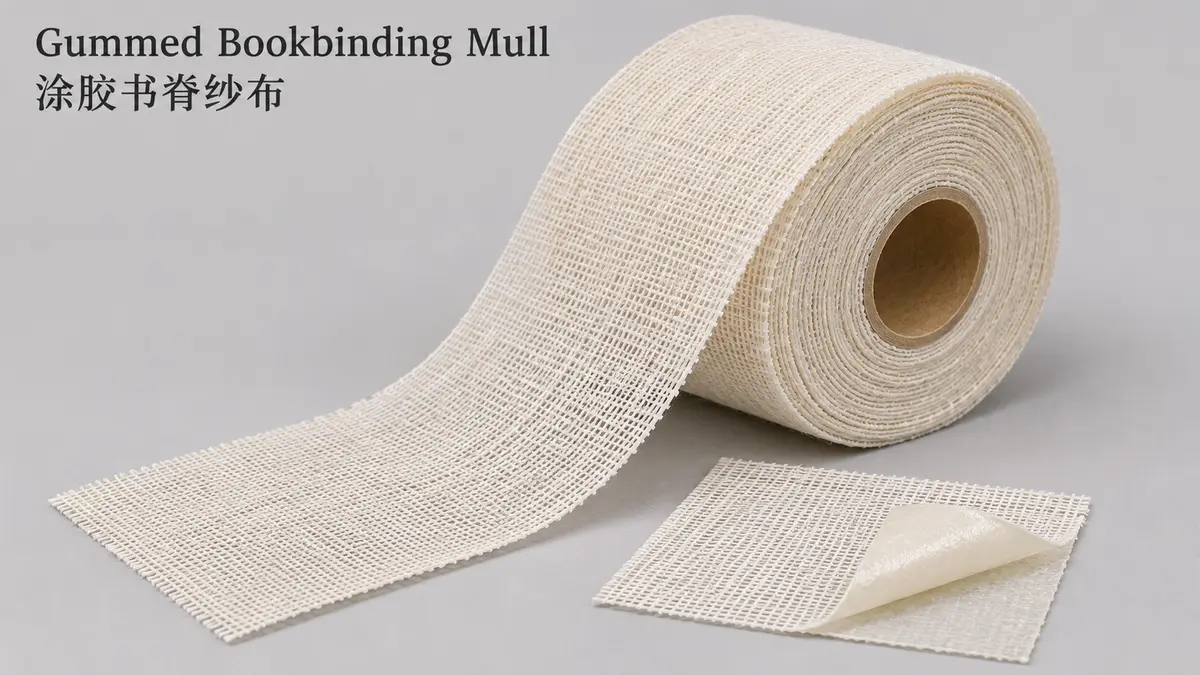
Specify the base fibre, open-weave construction, fabric mass, gum or starch composition, coating amount, flexibility, roll width and usable length. Clarify whether the coating is sizing or an adhesive intended to activate during binding. Send the factory your binding method and adhesive details, and approve a sample on your own paper and boards.
UK REACH restrictions can limit, ban or set conditions on the use or placing on the market of substances. Ask for coating composition and supporting information against applicable restrictions. If the mull is sold as a consumer craft supply in Great Britain, it must be safe; assess that intended use separately from the binding trial.
Worked duty example
Illustrative example, not a quote: Illustrative trial order of gummed bookbinding mull in rolls, subject to classification under 5901 10 00 00, invoiced at £2,500 free on board, with £1,200 of freight and insurance to the UK. The customs value is £3,700. Duty at 6% is £222. Import VAT at 20% is charged on the customs value plus duty, £3,922, so it is £784.40. Import taxes total £1,006.40; a VAT-registered importer can usually reclaim the VAT, so the lasting cost is the £222 of duty. The import duty and VAT guide explains each step.
Inspection checklist
Weave: compare openness and yarn distribution with the approved sample; check for missing threads, distortion and weak areas.
Coating: check evenness, shedding and flexibility; trial the mull with the agreed adhesive and inspect the bond after drying.
Dimensions: measure roll width and usable length; check edge fraying, joins and whether the roll unwinds without sticking.
Packing: check rigid cores, moisture protection and batch identification; inspect for damp patches, mould and crushed rolls. Use the quality inspection guide to plan checks.
Working out your own order? Send us the product on WhatsApp and we reply the same working day: WhatsApp us
What goes wrong
Excessive sizing can make mull brittle or obstruct adhesive penetration. Uneven coating can produce inconsistent bonds, while a changed weave can alter handling and reinforcement. A dry fabric sample alone does not demonstrate performance in a finished binding.
Trial the production batch in your binding process before releasing it for use. Check that adhesive reaches the intended surfaces and that the dried spine remains flexible. Damp storage can leave rolls stuck together or mouldy, so inspect packaging and the inner layers on arrival.
Cambridge China Bridge sources these products for UK businesses, checking the factory and the documents before shipment. See factory verification. For own-brand ranges, see sourcing for brands.
Frequently asked questions
What is the UK import duty on gummed bookbinding mull from China?
The supplied tariff record shows 6% on both heading 5901 lines, with no trade remedy or suspension. Confirm that your mull belongs in this heading and which line applies.
Is gummed mull the same as self-adhesive binding tape?
Do not assume so. Ask whether the coating is sizing, an activated adhesive or a pressure-sensitive adhesive, then approve a sample using your binding process.
What should I send the factory when requesting samples?
Send the fibre, weave, coating, flexibility and roll dimensions you need, together with your binding method and adhesive details. Keep an approved sample for batch comparisons.
How do I check whether the mull bonds properly?
Make a trial binding with your normal paper, boards and adhesive. After drying, inspect adhesive penetration, lifting and spine flexibility, and compare with the approved sample.