Sourcing textile Austrian blinds from China
Textile Austrian blinds from China carry UK duty of 6% to 12%: nonwovens pay 6%, while ordinary woven versions pay 12%. Fibre composition must be labelled, and new blinds with looped cords must include child safety devices. Cambridge China Bridge sources textile Austrian blinds.
Buying from China for a business? How our UK China sourcing agent service works · China sourcing agent for small orders and first imports
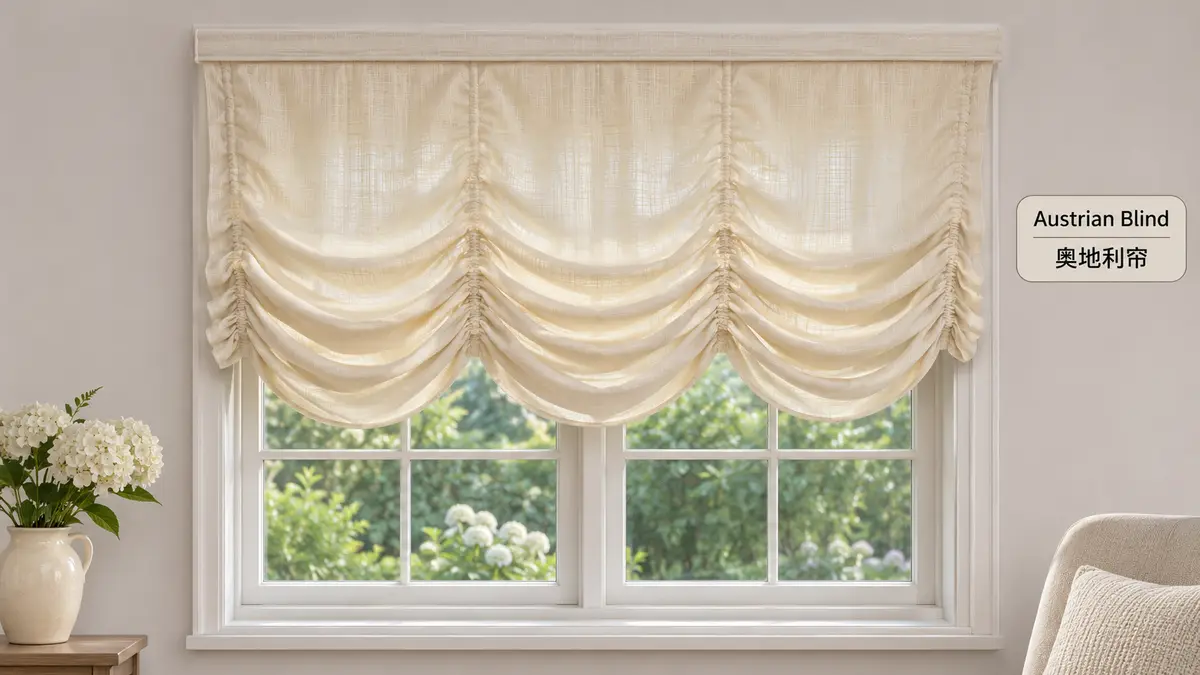
UK duty on textile Austrian blinds
Heading 6303 covers textile curtains, interior blinds and curtain or bed valances. Austrian blinds are gathered fabric blinds that lift into scalloped folds. This guide covers manually operated textile versions; see the curtains and blinds guide for the wider heading.
Read from the UK Trade Tariff on 30 September 2026, the supplied lines carry 12% duty on goods from China, except nonwoven lines at 6%. No anti-dumping or countervailing duties, suspensions or attached import controls are recorded in the supplied facts. Ordinary woven polyester Austrian blinds fall within the synthetic-fibre category carrying 12%, subject to classification confirmation.
Confirm the fibre composition, fabric construction and finished product description before choosing a line. The table lists candidate classifications, rather than a code determined by the Austrian style alone. Send the fabric details, lining specification and product photographs to your customs broker and use finding your commodity code.
| Goods | Commodity code | Duty | Anti-dumping or countervailing duty on China |
|---|---|---|---|
| Synthetic-fibre Austrian blinds, neither knitted nor nonwoven | 6303 92 90 90 | 12% | None |
| Cotton Austrian blinds, other than net curtains or hand-printed batik | 6303 91 00 99 | 12% | None |
| Flax or ramie Austrian blinds, neither knitted nor nonwoven | 6303 99 90 10 | 12% | None |
| Other textile Austrian blinds, such as woven silk | 6303 99 90 90 | 12% | None |
| Synthetic-fibre nonwoven Austrian blinds | 6303 92 10 00 | 6% | None |
Specify the scallops, lining and lifting system
Specify finished width, fully lowered drop, gathered fullness, scallop spacing and the appearance when raised. Supply a drawing showing lift-tape positions, sewn rings, bottom finish and mounting arrangement. Approve a hanging sample with the intended lining and hardware, because a flat fabric sample cannot show how the folds gather.
Agree face fabric and lining composition, shade, opacity and care method. Specify whether the headrail, brackets, cord lock and safety devices are included. Fibre composition must be labelled; use a durable, legible label. New blinds with looped cords must have child safety devices installed during manufacture or supplied with the blind.
Ask for cord-safety test evidence for the finished configuration, together with warnings and fitting instructions. For hotel or contract orders, agree the buyer's fire-performance specification before selecting the fabric and finish. Check that any supporting report identifies the supplied material.
Worked duty example
Illustrative example, not a quote: 800 manually operated polyester Austrian blinds, illustrative only under 6303 92 90 90, invoiced at £48,000 free on board, with £3,000 of freight and insurance to the UK. The customs value is £51,000. Duty at 12% is £6,120. Import VAT at 20% is charged on the customs value plus duty, £57,120, so it is £11,424. Import taxes total £17,544; a VAT-registered importer can usually reclaim the VAT, so the lasting cost is the £6,120 of duty. The import duty and VAT guide explains each step.
Inspection checklist
Shape and size: hang the blind on its intended rail, measure finished width and lowered drop, and compare scallop depth, spacing and raised folds with the approved sample.
Lifting system: raise and lower the blind, check even lifting across the width, secure ring stitching, smooth cord travel and a lock that holds the blind without slipping.
Fabric and lining: compare shades across the order, examine seam puckering and light leakage, and wash-test face fabric and lining together against the agreed care method.
Labels and pack contents: check fibre labels, warnings, fitting instructions and the agreed child safety devices. Match rails, brackets and fittings to each blind at quality inspection.
Working out your own order? Send us the product on WhatsApp and we reply the same working day: WhatsApp us
What goes wrong
Uneven lift-tape positions or cord adjustment can make the blind rise crookedly and leave scallops at different heights. Heavy lining can change the gathered shape, while different shrinkage between lining and face fabric can twist seams. Check the assembled hanging sample and repeat the checks on production goods.
A fabric-only sample can conceal weak ring stitching, slipping cord locks or missing safety fittings. Keep the approved assembly and packing list with the inspection brief. Hold affected stock for investigation when lifting or safety components differ from the approved configuration.
Cambridge China Bridge sources these products for UK businesses, checking the factory and the documents before shipment. See factory verification. For own-brand ranges, see sourcing for brands.
Frequently asked questions
What is the UK import duty on Austrian blinds from China?
The supplied tariff lines show 12% for ordinary woven textile blinds and 6% for nonwovens. No anti-dumping or countervailing duty is recorded.
Do Austrian blinds need child safety devices?
Check the finished lifting system, warnings and fitting instructions.
Do textile Austrian blinds need fibre labels?
Yes. Fibre composition must be labelled. Check the label against the agreed face fabric and lining specification, and use a durable, legible label.
What should I check on an Austrian-blind sample?
Hang it with the intended lining and rail. Check lowered dimensions, scallop shape, even lifting, ring stitching, cord-lock holding and the included safety fittings.