Sourcing talking calculators from China
Talking calculators from China carry 0% UK import duty across the relevant electronic calculator lines. Electrical equipment obligations still apply: check compliance evidence, battery responsibilities and spoken results against the display before ordering. Cambridge China Bridge sources talking calculators.
Buying from China for a business? How our UK China sourcing agent service works · China sourcing agent for small orders and first imports
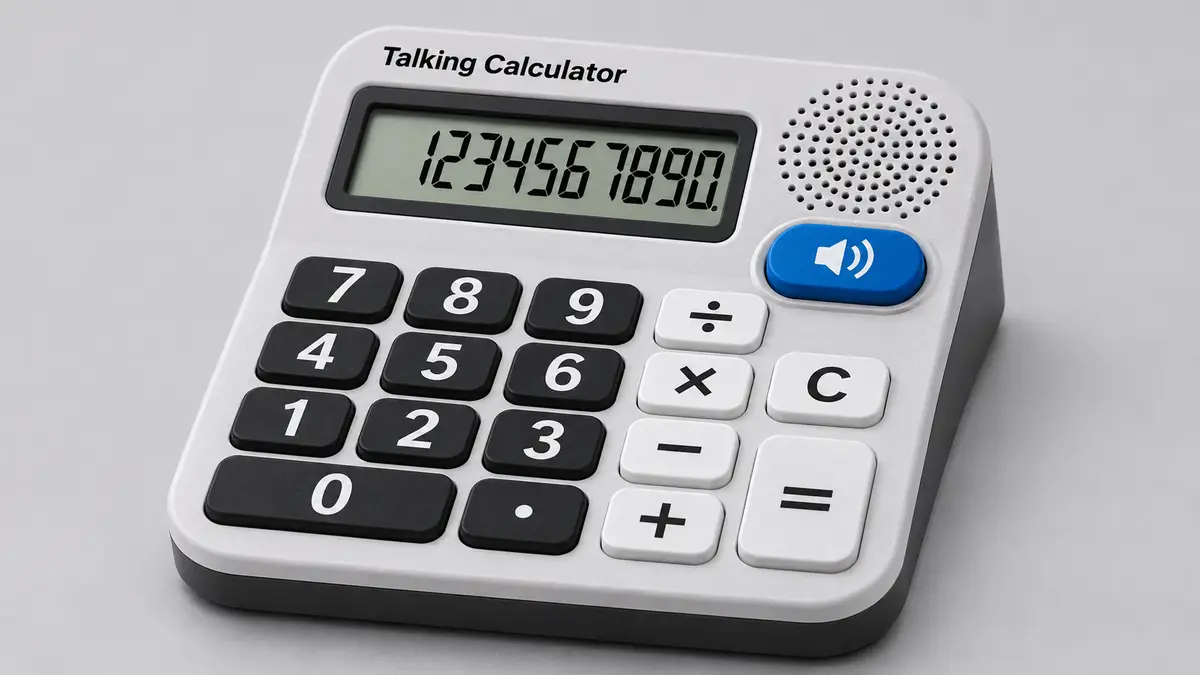
Talking calculator codes and zero duty
Heading 8470 covers calculating machines and related equipment. For talking electronic calculators, classification depends on whether the unit can operate without external electric power and, for externally powered models, whether it incorporates a printing device. Battery-powered pocket and desktop models share a tariff line, so the table repeats that code for these different buying specifications.
Read from the UK Trade Tariff on 1 October 2026, all listed lines carried 0% duty for goods from China. The supplied tariff record lists no anti-dumping or countervailing measures, suspensions or attached import controls. Import VAT is normally 20%; see import duty and VAT.
Confirm the commodity code using the actual power arrangement and printing function. A spoken-output feature does not describe those classification details. For the wider calculator family, see scientific calculators.
| Goods | Commodity code | Duty | Anti-dumping or countervailing duty on China |
|---|---|---|---|
| Battery-powered pocket talking calculators | 8470 10 00 00 | 0% | None |
| Talking electronic calculators with printing, requiring external power | 8470 21 00 00 | 0% | None |
| Talking electronic calculators without printing, requiring external power | 8470 29 00 00 | 0% | None |
Specify the voice, keys and power arrangement
Specify spoken English, pronunciation of decimals and negative results, digit-by-digit or whole-number announcements, result repeat, volume adjustment and mute behaviour. Agree which keys speak and whether memory operations are announced. Define tactile key shapes, spacing, contrast, display readability and any headphone connection. Approve the voice and firmware on a physical sample.
Specify the battery type, replacement access and any supplied power adapter. Calculators bring electrical waste obligations; for button-cell models, confirm the applicable battery obligations with the relevant authority. Electrical and electronic equipment is within the hazardous-substance rules unless specifically excluded. Obtain model-matched compliance documents for review through testing and certification.
For apparatus covered by the electromagnetic compatibility rules in Great Britain, manufacturers must supply relevant instructions in English. Hazardous-substance guidance also requires importer identification and a contactable address on the product or packaging. Electrical equipment producers must register annually.
Worked duty example
Illustrative example, not a quote: Illustrative order: 40 battery-powered talking calculators under 8470 10 00 00, invoiced at £1,500 free on board, with £150 of freight and insurance to the UK. The customs value is £1,650. Duty at 0% is £0. Import VAT at 20% is charged on the customs value plus duty, £1,650, so it is £330. With no duty, the only import tax is the VAT, which a VAT-registered importer can usually reclaim. The import duty and VAT guide explains each step.
Inspection checklist
Speech: compare spoken and displayed results against an agreed calculation script, including decimals, negative results, memory recall and repeated results. Listen for clipped words, overlapping announcements and incorrect language.
Keys and display: check key identification by touch, contrast, missed inputs, double inputs and missing display segments. Include intended users in sample evaluation where practical.
Power and audio: test battery replacement, volume, mute and headphone behaviour if fitted. Check that speech remains intelligible during the agreed battery-use test and that settings behave as specified after power loss.
Documents and identity: match the model and firmware to the approved sample and supplied compliance evidence. Check importer identification and English instructions where applicable. Use quality inspection to record findings before shipment and repeat functional checks on arrival.
Working out your own order? Send us the product on WhatsApp and we reply the same working day: WhatsApp us
What goes wrong
A display can show the correct answer while the voice omits the minus sign, misreads the decimal point or announces a previous result. Rapid key presses can queue speech until it no longer matches the current operation. A weak speaker or falling battery output can make an otherwise working calculator difficult to use.
Treat the approved voice files, firmware, key layout and battery arrangement as part of the purchase specification. Ask the factory to submit changes for approval and retain a sample for repeat orders. Test spoken output directly rather than accepting a silent demonstration of the display.
Cambridge China Bridge sources these products for UK businesses, checking the factory and the documents before shipment. See factory verification. For machinery and equipment, see machinery imports.
Frequently asked questions
What is the UK import duty on talking calculators from China?
The relevant electronic calculator lines in heading 8470 carry 0% duty in the supplied tariff record. No anti-dumping or countervailing measures are listed. Import VAT is normally 20%.
Do talking calculators have a separate commodity code?
The supplied tariff lines do not distinguish spoken output. Confirm whether the calculator operates without external power and whether an externally powered model incorporates printing.
What should I test on a talking calculator sample?
Compare speech with the display for decimals, negative results and memory operations. Check rapid inputs, result repeat, volume, tactile keys and battery performance.
Do battery-powered talking calculators have compliance obligations?
Yes. Check hazardous-substance compliance and the applicable electrical documents for the exact model.