Sourcing sulphited apricots from China
Sulphited apricots for processing under 0812 90 25 90 carry 0% UK duty from China, with no trade remedy or suspension listed. This heading covers provisionally preserved fruit unsuitable for immediate consumption; specify sulphite levels and check food additive permissions. Cambridge China Bridge sources sulphited apricots for processing.
Buying from China for a business? How our UK China sourcing agent service works · China sourcing agent for small orders and first imports
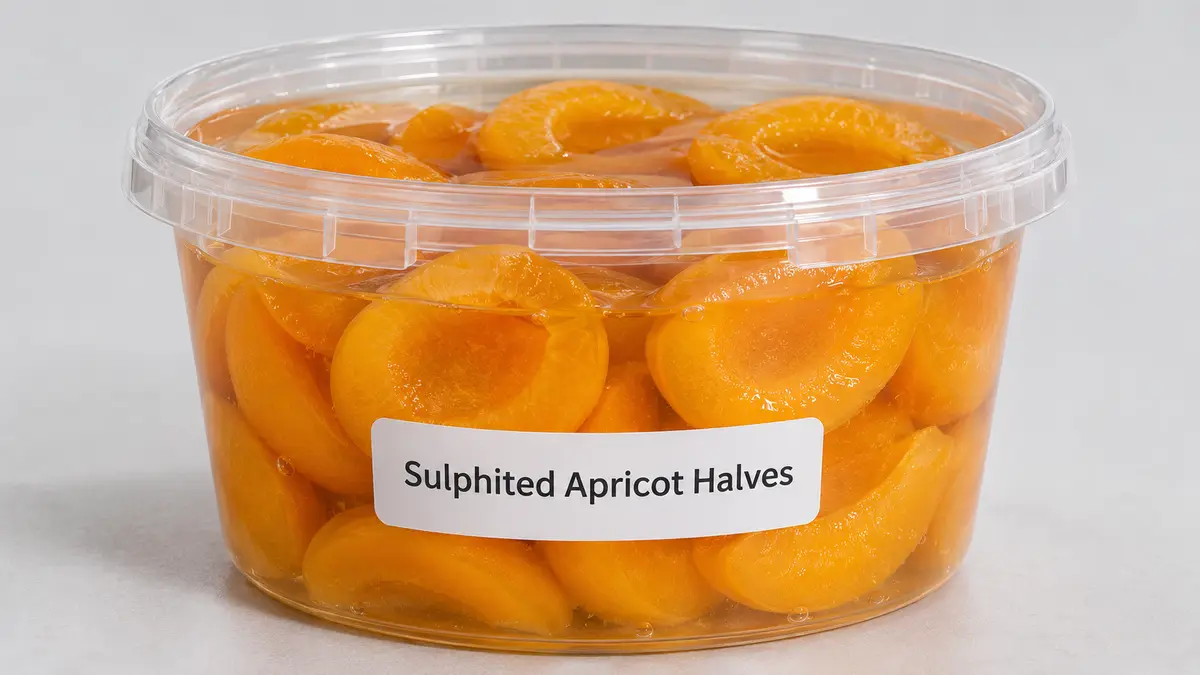
Duty and classification for processing apricots
Heading 0812 covers fruit and nuts provisionally preserved but unsuitable in that state for immediate consumption. This guide concerns sulphited apricots supplied as a processing ingredient. The table shows purchasing forms covered by the same apricot commodity line, rather than separate tariff subdivisions. See the provisionally preserved fruit guide for the wider heading.
Read from the UK Trade Tariff on 29 September 2026, the supplied extract lists 0% duty for Chinese apricots under 0812 90 25 90, with no anti-dumping or countervailing duty and no suspension. It attaches an organic-products import control. Organic consignments need an inspection certificate; for Great Britain, this is issued by the exporter’s control body. Confirm eligibility with your organic control body before accepting an organic specification.
Confirm the commodity code using the preservation method, composition and condition at import. A sulphite treatment alone does not establish that the fruit is provisionally preserved and unsuitable for immediate consumption. Give your customs broker the specification and processing instructions.
| Goods | Commodity code | Duty | Anti-dumping or countervailing duty on China |
|---|---|---|---|
| Sulphited whole apricots, provisionally preserved for processing | 0812 90 25 90 | 0% | None |
Specify the fruit and its processing route
Specify variety, maturity, whole fruit or cut form, stone removal, firmness, colour and drained fruit weight. Record the preserving medium, all added ingredients and the agreed sulphur dioxide test method. Ask for storage instructions and a batch sample for trials using your intended washing, soaking and cooking process.
Most food additives are permitted only in certain foods and quantities. Check the preservative conditions for the supplied ingredient and intended finished food before agreeing the specification. Confirm sulphur dioxide allergen declaration requirements with the relevant food authority. Obtain batch results and provide accurate allergen information to your customer.
Worked duty example
Illustrative example, not a quote: 5 tonnes of provisionally preserved sulphited apricot halves for processing; illustrative figures under 0812 90 25 90, invoiced at £20,000 free on board, with £1,800 of freight and insurance to the UK. The customs value is £21,800. Duty at 0% is £0. Import VAT at 20% is charged on the customs value plus duty, £21,800, so it is £4,360. With no duty, the only import tax is the VAT, which a VAT-registered importer can usually reclaim. The import duty and VAT guide explains each step. This assumes the goods are standard-rated for VAT. Most food for human consumption is zero-rated, and animal feed can be too, in which case no import VAT is due, so check the rate for your product in HMRC's VAT Notice 701/14.
Inspection checklist
Fruit: compare cut size, colour and firmness with the approved sample; check for stones, stone fragments, skin defects and excessive broken flesh.
Preservation: commission batch sulphur dioxide testing and compare the result with the agreed specification; trial the fruit through the intended processing route.
Packaging: inspect liners, closures and drums for leaks, corrosion or contamination; weigh drained fruit using the agreed method.
Records: match batch markings to test reports and ingredient declarations; check storage instructions and any organic inspection certificate.
Working out your own order? Send us the product on WhatsApp and we reply the same working day: WhatsApp us
What goes wrong
A bright sample can conceal variable sulphite treatment across the batch. Fruit may soften during processing, leave too little drained yield or contain stone fragments. Leaking containers, fermentation and mould are reasons to hold the affected stock while you investigate.
Another failure is ordering processing fruit but receiving ready-to-eat dried apricots, or using a generic test report that does not identify the shipment. Approve a processing trial and batch-specific inspection evidence before dispatch. Agree how failed stock will be isolated and how replacement or rejection will be handled.
Cambridge China Bridge sources these products for UK businesses, checking the factory and the documents before shipment. See factory verification. For repeat volumes, see container programmes.
Frequently asked questions
What is the UK import duty on sulphited apricots from China?
The supplied tariff extract lists 0% under 0812 90 25 90 for provisionally preserved apricots, with no anti-dumping or countervailing duty and no suspension.
Are sulphited processing apricots the same as dried apricots?
No. This guide covers provisionally preserved apricots unsuitable for immediate consumption. Confirm classification from the product’s condition and preservation method, rather than the supplier’s name.
What sulphite information should I request?
Request the preservative identity, batch sulphur dioxide results and processing instructions. Confirm sulphur dioxide allergen declaration requirements with the relevant food authority; check the additive conditions separately.
Can I import these apricots as organic?
Confirm eligibility with your organic control body before ordering. Organic consignments need an inspection certificate, issued by the exporter’s control body for imports into Great Britain.