Straw hats and plaited headgear from China
Buy against a packed-carton sample, not just a display hat: agree the material, finished head opening and brim shape after unpacking. Plaited or strip-assembled hats under 6504000000 currently attract 0% UK duty; check current trade-remedy measures before declaring the goods. Adult hats normally incur 20% import VAT; qualifying young children's hats can be zero-rated.
Buying from China for a business? How our UK China sourcing agent service works · China sourcing agent for small orders and first imports
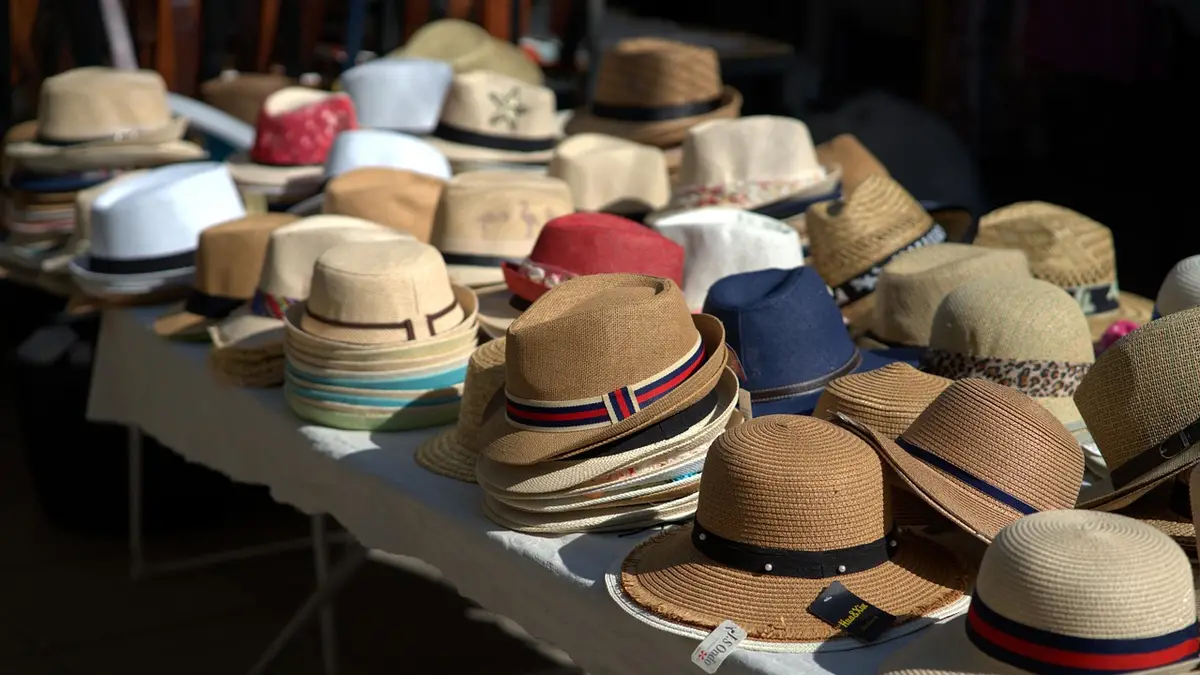
Where to look: Wenling's straw-hat clusters
Start supplier enquiries in Wenling, Zhejiang. Xinhua identifies Nanjian village in Xinhe town as a straw-hat industry village. Zhejiang Online identifies Ruoheng town as a concentration of hat businesses and Loujiang village as a straw-plaiting collection and distribution centre. These are documented production locations; the reports do not establish any individual supplier's current export capability.
Use those locations to build a comparison shortlist. Ask each business which operations it performs itself: plaiting the hat body, joining strips, shaping, attaching sweatbands and trimming, or packing. Request photographs of your proposed construction and identify any subcontracted stages before approving the sample.
Specify the hat body and the packed result
A useful enquiry distinguishes paper straw, natural straw and raffia rather than asking only for a 'straw-look sun hat'. Ask for the actual material composition, construction method, lining, sweatband, stiffening treatment and trim attachment. Treat these as purchase specifications, not interchangeable descriptions.
Record the finished internal head opening with the sweatband fitted, crown height, brim width and profile, colour reference and acceptable weave variation. Agree measurement methods and tolerances with the supplier rather than borrowing an unexplained size chart. Use our product specification guide to turn these decisions into a quotation brief.
Approve a sample packed in the intended export arrangement. Specify nesting direction, separators or crown supports, and the quantity per carton. Photograph the brim profile before packing and after unpacking; agree what distortion is acceptable and how it will be assessed. This makes carton capacity a quality decision as well as a freight decision.
Inspection: moisture, brim damage and colour transfer
Moisture deserves its own release check. Hat manufacturer JoinTop describes wet straw swelling and losing shape, with lingering moisture creating a mildew risk. Inspect inside crowns, under sweatbands and between nested hats for dampness, mould, staining and odour. Agree a drying and packing procedure; do not invent a universal moisture percentage for different materials.
Open packed cartons and examine hats from different positions in the stack. Check crown collapse, distorted brims, cracks, protruding ends, loose strip joins, sweatband attachment and trim security against the approved sample. Record these as inspection points, not claims about their frequency. Use packaging tests for your distribution route to agree a representative packing trial.
For textile sweatbands and ribbons, ask the laboratory to recommend methods for assessing colourfastness to water and perspiration. Agree acceptance criteria with the laboratory. Ask it to confirm an appropriate method for dyed paper or natural-straw components rather than assuming every hat material falls within a textile test's scope.
Match reports to the ordered colour, material and component; a ribbon report does not establish the performance of the whole hat. Our test report verification guide explains the document checks. For comparing constructions and packed samples, use our sample comparison service.
UK safety: assess the hat, especially children's cords
For ordinary consumer hats supplied in Great Britain, the General Product Safety Regulations 2005 provide the safety baseline. The current instrument on the UK legislation website is not marked revoked, and OPSS guidance confirms its application in Great Britain. Importers must ensure safety, provide relevant risk information and enable traceability through producer details and product or batch identification on the product or packaging where reasonable.
For a children's design, make the chin cord, toggle, elastic, detachable decorations and exposed ends explicit parts of the safety assessment. Ask the assessor to document foreseeable entrapment, strangulation, recoil and detachment risks. Do not accept a generic clothing-cord certificate as the complete assessment of a hat.
Ask the assessor to confirm the scope and applicability of any proposed clothing-cord standard before relying on it for a hat. Agree product-specific cord requirements through the safety assessment rather than assuming a universal permitted chin-cord length.
Northern Ireland has a separate position: EU Regulation 2023/988 on general product safety superseded the 2005 Regulations there on 13 December 2024. Confirm the intended market before finalising the compliance brief; the Great Britain rules above do not describe Northern Ireland's regime.
UK tariff: construction determines the code
The UK Trade Tariff describes 6504000000 as headgear plaited or made by assembling strips of any material, whether lined or trimmed. The description turns on construction, so ask for evidence of how the hat body is made before using the code. A straw-looking surface alone is insufficient; use our commodity code guide if the construction is unclear. For textile alternatives, see our caps and hats sourcing guide. For trade in the opposite direction, see our guide to exporting gloves and hats to China. For felt styles, see our guide to sourcing felt berets from China.
Checked on 4 October 2026, the tariff lists third-country duty of 0.00%. Check current trade-remedy measures for Chinese-origin goods before declaring the shipment. The table is for hats that meet this commodity description; recheck the tariff at the declaration date.
| Goods | Commodity code | Duty | Anti-dumping duty on China |
|---|---|---|---|
| Hats and other headgear plaited or assembled from strips, whether lined or trimmed | 6504000000 | 0% | Check current measures |
Working out your own order? Send us the product on WhatsApp and we reply the same working day: WhatsApp us
Worked example: zero duty does not mean zero import tax
Hypothetical adult-hat shipment, with every amount invented solely to illustrate the calculation: goods £7,500, freight and insurance to the UK border £900, and additional transport and incidental costs to the documented first UK destination £200. Assume no other customs-value adjustments or additional trade-remedy duties. Customs value is £8,400; duty at 0% is £0.
The import VAT value includes those additional destination costs: £8,400 + £0 + £200 = £8,600. At the standard 20% rate, import VAT is £1,720. Goods, the stated logistics costs, duty and import VAT total £10,320 before any VAT recovery. Our UK duty and VAT guide explains the wider calculation.
Children's hats require a separate VAT decision. HMRC VAT Notice 714, section 4.4.1, allows zero-rating for hats suitable by design only for young children or clearly held out for sale for young children, subject to the notice's conditions. A head size that also fits an adult does not automatically prevent relief. If the otherwise identical hypothetical shipment qualifies, import VAT is £0 and the stated total is £8,600; a 'kids' label alone should not determine the declaration.
Related help: small first orders.
Frequently asked questions
Should I approve a loose sample or an export carton?
Approve the hat's appearance and fit first, then its intended packed arrangement. Retain photographs and an agreed acceptance method for brim shape after unpacking; a display sample cannot demonstrate the proposed nesting arrangement.
Does BS EN 14682 certify a children's straw hat?
Ask the assessor to confirm the standard's scope and applicability before relying on a report. Arrange a product-specific assessment of the actual cords, elastic and decorations.
Are all straw hats subject to 20% import VAT?
Adult hats normally use the standard 20% rate. Qualifying young children's hats can be zero-rated under HMRC VAT Notice 714; retain evidence of the design and how they are offered for sale.
Sources
- Xinhua — Nanjian village, Xinhe town, Wenling
- Zhejiang Online — Ruoheng and Loujiang's straw-hat industry
- JoinTop — water damage and mildew in straw hats
- General Product Safety Regulations 2005 — current instrument
- OPSS — general product safety obligations in Great Britain
- OPSS — general product safety in Northern Ireland
- UK Trade Tariff — commodity 6504000000
- HMRC — standard VAT rate
- HMRC VAT Notice 714 — young children's hats
- HMRC — customs value and additional import VAT costs