Sourcing railway gauge tie rods from China
Steel railway gauge tie rods from China normally fall under 7302 90 00 00 and pay 0% UK duty. For national-network track components, confirm with Network Rail whether product acceptance is needed. Confirm the drawing, rail-clamp compatibility and acceptance route before ordering. Cambridge China Bridge sources steel railway gauge tie rods.
Buying from China for a business? How our UK China sourcing agent service works · China sourcing agent for small orders and first imports
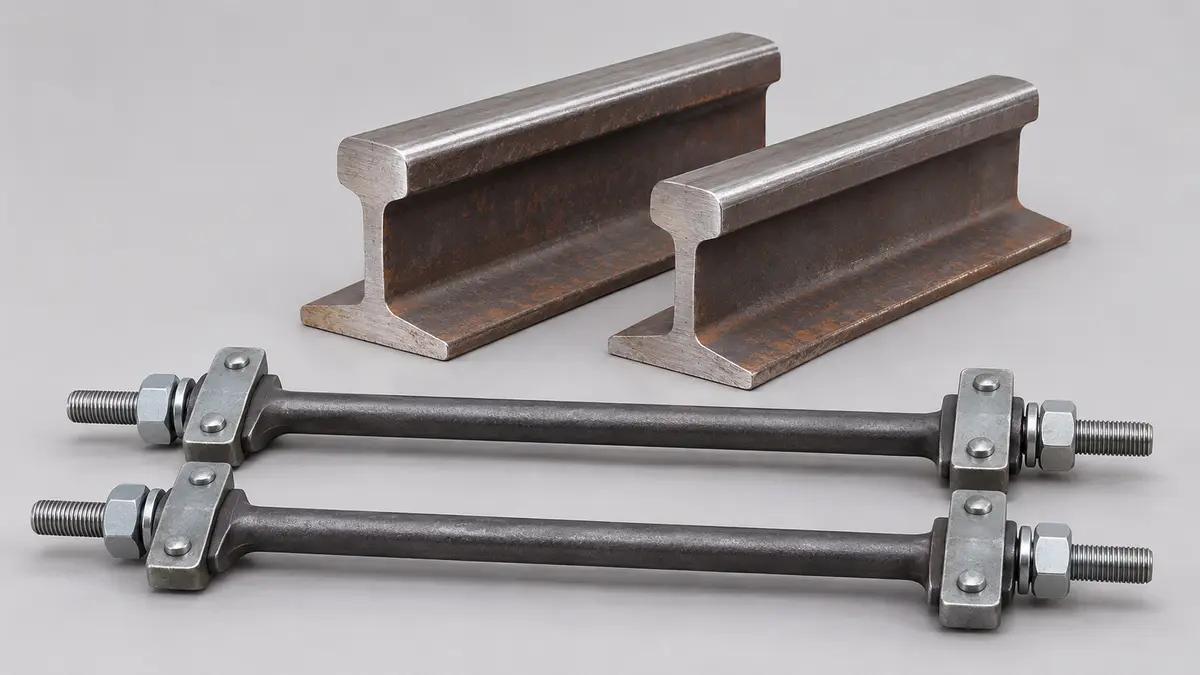
Duty on steel railway gauge tie rods
Read from the UK Trade Tariff on 1 October 2026, heading 7302 covers specialised iron or steel railway and tramway track construction material. Gauge tie rods used to hold rails at the specified spacing normally belong in its “Other” line, 7302 90 00 00. The table shows designs sharing that tariff line, rather than separate commodity codes.
The supplied tariff record gives this line 0% duty for goods from China, with no listed anti-dumping or countervailing duty, steel measure, suspension or import control. Its treatment differs from some new rails elsewhere in the heading. See the wider rails and track fittings guide.
Confirm the commodity code using the drawing, function and complete assembly description. Gauge tie rods should be distinguished from rods operating railway points. UK CBAM takes effect from 1 January 2027; ask your customs broker to confirm whether the assembly is in scope. Ask the factory for emissions information and check the UK CBAM guide.
| Goods | Commodity code | Duty | Anti-dumping or countervailing duty on China |
|---|---|---|---|
| Steel railway gauge tie rods, fixed length | 7302 90 00 00 | 0% | None |
Specify the rod, clamps and adjustment
Send a controlled drawing showing the track gauge, rail profile, clamp contact surfaces, rod section, overall length and adjustment range. Specify steel grade, mechanical properties, thread form, locking arrangement, coating and supplied nuts, washers and clamps. State whether the application needs an insulated connection and agree how the complete assembly will be tested.
Ask the buyer’s railway engineer to confirm the acceptance route and whether the assembly is an interoperability constituent. Where it is, assessment is necessary before placing it on the UK market. Agree the required documents before authorising manufacture.
Worked duty example
Illustrative example, not a quote: 300 complete gauge tie rod assemblies, illustrative only under 7302 90 00 00, invoiced at £32,000 free on board, with £4,000 of freight and insurance to the UK. The customs value is £36,000. Duty at 0% is £0. Import VAT at 20% is charged on the customs value plus duty, £36,000, so it is £7,200. With no duty, the only import tax is the VAT, which a VAT-registered importer can usually reclaim. The import duty and VAT guide explains each step.
Inspection checklist
Material and identity: match steel certificates and heat or batch identification to the rods supplied; check the ordered grade and mechanical test results.
Geometry and fit: measure rod length, straightness, clamp geometry and thread dimensions against the drawing. Trial-fit an assembly to the intended rail profile.
Adjustment and locking: operate the adjustment through the agreed range, check thread engagement and confirm that the supplied locking parts fit without forcing.
Finish and insulation: inspect coating coverage, corrosion, damaged threads and cracked clamps. Where insulation is specified, check the complete connection against the agreed test method.
Working out your own order? Send us the product on WhatsApp and we reply the same working day: WhatsApp us
What goes wrong
A clamp can look suitable but contact the wrong part of the rail profile. Incorrect thread combinations prevent adjustment, while insufficient engagement or missing locking parts undermines the assembly. Coating can obstruct threads, and insulated components can be damaged during packing or assembly.
Another failure is approving a sample without checking the railway operator’s documentation expectations. Agree the drawing revision, acceptance evidence and assembly tests before production, then compare delivered goods with the approved sample. Use the inspection guide to define the checks.
Cambridge China Bridge sources these products for UK businesses, checking the factory and the documents before shipment. See factory verification. For repeat volumes, see container programmes.
Frequently asked questions
What is the UK import duty on steel railway gauge tie rods from China?
The supplied tariff record gives 7302 90 00 00 a duty of 0% for goods from China, with no listed trade remedy. Confirm that the actual assembly belongs in this line.
Are gauge tie rods the same as railway point rods?
Gauge tie rods hold rails at the specified spacing. Point rods operate railway points. Describe the function clearly when confirming classification and preparing the factory drawing.
Can Chinese gauge tie rods be used on the national railway network?
Confirm the assembly’s acceptance route and required evidence with the railway engineer before ordering.
What should I check when gauge tie rods arrive?
Check material traceability, dimensions, clamp fit, adjustment, thread engagement, locking parts and coating. For insulated designs, check the connection against the agreed test method.