Sourcing spun nylon knitting yarn from China
Spun nylon hand knitting yarn qualifying under heading 5511 pays a flat 0% UK duty from China across the relevant lines. Retail yarn must carry a fibre composition label. Check staple construction, blend and retail put-up before ordering. Cambridge China Bridge sources spun nylon hand knitting yarn.
Buying from China for a business? How our UK China sourcing agent service works · China sourcing agent for small orders and first imports
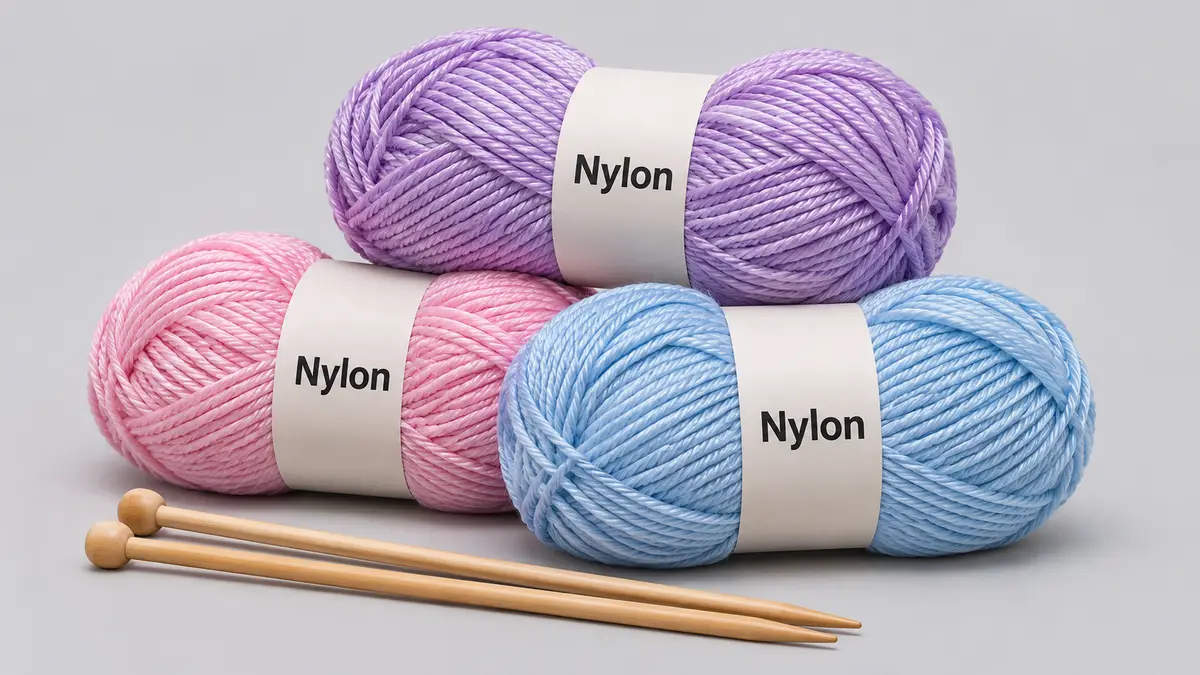
Duty on retail spun nylon yarn
Heading 5511 covers yarn other than sewing thread, made from man-made staple fibres and put up for retail sale. This guide covers spun nylon hand knitting yarn, rather than continuous-filament nylon. Retail put-up depends on the applicable ball and hank weight rules. For the wider heading, see our acrylic hand-knitting yarn guide.
Read from the UK Trade Tariff on 2 October 2026, both relevant synthetic-staple lines carried 0% duty for goods from China. The supplied tariff record lists no anti-dumping or countervailing measures, suspensions or attached import controls. The table repeats these codes for ball and hank formats; these are product examples within the same tariff lines.
Confirm the commodity code using the full fibre breakdown, staple construction and packaging weights. The 85% threshold concerns all synthetic staple fibres together, not nylon alone. A wool-predominant blend moves outside this heading, so do not classify every nylon-containing knitting yarn under 5511.
| Goods | Commodity code | Duty | Anti-dumping or countervailing duty on China |
|---|---|---|---|
| Spun nylon knitting yarn in balls, synthetic staple fibre content at least 85% | 5511 10 00 00 | 0% | None |
| Nylon-blend knitting yarn in balls, synthetic staple fibre content below 85% | 5511 20 00 00 | 0% | None |
Specify the spun nylon construction and ball band
State that the yarn is spun from nylon staple fibres. Agree the fibre breakdown, yarn count, ply, twist, net weight, metres per ball or hank, shade and dye-lot identification. Approve a knitted swatch for handle, stitch definition, splitting and dimensional change after the intended wash.
Retail yarn needs a fibre composition label; confirm the permitted fibre names with the relevant authority. Test composition before printing the bands. Agree the recommended needle size, tension information and care instructions from the approved knitting and washing samples, rather than copying them from another yarn.
Worked duty example
Illustrative example, not a quote: Illustrative order: 4,000 balls of spun nylon hand knitting yarn, each 100 g under 5511 10 00 00, invoiced at £2,200 free on board, with £1,200 of freight and insurance to the UK. The customs value is £3,400. Duty at 0% is £0. Import VAT at 20% is charged on the customs value plus duty, £3,400, so it is £680. With no duty, the only import tax is the VAT, which a VAT-registered importer can usually reclaim. The import duty and VAT guide explains each step.
Inspection checklist
Composition: compare laboratory results with the agreed blend and the printed fibre declaration; confirm that the supplied yarn has the agreed staple construction.
Weight and length: weigh conditioned samples from each dye lot and check the stated metres against measured yarn length and yarn count.
Shade and washing: compare each lot with retained samples under consistent lighting; check colour transfer and the washed swatch against the approved result.
Unwinding and packing: unwind sampled balls or hanks for knots, breaks and tangles; match dye-lot references on bands and cartons. Use our quality inspection guide to prepare the inspection brief.
Working out your own order? Send us the product on WhatsApp and we reply the same working day: WhatsApp us
What goes wrong
Watch for a substituted filament construction, changed blend, loose twist that splits on the needle, short metreage and mismatched shades. A ball can meet the stated weight while delivering too little length if the yarn is thicker than approved.
Keep a retained yarn sample and knitted swatch for each approved dye lot. Compare production samples before dispatch and repeat the agreed checks on arrival. Hold disputed lots separately so shade or labelling problems do not spread through retail stock.
Cambridge China Bridge sources these products for UK businesses, checking the factory and the documents before shipment. See factory verification. For repeat volumes, see container programmes.
Frequently asked questions
What is the UK import duty on spun nylon knitting yarn from China?
The supplied tariff record, read on 2 October 2026, gives 0% for both relevant synthetic-staple retail yarn lines under 5511, with no listed trade remedies.
Does the 85% threshold mean nylon content alone?
No. It means the combined synthetic staple fibre content. Confirm the complete blend and retail packaging before choosing the code.
Does the ball band need the fibre composition?
Yes. Retail yarn must state its fibre composition. Confirm the permitted fibre names with the relevant authority and check the laboratory result against the band before printing.
How do I check that nylon yarn will knit consistently?
Compare count, ply, twist and metres with the approved sample. Knit and wash a swatch, then check splitting, stitch definition, dimensions and colour transfer.