Sourcing spiral steel boning from China
The supplied heading has a flat 2% duty rate from China, but confirm that its other-parts code describes your spiral steel boning before using it. Consumer products must be safe; check cut ends, cap retention and fit in the intended garment. Cambridge China Bridge sources spiral steel boning.
Buying from China for a business? How our UK China sourcing agent service works · China sourcing agent for small orders and first imports
Duty and classification for spiral steel boning
Read from the UK Trade Tariff on 30 September 2026, heading 8308 covers base-metal clasps, buckles, hooks, eyes and similar articles, rivets, beads and spangles. The supplied record does not name spiral steel boning expressly. Do not treat a garment use alone as confirmation of classification. For the wider heading, see metal corset busks.
Every supplied line carries 2% duty for goods from China. The record lists no anti-dumping or countervailing duty, steel measure, suspension or attached import control. The table repeats the other-parts code for boning variants conditionally; it does not establish their classification. Use that rate only after confirming the code for the article supplied.
Send your customs broker photographs, construction details, dimensions and intended use, stating whether the goods are cut and capped or supplied continuously. Confirm the commodity code before ordering. If classification remains uncertain, ask HMRC or your broker whether an Advance Tariff Ruling is appropriate and confirm its scope and legal effect. Keep any decision with the product specification.
| Goods | Commodity code | Duty | Anti-dumping or countervailing duty on China |
|---|---|---|---|
| Cut spiral steel boning, if classified under this other-parts line | 8308 90 00 90 | 2% | None |
Specify the spiral, finished length and end caps
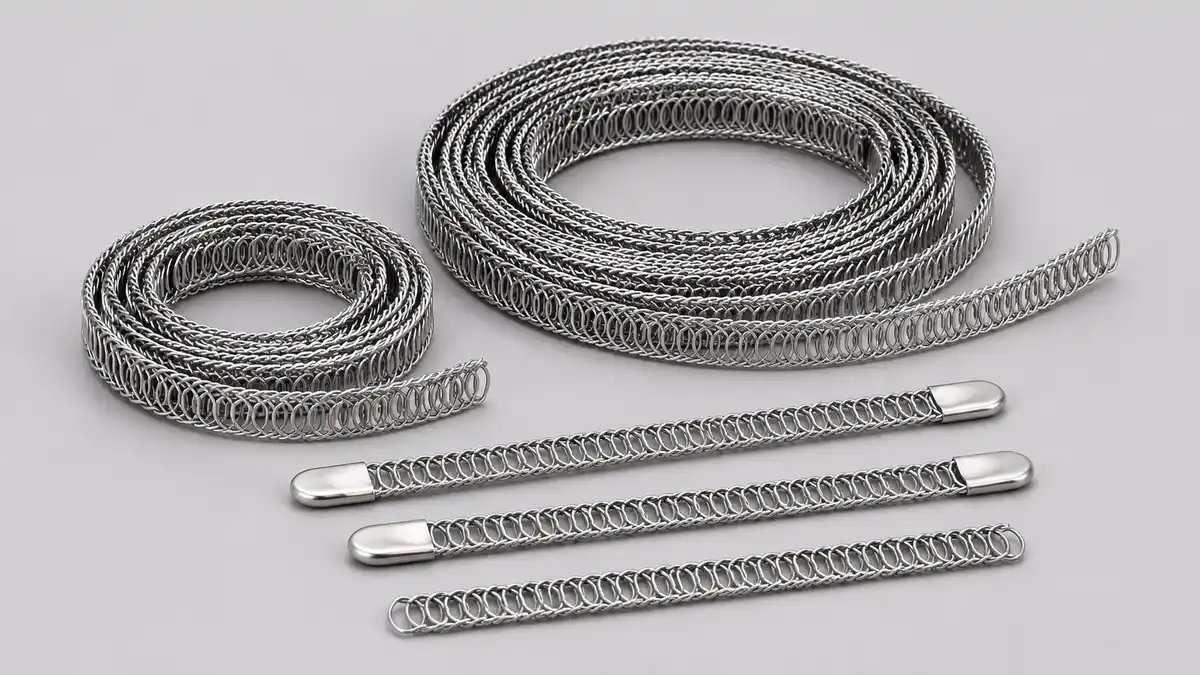
Specify steel material, wire construction, finished width and thickness, and length measured with the end caps fitted. Agree dimensional tolerances, coating or plating, cap material and cap attachment. State whether you need finished lengths or continuous material for cutting. Keep an approved sample showing the required flexibility and recovery after bending.
Trial the boning in the actual channel fabric and seam construction. Check insertion, movement around the garment's curves and whether the capped ends leave enough clearance from the channel stitching. Agree checks for bending recovery, cap retention, corrosion and coating transfer against the intended use and care method.
Businesses importing or selling consumer products are responsible for their safety. Where metal is in direct and prolonged skin contact, confirm the applicable REACH nickel-release requirements with HSE. Assess the intended garment construction rather than assuming that all concealed boning touches skin. For exposed parts, request a nickel-release report matching the material and finish, with testing and certification support if needed.
Worked duty example
Illustrative example, not a quote: Illustrative batch of end-tipped spiral steel boning for a garment workshop, assuming this classification; illustrative FOB and freight values under 8308 90 00 90, invoiced at £1,500 free on board, with £600 of freight and insurance to the UK. The customs value is £2,100. Duty at 2% is £42. Import VAT at 20% is charged on the customs value plus duty, £2,142, so it is £428.40. Import taxes total £470.40; a VAT-registered importer can usually reclaim the VAT, so the lasting cost is the £42 of duty. The import duty and VAT guide explains each step.
Inspection checklist
Dimensions: measure finished length, width, thickness and capped-end profile against the approved drawing; trial insertion in the intended channel.
Ends: check for exposed wire, burrs, cracked caps and loose attachments; assess cap retention using the agreed sample procedure.
Flexibility: bend samples from different packs against the approved sample, checking recovery, kinks, opened spirals and permanent distortion.
Finish and packing: check rust, coating damage and transfer onto fabric; verify length identification and protection against crushing. Arrange a shipment inspection.
Working out your own order? Send us the product on WhatsApp and we reply the same working day: WhatsApp us
What goes wrong
Boning can match the advertised width yet be too thick at the capped ends to enter the channel. Measuring the steel before capping can also leave the finished part too long. Loose caps expose cut wire, while burrs or opened spirals catch the lining and can work through the fabric.
A sample may bend smoothly while production pieces kink or remain distorted. Damp packing can leave rust that marks pale fabric. Keep a fitted garment sample and the loose approved boning together, then compare production pieces for dimensions, bending behaviour, end protection and finish before accepting the batch.
Cambridge China Bridge sources these products for UK businesses, checking the factory and the documents before shipment. See factory verification. For repeat volumes, see container programmes.
Frequently asked questions
What is the UK import duty on spiral steel boning from China?
The supplied heading 8308 record shows 2% on every line, with no trade remedy recorded. Spiral steel boning is not named expressly, so confirm its classification before applying that rate.
Should I buy cut lengths or continuous spiral steel boning?
Choose around your cutting and end-capping process. For finished lengths, specify the length with caps fitted. For continuous material, agree how you will cut it and protect every cut end.
What should I check on spiral steel boning samples?
Check finished dimensions, capped-end fit, burrs, cap retention, bending recovery and corrosion. Fit samples into the actual garment channels and compare production pieces with the approved sample.
Does spiral steel boning need nickel-release testing?
Assess the garment construction; for exposed parts, request a report matching the actual material and finish.