Sourcing skin-pass rolling mills from China
Skin-pass rolling mills and the relevant rolls and parts from China carry 0% UK duty across the selected lines, with no listed trade remedies. Confirm the machinery safety requirements, UKCA or CE marking route and declaration of conformity for complete mills supplied in Great Britain with the relevant authority. Cambridge China Bridge sources skin-pass rolling mills.
Buying from China for a business? How our UK China sourcing agent service works · China sourcing agent for small orders and first imports
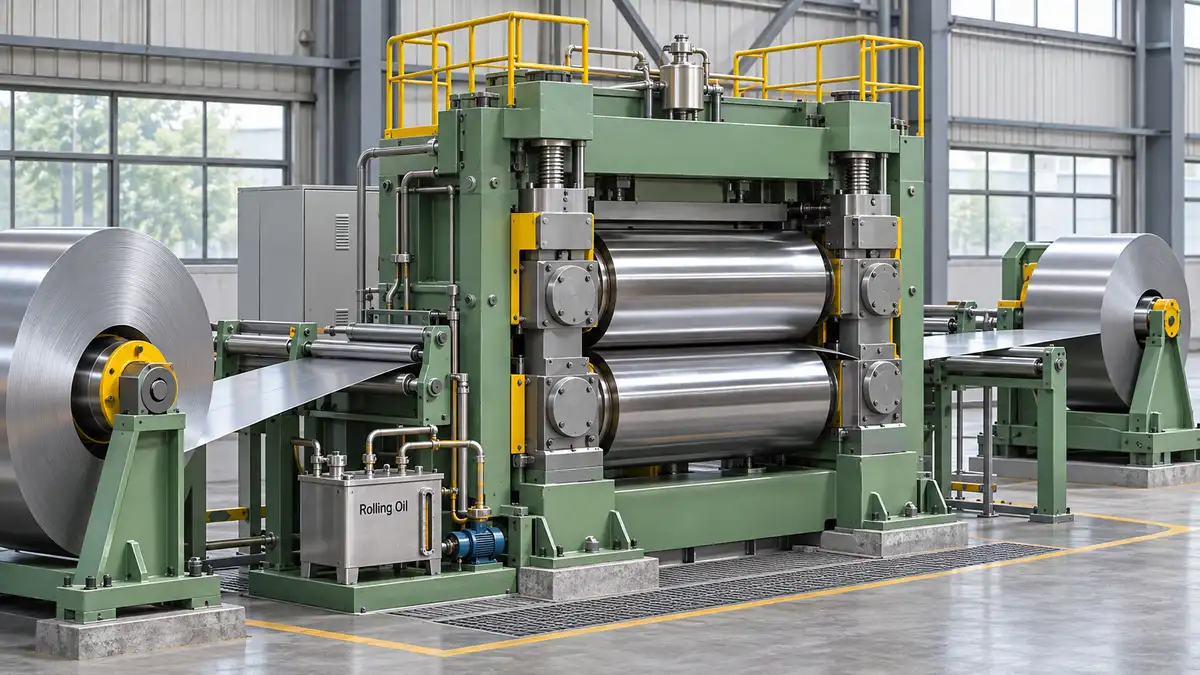
Duty on skin-pass mills, rolls and parts
Read from the UK Trade Tariff on 3 October 2026, heading 8455 covers metal-rolling mills and their rolls. A skin-pass mill that cold-rolls metal strip is a candidate for 8455 22 00 00. Replacement work rolls, back-up rolls and other mill parts have separate lines according to their material and function.
All selected lines carry 0% duty for goods from China. The supplied tariff record lists no anti-dumping or countervailing duty, suspensions or attached import controls for these lines. Import VAT is generally 20%; see UK import duty and VAT.
Confirm the commodity code using the mill's process description, drawings and shipment scope. Motors, gearboxes and drives may be classified separately. For the wider product family, see cold rolling mills.
| Goods | Commodity code | Duty | Anti-dumping or countervailing duty on China |
|---|---|---|---|
| Cold rolling mills, including skin-pass mills | 8455 22 00 00 | 0% | None |
| Open-die forged steel back-up rolls for cold rolling | 8455 30 31 00 | 0% | None |
| Open-die forged steel cold-rolling work rolls | 8455 30 39 00 | 0% | None |
| Other parts of metal-rolling mills | 8455 90 00 00 | 0% | None |
Specify strip finish and elongation control
Define strip material, incoming thickness and width, coil weight, target elongation, flatness and surface roughness. State whether rolling is wet or dry, the required roll texture, and the acceptable surface marks. Agree how each result will be measured using your material during the factory acceptance trial.
Identify the mill stand, entry and exit tension equipment, coilers, drives, hydraulic equipment and controls included in the supply. Specify roll barrel and neck dimensions, hardness, run-out and bearing seats. Ask for roll material certificates, heat treatment records, hardness maps and ultrasonic reports against agreed acceptance criteria.
For a complete mill supplied in Great Britain, confirm with the relevant authority how the Supply of Machinery (Safety) Regulations 2008 apply, including essential health and safety requirements, guarding, emergency stops, conformity assessment and UKCA or CE marking with a declaration of conformity. The technical file must be compiled and available on request. Instructions and safety information should be in English. Agree who integrates the line and signs its declaration.
Worked duty example
Illustrative example, not a quote: Illustrative order: 12 replacement skin-pass work rolls of open-die forged steel under 8455 30 39 00, invoiced at £180,000 free on board, with £9,000 of freight and insurance to the UK. The customs value is £189,000. Duty at 0% is £0. Import VAT at 20% is charged on the customs value plus duty, £189,000, so it is £37,800. With no duty, the only import tax is the VAT, which a VAT-registered importer can usually reclaim. The import duty and VAT guide explains each step.
Inspection checklist
Strip trial: check recorded elongation, flatness and surface roughness against the agreed specification using your strip grade, including changes in operating speed.
Rolls: check dimensions, hardness maps, ultrasonic reports, run-out and surface texture; inspect the barrel and journals for transit damage on arrival.
Controls and safety: check tension feedback, elongation measurement, guarding, emergency stops and the response to a strip break during an agreed safe test.
Documents and arrival: match machine identification to the declaration, check English instructions and technical-file arrangements, then inspect crates, corrosion protection and loose components. Arrange quality inspection before shipment.
Working out your own order? Send us the product on WhatsApp and we reply the same working day: WhatsApp us
What goes wrong
A trial with a different strip grade can hide unstable tension or poor elongation control. Damaged or unevenly textured work rolls can leave repeating marks, while an unsuitable roll finish can miss the required surface roughness. Record the trial conditions and retain inspected strip samples as the acceptance reference.
An undefined supply boundary leaves the buyer to resolve coiler interfaces, controls or guarding after delivery. Poor protection can damage roll surfaces and bearing seats in transit. Agree interface drawings, packing methods, spare-roll compatibility and acceptance responsibilities before ordering.
Cambridge China Bridge sources these products for UK businesses, checking the factory and the documents before shipment. See factory verification. For machinery and equipment, see machinery imports.
Frequently asked questions
What is the UK import duty on skin-pass mills from China?
The supplied tariff record shows 0% duty for cold rolling mills and the selected roll and parts lines, with no listed anti-dumping or countervailing duty.
Does a skin-pass mill need UKCA marking?
For a complete mill supplied in Great Britain, confirm the UKCA or CE marking route, declaration of conformity and machinery safety requirements with the relevant authority.
How should I test a skin-pass mill before shipment?
Use your strip grade and record elongation, flatness, surface roughness and tension behaviour against agreed acceptance criteria. Keep inspected strip samples.
What should I specify for replacement skin-pass rolls?
Specify material, barrel and neck dimensions, bearing seats, hardness, run-out and surface texture. Request material certificates, hardness maps and ultrasonic reports.