Sourcing silicone pet lick mats from China
For silicone pet lick mats confirmed under 3924 90 00 90, the UK duty range is a single rate of 6%. Consumer products sold in Great Britain must be safe in normal and reasonably foreseeable use. Specify the silicone, ridge pattern, tear resistance and cleaning method. Cambridge China Bridge sources silicone pet lick mats.
Buying from China for a business? How our UK China sourcing agent service works · China sourcing agent for small orders and first imports
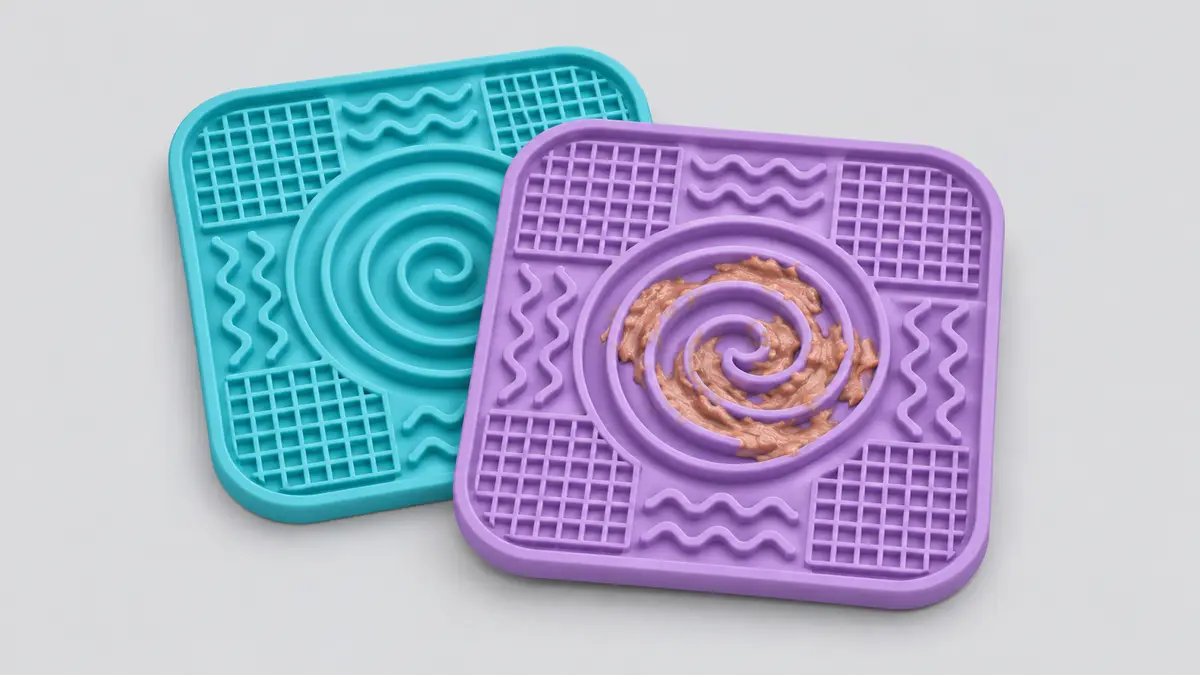
Duty on silicone pet lick mats
Read from the UK Trade Tariff on 28 October 2026, heading 3924 covers plastic tableware, kitchenware, other household articles and hygienic or toilet articles. This guide concerns silicone pet lick mats proposed for the other household articles line, 3924 90 00 90. The table lists styles sharing that code, rather than separate tariff subdivisions. See the wider plastic pet bowl guide.
The supplied facts show 6% duty for goods from China under this line, with no anti-dumping duty, countervailing duty, suspension or attached import control listed. Separate kitchenware lines carry declaration controls. If the mat is also intended for human food preparation, ask your customs broker to confirm the classification and declaration requirement.
Give your broker the silicone formulation, details of any reinforcement or rigid backing, photographs and intended use before confirming the commodity code. Do not assume that every product described by a supplier as silicone belongs under the same code.
| Goods | Commodity code | Duty | Anti-dumping or countervailing duty on China |
|---|---|---|---|
| Flat silicone pet lick mats, subject to classification | 3924 90 00 90 | 6% | None |
Specify the silicone, feeding texture and suction
Specify the silicone formulation, colourants, curing and post-curing process, dimensions, base thickness and flexibility. Agree ridge height, channel width, rim shape and suction-cup construction against an approved sample. Describe the intended animal, feed consistency and supporting surface. Require approval before the factory changes the formulation, pigment or construction.
Consumer products supplied in Great Britain must be safe in normal and reasonably foreseeable use. Assess tearing, detachable pieces and foreseeable chewing. Agree supervision advice and replacement instructions for damaged mats. Confirm with the relevant product safety authority what producer name and address and product reference or batch identification should appear on the product or packaging.
Trial the intended feed and cleaning method on finished samples. Ask for reports matching the actual formulation and colour, with evidence supporting dishwasher or freezer claims where made. A generic food-grade claim does not identify the product or conditions tested. Discuss the scope through testing and certification.
Worked duty example
Illustrative example, not a quote: Illustrative order: 2,000 silicone pet lick mats, assuming classification is confirmed under 3924 90 00 90, invoiced at £7,000 free on board, with £600 of freight and insurance to the UK. The customs value is £7,600. Duty at 6% is £456. Import VAT at 20% is charged on the customs value plus duty, £8,056, so it is £1,611.20. Import taxes total £2,067.20; a VAT-registered importer can usually reclaim the VAT, so the lasting cost is the £456 of duty. The import duty and VAT guide explains each step.
Inspection checklist
Material and moulding: compare colour, flexibility and finish with the approved sample; check persistent odour, tackiness, residue, sharp flash and incomplete ridges.
Tear resistance: flex the mat and inspect ridge roots, corners, thin channels and suction-cup necks for splits or loose pieces before and after the agreed cleaning trial.
Suction and feeding: test attachment on the agreed surfaces with the intended feed; check edge lifting, sliding, removal and whether the mat folds during licking.
Cleaning and packing: brush every channel and inspect for trapped feed, distortion and colour transfer; check packing creases, care instructions and batch identification. Plan arrival checks with the quality inspection guide.
Working out your own order? Send us the product on WhatsApp and we reply the same working day: WhatsApp us
What goes wrong
Deep textures can retain wet feed, while thin ridge roots and suction-cup necks can tear. Suction that works on a clean, smooth sample surface may fail on textured or damp surfaces. Tight folded packing can leave edges curled. Test production samples under the conditions described to customers.
A report for another formulation or colour leaves the supplied mat unassessed. Keep the approved sample, specification and reports linked to the order. Separate stock showing loose fragments, persistent odour or colour transfer and investigate before sale.
Cambridge China Bridge sources these products for UK businesses, checking the factory and the documents before shipment. See factory verification. For repeat volumes, see container programmes.
Frequently asked questions
What is the UK import duty on silicone pet lick mats from China?
The supplied facts show 6% under 3924 90 00 90, with no trade remedy, suspension or attached import control listed. Confirm the code for the actual formulation and construction.
Is a food-grade claim enough for a silicone lick mat?
Ask for reports identifying the actual formulation, colour and finished mat, with testing matched to intended use and cleaning. A generic claim does not show what was assessed.
How do I check suction on a pet lick mat?
Test production samples on the surfaces you intend to recommend, using the intended feed. Check edge lifting, sliding and removal, then repeat after cleaning.
What should I specify for easy cleaning?
Agree channel width, ridge shape and the cleaning method against a sample. Trial sticky feed, brush every recess and inspect for residue, odour, tearing and distortion after washing.